World
US Struggles to Accept China’s Economic Supremacy, Says Stiglitz
By HT News Desk
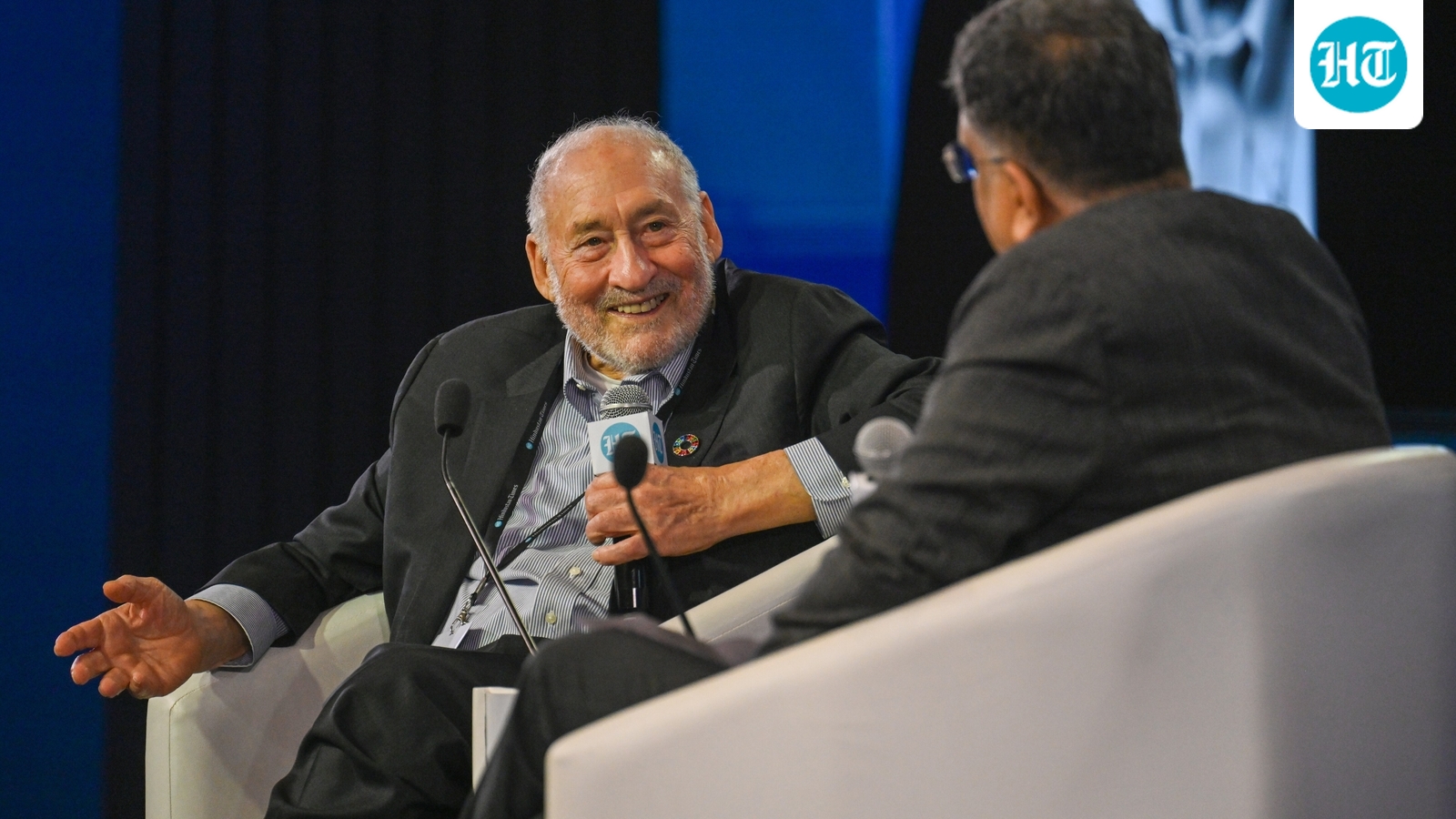
Nobel Prize‑winning economist Joseph E. Stiglitz, former World Bank chief economist, said on November 14 at the Hindustan Times Leadership Summit that the United States is finding it difficult to accept that it is no longer the world’s largest economy in terms of purchasing‑power parity (PPP). He noted that the shift to a multipolar world was most evident a decade ago when China’s PPP‑adjusted GDP surpassed that of the United States. Stiglitz warned that President Donald Trump’s policies targeting universities, research and foreign students could create turmoil for the U.S. over the next five years.
Stiglitz highlighted that the U.S. had attracted many of the world’s best talent to its universities, including a significant number of Indians, and that Trump’s administration had imposed measures such as limiting international student visas, raising H‑1B visa fees and demanding a 15% cap on foreign students at U.S. universities. Some of these measures have been blocked by U.S. courts.
He called for young, idealistic and pragmatic leaders and for middle powers to stand together against what he described as “bully‑like” behavior from the U.S. under Trump. Stiglitz also expressed concern about the rise of right‑wing politics among men under 35, noting that women continue to support progressive politics.
Stiglitz recalled that after World War II the U.S. dominated a unipolar system, competing mainly with Russia. Today, he said, the world is moving toward multipolarity. He added that neither the U.S. nor China wanted to publicly acknowledge the shift: the U.S. did not want to admit it had become number two, and China did not want to announce it had become number one.
According to the International Monetary Fund’s October 2026 World Economic Outlook, the U.S. nominal GDP is projected at $32.64 trillion in 2026, while China’s is $21.55 trillion. Adjusted for PPP, China’s GDP is about $44.6 trillion versus $32.6 trillion for the U.S., reflecting lower prices in China. The IMF projects China’s growth at 4.5% this year against 2.3% for the U.S.
Stiglitz noted that China’s rise as an export superpower initially benefited U.S. consumers by keeping prices down, but that China’s growth over the past 30 years has turned it into a competitor to the U.S. for the first time.
The comments were made during a conversation with Artha Global Executive Director Dr. Niranjan Rajadhyaksha in the capital.
Frequently asked questions
What did Stiglitz say about the US economy?
He said the US is struggling to accept that it is no longer the world’s largest economy in PPP terms, noting China surpassed the US a decade ago.
What Trump policies did Stiglitz warn could cause turmoil?
He warned that Trump’s policies targeting universities, research and foreign students—including limiting international student visas, raising H‑1B visa fees, and demanding a 15% cap on foreign students at U.S. universities—could create turmoil.
What are the IMF projections for US and China GDP?
The IMF projects the US nominal GDP at $32.64 trillion in 2026 and China’s at $21.55 trillion; PPP‑adjusted GDP is about $44.6 trillion for China versus $32.6 trillion for the US, with growth rates of 4.5% for China and 2.3% for the US.