World
Global Conflict Evolving Through Regional Skirmishes, Not a Traditional World War
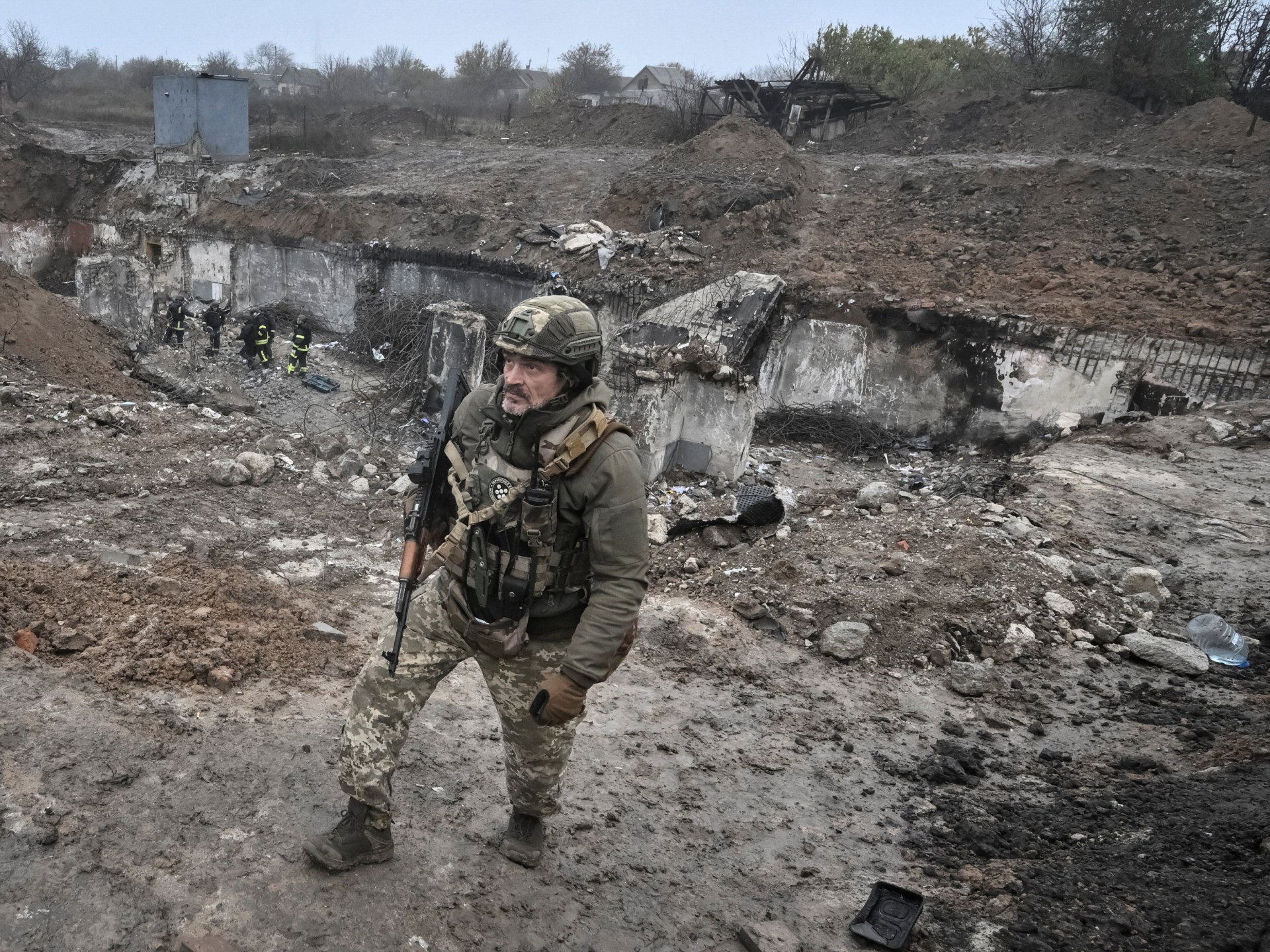
Regional disputes and emerging alliances are creating a global confrontation that international institutions are failing to contain. Many commentators in the Middle East and the West warn that the world is witnessing the early stages of another world war. The author disagrees, arguing that a war on the scale of the two world wars is unlikely because nuclear deterrence makes such a conflict almost impossible. The United States, Russia, China, the United Kingdom and France—the five permanent members of the United Nations Security Council—along with India, Pakistan, North Korea and Israel, all possess nuclear weapons, and Iran may yet join them. An all‑out war involving these powers would produce neither victors nor vanquished, but destruction on a scale that could threaten civilisation itself.
However, a different kind of global conflict is already underway. Some longstanding disputes and rivalries have erupted into war, while others threaten to do so. The author compares the current situation to the years preceding World War II, when competing national interests drove countries into opposing camps. The alliances that emerged during World War II were shaped by the ambitions and strategic interests of the countries involved.
The author questions whether a similar alignment of interests is forming among the world’s major powers, particularly among nuclear‑armed states. Could Russia, China, North Korea and Iran form a bloc capable of confronting the US and its allies, and could their regional conflicts become part of a wider global war fought with different weapons and methods?
**Russia** – After the collapse of the Soviet Union, US‑led capitalism seemed to have triumphed. Under President Vladimir Putin, Russia has sought to rebuild its economic and military strength and reclaim its position as a global power. The war in Ukraine is described as a confrontation between Russia and Europe, with Washington’s position shifting from President Joe Biden’s efforts to weaken Moscow to the reluctance of his successor, Donald Trump, to regard Ukraine as a vital US interest or Russia as a principal adversary. Russia is supported by China, Iran and North Korea, which see its defeat as a threat to their own interests and regional standing.
**China** – China’s economic and military might represents the greatest challenge to the US and the West. Its economy is already the world’s second‑largest, and many expect it to overtake that of the US within a decade or so. China has successfully used the tools of free‑market capitalism championed by Washington to its own advantage, flooding US and global markets with its products and securing a major commercial victory. Although Beijing has largely avoided direct military involvement in international conflicts, it prefers diplomatic support for Russia and the Palestinian cause, as well as engagement on trade, development and climate change. Taiwan remains a major unresolved objective. The principle of “one China” and the goal of bringing Taiwan under Chinese control remain central to Beijing’s ambitions. If China decides to make this objective an immediate priority, it could trigger a major political and potentially military confrontation between China and its allies on one side and the US and its allies on the other.
**North Korea** – North Korea’s nuclear arsenal makes the Korean Peninsula another potential flashpoint in a wider global conflict. Any confrontation between the two Koreas could quickly become an international crisis. Historically, Korea was a battleground for competing powers. Following Japan’s defeat in World War II, the peninsula was divided into Soviet and American occupation zones, which subsequently became two states: one backed by China and the Soviet Union, and later Russia, and the other by the West. A renewed conflict could therefore draw in these powers and become another front in a wider global confrontation.
**Iran** – Iran’s far‑reaching ambitions are rooted partly in the legacy of the Persian Empire. Since the 1979 Islamic Revolution, Tehran has also sought to export its sectarian ideology, fuelling divisions and conflict among Muslims. More importantly, Iran’s pursuit of nuclear capabilities is regarded by the US and Israel as a direct threat, particularly to Israel. The continuing cycle of military confrontation, diplomatic brinkmanship and economic sanctions is pushing Tehran toward an increasingly clear alignment with China, Russia and North Korea.
The author notes that other rising powers, including Brazil and India, must also be considered, but the clearest emerging alignment places China, Russia, North Korea and Iran on one side, and the US and Europe on the other, despite the weakening of political and ideological ties between Washington and its European allies. Japan, despite its longstanding tensions with China, is unlikely to participate directly in a regional or global conflict.
The author argues that we are witnessing “piecemeal wars”: a series of regional conflicts, some already raging, such as the war in Ukraine and the confrontation involving Iran, the US and Israel, and others that remain unresolved, such as the Taiwan question and the tensions between the two Koreas. Taken together, these seemingly separate conflicts amount to a global war, one being fought piecemeal rather than through a single, openly acknowledged confrontation between opposing blocs.
**The collapse of international safeguards** – The author points to the declining authority of the UN, including the UNSC, as another factor making the current international situation particularly dangerous. Throughout the Cold War, these institutions helped contain crises that might otherwise have escalated into wider wars. The UN’s authority has steadily eroded. Its weakness became glaringly apparent when the US invaded Iraq in 2003 on the spurious pretext that Iraq possessed weapons of mass destruction, disregarding the UNSC and proceeding without its authorisation. Today, the UNSC has effectively surrendered its authority over the Palestinian question to President Trump and his so-called Board of Peace. Yet this body has failed to implement even one of the 21 provisions intended to restore peace to Gaza. Under its watch, what was a Palestinian‑Israeli war in Gaza has given way to continuing Israeli aggression against civilians in the enclave, the occupied West Bank, Jerusalem, Lebanon and Syria, without any meaningful deterrent. The author compares the paralysis of the UN today to that of the League of Nations on the eve of World War II. The author calls for strengthening the institutions and mechanisms designed to protect international peace, giving them the authority and effectiveness they need to prevent a wider collapse of the international order. The views expressed in this article are the author’s own and do not necessarily reflect Al Jazeera’s editorial stance.
Frequently asked questions
Which countries possess nuclear weapons according to the article?
The United States, Russia, China, the United Kingdom, France, India, Pakistan, North Korea, Israel, and possibly Iran.
What does the article say about the United Nations Security Council?
The article states that the UN's authority has eroded, with the UNSC surrendering its authority over the Palestinian question to President Trump and his Board of Peace, and failing to implement any of the 21 provisions intended to restore peace to Gaza.
Which regional conflicts are cited as part of the global confrontation?
The war in Ukraine, the confrontation involving Iran, the United States and Israel, the Taiwan question, and tensions between North and South Korea.