World
India‑UK Relations Strengthen Amid Prince William’s Visit
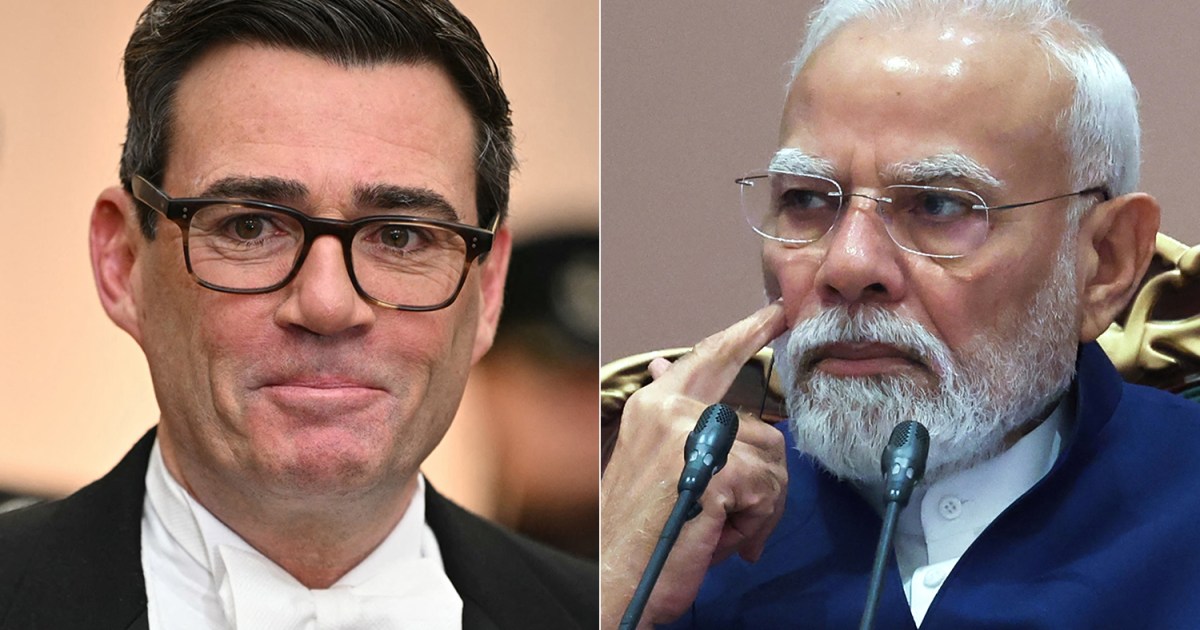
Prince William and Princess Catherine’s visit this week underscores the growing partnership between New Delhi and London, despite their colonial past. In a November 2025 lecture, Prime Minister Narendra Modi spoke of the lingering legacy of British rule that India endured for two centuries. Although India gained independence in 1947, Modi said the country still needed to “decolonise the mind,” and outlined a decade‑long plan to achieve this goal. A year after those remarks, Modi will host the British royals in New Delhi, following their visit to Mumbai where they played street cricket with Indian legend Sachin Tendulkar to open a three‑day trip to India. The royals, visiting India for the first time in a decade, will attend the Earthshot Prize ceremony, one of the world’s most prestigious environmental awards founded by William.
Modi’s conversation with the royals is expected to focus on the deep bonds, past and present, between the two nations – a reality that analysts say is more powerful than political rhetoric. The prime minister’s residence is no longer on Race Course Road; Modi renamed the street Lok Kalyan Marg (Public Welfare Street in Sanskrit). Several landmarks and towns named after British colonial‑era figures across the country have been renamed under Modi, as have the country’s British‑era criminal and penal codes. Yet beyond that symbolism, India’s relations with the United Kingdom have blossomed over the decades, even as India’s bureaucracy, legal and political systems remain rooted in institutions set up by the British.
Under Modi, New Delhi has pursued increasingly close economic ties with London, culminating in a landmark free‑trade agreement that came into force in July. “I don’t see an inherent contradiction. India has been moving away from its colonial legacy while building a relationship with Britain ever since 1947,” academic Jaideep Prabhu told Al Jazeera. “I believe that a more confident India can reclaim its historical narrative while engaging Britain as an equal. The relationship can acknowledge the past without being defined by it,” Prabhu, professor of business and enterprise at Cambridge University, added.
Strategic interests lie at the heart of the growing partnership, which seems to have taken precedence over the countries’ complicated history. Britain’s search for new trading relationships following Brexit has made India an increasingly important partner, said Kate Sullivan de Estrada, associate professor in international relations of South Asia at the University of Oxford. “As a post‑Brexit UK has honed in on global trade and investment opportunities, pursued defence and technological cooperation, and sought partners to address global challenges such as climate change and health, India has emerged as an increasing priority in almost all areas of UK foreign policy,” de Estrada told Al Jazeera. Echoing de Estrada, Gulshan Sachdeva, a professor at Jawaharlal Nehru University in New Delhi, said Britain’s post‑Brexit ambitions, including its growing focus on the Asia Pacific, have converged with India’s economic and strategic priorities. “Both are trying to transform their shared colonial legacy into a foundation for positive engagement, particularly through deeper economic integration and diaspora linkages,” he told Al Jazeera.
In July 2025, the relationship reached a notable high when Modi and former British Prime Minister Keir Starmer signed a multibillion‑dollar trade agreement, which came into force a year later. The agreement is expected to increase bilateral trade by £25.5 bn ($33 bn) annually in the long term, according to British government estimates, by reducing tariffs and removing barriers across a range of industries. Trade between the two countries had already reached nearly £48 bn ($63 bn) in 2025, reflecting the growing economic stakes for both sides. Oxford’s de Estrada said the agreement also reflected growing global trade uncertainty, particularly following US President Donald Trump’s tariff policies, which encouraged both countries to diversify their economic relationships.
Beyond trade, India and Britain have also increased cooperation in defence and security, emerging technologies and clean energy. In October 2025, London and New Delhi signed a $465 m deal to supply India’s military with UK‑manufactured lightweight multirole missiles built in Northern Ireland. That same month, India’s Ministry of External Affairs announced that New Delhi and London had agreed to establish centres for connectivity, innovation and artificial intelligence, alongside a critical minerals industry group aimed at strengthening supply chains and advancing green technologies.
Prabhu noted that the relationship between India and the UK is defined by more than “ties between governments,” pointing to longstanding cultural, sporting and historical connections, as well as Britain’s large Indian diaspora. “Britain’s large Indian diaspora is an important bridge between the two societies, while Indian parents continue to invest in a British education for their children. There is also an institutional familiarity, given the similarities in our legal, parliamentary and administrative systems,” he added. About two million people of Indian origin live in the UK today.
Despite their growing partnership, several disagreements between New Delhi and London continue to flare up from time to time. “One point of tension is diaspora politics,” Edward Anderson, associate professor at Northumbria University and senior fellow at SOAS, told Al Jazeera. “India sees its diaspora as a potential ally and asset – the huge rallies Modi has held in New York, London and elsewhere clearly illustrate that. But India simultaneously sees the diaspora as a possible threat and liability.” One of the most contentious issues involves the Khalistan movement, which seeks the creation of an independent Sikh homeland in India’s Punjab region. Britain is home to a large Sikh diaspora, including supporters of the separatist movement, whose activities have repeatedly drawn criticism from Indian officials. New Delhi views Khalistani separatism as a threat to its territorial integrity and has accused British authorities of failing to adequately address the activities of groups it considers extremist. The issue came to the forefront in March 2023 when protesters supporting the movement removed an Indian flag from the country’s diplomatic mission in London, prompting stern condemnation from New Delhi and the summoning of the UK’s deputy high commissioner in India. Two years later, in March 2025, a pro‑Khalistan protester breached a police cordon during a visit by Indian Foreign Minister Subrahmanyam Jaishankar to London and tore an Indian flag.
Other disagreements have also tested bilateral relations. India’s human rights record, including its treatment of religious minorities and policies in Indian‑administered Kashmir, has drawn criticism from some British politicians and human rights organisations. New Delhi has rejected such criticism as interference in its internal affairs. According to Cambridge’s Prabhu, these tensions between the countries often arise when “domestic political concerns meet the bilateral relationship”. “Immigration and access for Indian students and professionals are sensitive issues, as are extradition cases and India’s concerns about potential anti‑Indian activities in Britain,” he said. “Such disagreements matter and should not be dismissed. But the relationship is sufficiently broad that friction in one area need not determine what happens in others.”
Despite the tensions, analysts say the two governments have developed sufficient shared interests to manage their disagreements. Oxford’s de Estrada says both sides have demonstrated a willingness to “compartmentalise their differences in pursuit of shared economic and strategic interests”. “While disagreements over Russia, Pakistan and occasionally the activities of Sikh separatist groups in Britain remain potential sources of friction, neither country appears willing to allow these issues to shadow the broader relationship.” Similarly, Cambridge professor Prabhu warned that while a serious security incident or sustained loss of trust could damage the relationship, both governments increasingly recognise the benefits of working together. “Their expanding cooperation in trade, technology and security gives them strong reasons to manage their differences,” he said. Moreover, Prabhu said Prince William and Catherine’s visit, with its emphasis on sustainability and innovation, reflects the changing nature of the relationship. “I see Prince William’s visit in that light,” he said. “Its emphasis on sustainability and innovation symbolises a relationship that acknowledges its history but is increasingly concerned with what the two countries can build together.”
Frequently asked questions
What was the main focus of Prime Minister Narendra Modi's lecture in November 2025?
He spoke about the lingering legacy of British rule and the need to "decolonise the mind," outlining a decade‑long plan.
What significant trade agreement was signed between India and the UK in July 2025?
Modi and former British Prime Minister Keir Starmer signed a multibillion‑dollar trade agreement that came into force a year later, expected to increase bilateral trade by £25.5 bn annually.
What areas of cooperation beyond trade between India and the UK are mentioned?
Defence and security, emerging technologies, clean energy, a $465 m missile deal, and centres for connectivity, innovation, AI, and critical minerals.