World
EU Faces Criticism Over Alleged Misrepresentation of Egypt Welfare Data
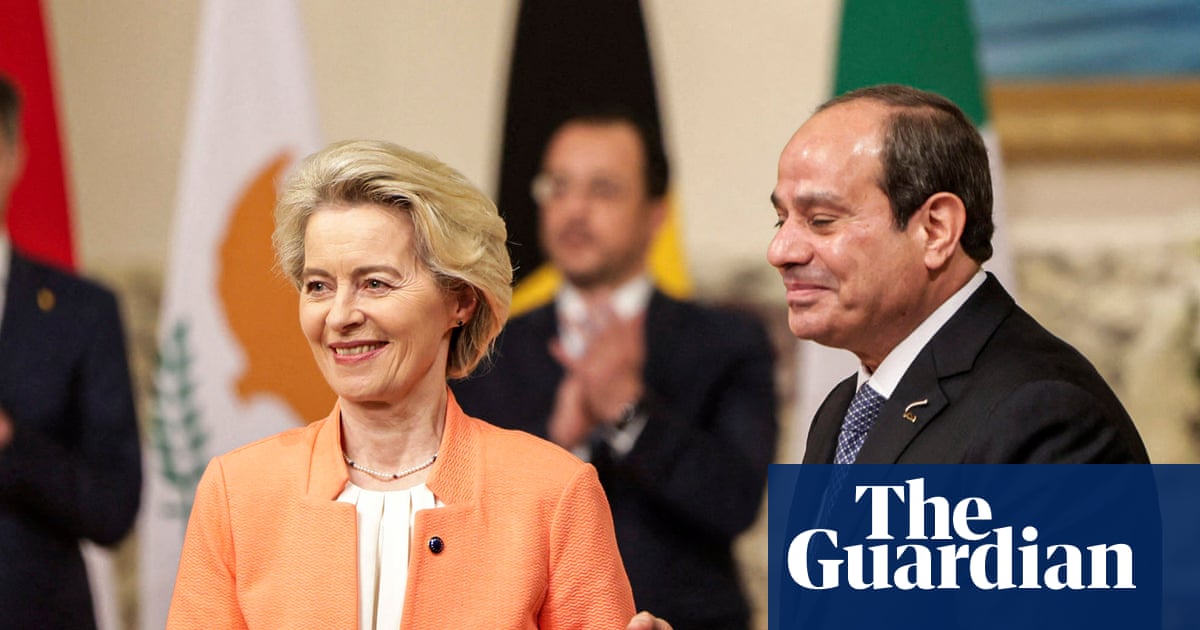
The European Commission has been accused of presenting misleading figures to justify the release of €7.4 billion in aid to Egypt under a 2024 agreement with President Abdel Fatah al‑Sisi. The pact, described as a three‑year “strategic and comprehensive partnership,” was intended to support Egypt’s fragile economy, curb migration to Europe and help the region recover from the 7 October attacks and Israel’s war on Gaza.
The controversy centers on €5 billion in EU “soft” loans—macro‑financial assistance with favourable repayment terms that are normally reserved for countries that respect human rights and democracy. The loans are tied to specific economic reforms, but the EU’s conditions on democracy and rights remain vague.
Leaked EU documents and data removed from an Egyptian government website suggest that Egypt did not meet the social‑welfare targets the Commission used to justify €2.5 billion of assistance. The Commission claimed that Egypt had "broadly fulfilled" and later "fulfilled" two separate targets to increase the number of poor households on the Takaful and Karama cash‑transfer programmes between 2024 and 2026. However, the data show a net reduction of 85,734 households, as the government removed people from its welfare programmes rather than expanding coverage.
If the programmes had expanded as the EU conditions required, an estimated 245,000 households—about 909,000 people—would have benefited. The Commission reportedly approved the loans despite the net reduction in beneficiaries.
The allegations were highlighted by the Guardian, prompting Dutch MEP Tineke Strik to ask the Commission for clarification. Strik said the Commission’s use of macro‑financial assistance appears to be a tool to secure migration cooperation while treating reporting obligations to parliament as an inconvenience.
Under the agreement, Egypt has received €3.5 billion in soft loans in three instalments, with a final payment of €1.5 billion expected before the end of 2027. The first €1 billion loan was conditioned on increasing the number of Takaful and Karama beneficiary households by 100,000 to 4.7 million. A leaked report described this requirement as "broadly fulfilled," yet the data show a net fall of 62,281 households during that period.
For the second instalment of €1.5 billion, Egypt was required to "further expand" the programmes by adding 60,000 households. A second leaked report claimed the target was "fulfilled" because 442,118 families were added, but it did not report the number removed. Egypt’s ministry of social solidarity shows a net reduction of 23,453 beneficiaries in the 11 months up to June 2026.
Critics argue that the Commission’s handling of the data undermines its conditionality on human rights and democracy. Timothy Kaldas of the Tahrir Institute for Middle East Policy said the Commission had "done a poor job of leveraging the funds of European taxpayers to support genuine stabilisation". Spanish socialist MEP Sandra Gómez López called for transparent explanations of how the commitments were met and warned that the EU should not lower its standards for human rights.
In a statement to the Guardian, the Commission said the policy target on Takaful and Karama referred to new beneficiary families "and not to its net increase" and that there was "no contradiction" with a confidential document stating Egypt was required to "further expand cash transfer programmes". The Commission added that the release of the remaining €1.5 billion would occur once all conditions—24 economic policy conditions, an IMF programme, and steps towards respecting democratic mechanisms and human rights—were met.
Egypt’s mission to the EU in Brussels did not respond to a request for comment.
Frequently asked questions
What total amount of aid was pledged to Egypt by the EU?
€7.4 billion.
What was the net change in households participating in Egypt's Takaful and Karama programmes?
A net reduction of 85,734 households.
What was the condition attached to the first €1 billion soft loan?
Increase the number of Takaful and Karama beneficiary households by 100,000 to 4.7 million.