World
Diplomatic Efforts Fail to Stem Ongoing Violence in Eastern DRC
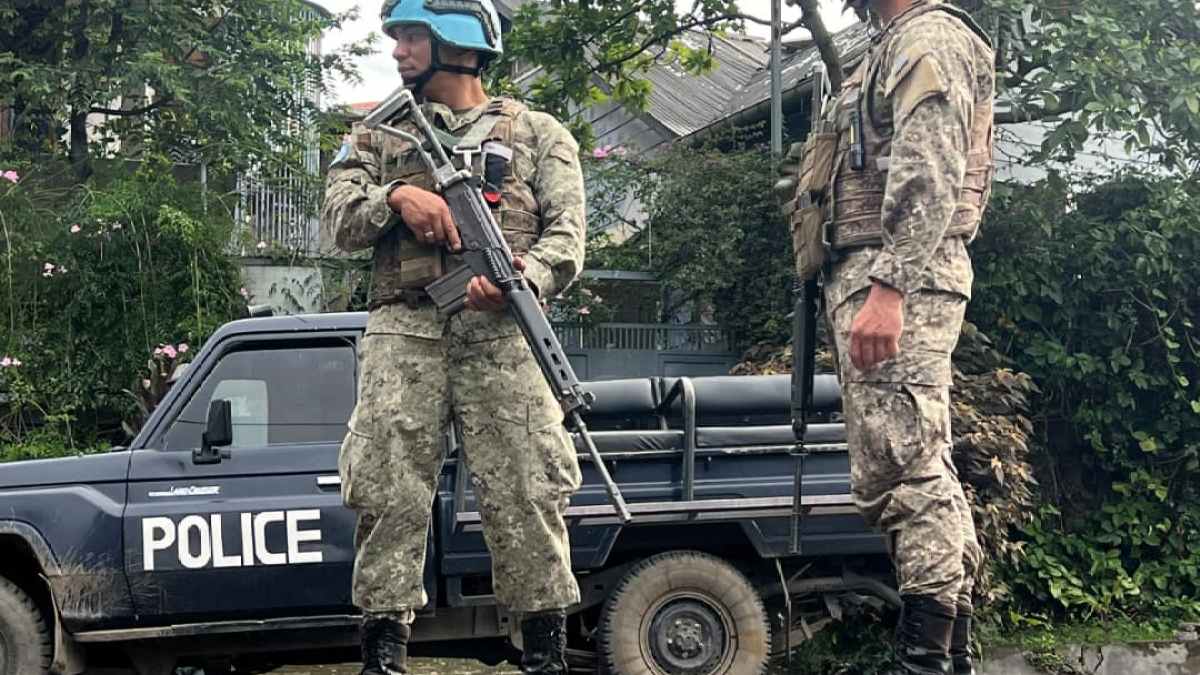
In eastern Democratic Republic of the Congo, a series of diplomatic initiatives aimed at ending long‑standing conflict have not halted the fighting that continues to affect civilians. In North and South Kivu provinces, clashes between the Congolese army and the Front for the Refoundation of the Nation (FRN)—a coalition led by former President Joseph Kabila—persist despite international attempts to secure a settlement. Residents in Bukavu, the provincial capital of South Kivu, report ongoing attacks, displacement and disruption of essential services.
The Washington Accords, signed in December 2025, address tensions between the DRC and Rwanda, while the Doha process seeks to resolve the conflict between the Congolese government and the Congo River Alliance (AFC), which includes the Rwanda‑backed M23 armed group. The Doha Framework for a Comprehensive Peace Agreement was signed by the DRC government, the AFC and M23 on 15 November 2025. In August 2026, representatives of the parties, along with Qatar, the United States, Togo, the African Union Commission and Switzerland, agreed on a roadmap to advance negotiations and establish a mechanism to review implementation.
Despite these agreements, fighting has continued. In early November, FRN fighters advanced through Kahuzi‑Biega National Park and along National Road 3, capturing several localities including Bitale and the centre of Bulambika on 8 November. The Congolese army said it had halted the advance at Bulambika and was preparing a counter‑offensive, though local and military accounts differed on the extent of the fighters’ gains.
The conflict has caused further displacement and strained communities already weakened by years of violence. Humanitarian organisations warn that the fighting makes it harder to maintain essential services. Doctors Without Borders (MSF) reduced its staff presence in the Bunyakiri health zone, relocating personnel to Bitale and Bukavu as security deteriorated. MSF urged all parties to respect and protect healthcare facilities, civilian populations and humanitarian staff in accordance with international humanitarian law.
The Congolese armed forces (FARDC) blame recent attacks in North and South Kivu on the Rwandan army and fighters allied with the FRN. Rwanda denies supporting armed groups in eastern DRC, citing the presence of the FDLR as a security threat. The dispute remains central to tensions between the two countries. In February 2025, the UN Security Council condemned M23’s offensive and described direct support and participation by the Rwanda Defence Force, calling on Rwanda to end its support and withdraw its forces from Congolese territory. The resolution also condemned support provided by Congolese forces to armed groups, particularly the FDLR, and called for the group’s neutralisation.
The African Union (AU) has acknowledged the gap between diplomatic commitments and conditions on the ground. A communique issued after a Peace and Security Council meeting on 26 October stated that implementation of commitments under the Washington and Doha processes remained limited, calling for better coordination between the initiatives and urging inclusive, nationally owned dialogue. The AU emphasised that a lasting settlement requires political dialogue involving wider sections of Congolese society, including women, young people and civil society organisations.
Civilian voices demand a broader political process that addresses the grievances sustaining the conflict. Dieumerci Mungu Akonkwa, North Kivu coordinator for Action for Democracy and Development in the Congo, said negotiations had yet to produce tangible improvements for civilians, noting ongoing displacement, rape and the loss of lives. He called for an inclusive national dialogue, citing proposals from Catholic and Protestant church leaders.
For residents, the immediate measure of progress is simple: whether the fighting stops, essential services remain available and families can return home. Blaise Chasumba of Bukavu said people are also waiting for those responsible for the destruction to address their losses and provide compensation. He warned that at the current rate, the conflict could become a long‑running saga with many twists and turns.
Frequently asked questions
What are the Washington Accords?
Signed in December 2025, they address tensions between the DRC and Rwanda.
Who leads the FRN coalition?
Former President Joseph Kabila.
What did the UN Security Council do in February 2025?
It condemned M23’s offensive, called on Rwanda to end its support and withdraw forces, and condemned support by Congolese forces to armed groups.