World
Russian Satellite Intelligence Enhances Iran’s Preparedness for Potential U.S. Attacks
By Nawaf Obaid
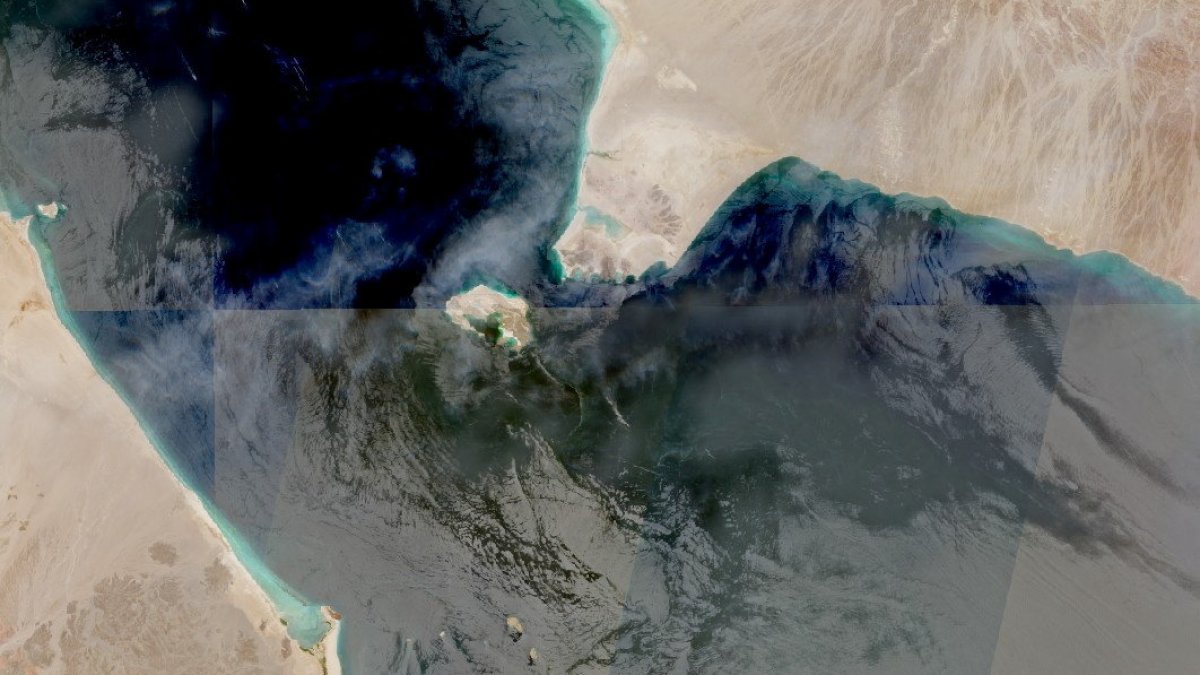
Russian space intelligence sharing is helping Tehran prepare for a possible U.S. assault. Recent reports suggest a cautious optimism about a de‑escalation in the U.S.–Israel war, with Qatari and Pakistani mediators working to broker a deal after a large military build‑up in the region raised fears of renewed kinetic conflict.
U.S. President Donald Trump has paused new attacks, partly because Iran can anticipate an assault and retaliate precisely. This capability is likely enabled by Russian military‑grade geospatial and signals intelligence.
For eight months, Project AURORAH has tracked Russian spy satellites, identifying at least 20 spacecraft in the Kosmos‑2600 series, 18 of which are trackable. These satellites are Russia’s newest and most manoeuvrable reconnaissance platforms, capable of cartographic reconnaissance, optical imagery, radar observation, and signals intelligence collection, including radar and other radio frequency emissions and military communications.
The satellites cover an area extending from Syria, Lebanon and Israel to Jordan, Saudi Arabia, the wider Arabian Peninsula, Iraq and Iran, including Bab al‑Mandeb and the Strait of Hormuz. They orbit Earth every 95 minutes, providing three to four relevant regional passes daily depending on viewing geometry.
Observations show that selected manoeuvrable satellites were repositioned to pass directly or almost directly over military and infrastructure targets in the region. The entire constellation was not moved, only specific spacecraft, improving timing and coverage over relevant targets. These satellites could be seen passing over targets before and after strikes, presumably to assess damage. The same pattern occurred repeatedly before and after Iranian attacks.
Given Iran’s precision strikes on U.S. and Gulf military and civilian targets, the author concludes that Russia provided the Iranian army with the geospatial intelligence needed for those attacks. The U.S. problem is that such intelligence can be used not only for target selection but also for monitoring a military build‑up. As U.S. aircraft are repositioned, naval forces redistributed and military infrastructure reinforced in the region, Russian satellites can provide a clear picture of these movements and the intensity of military communications.
Some spy satellites may also listen to military communications, though they are unlikely to intercept every message. The intelligence collected can be passed to Iranian intelligence to help Iranian leaders protect their forces, keep their command system operating and prepare their response before fighting begins. Thus, Iranian access to Russian satellite data complicates U.S. efforts to combine offensive readiness with protection against retaliation.
One solution is to move formations farther from Iranian weapons to reduce immediate exposure, but also to alter the distribution of combat power Tehran observes. Russian assistance would also give Iran early warning capabilities for attacks originating outside the region. During Operation Midnight Hammer in June 2025, B‑2 Spirit bombers flew from continental U.S. to strike Iranian nuclear facilities. Tehran knows that another such assault on deeply buried facilities could occur and can use Russian satellite capabilities to monitor for early signs.
Apart from preparedness to receive an attack, access to Russian satellite intelligence is likely playing a central role in preparations for retaliation in the region. Iranian leaders have warned that the danger extends to refineries, export terminals, desalination plants and power stations. If Trump reverses his decision and attacks, Iran will not only be ready for U.S. actions but will also be able to inflict a devastating blow to the region, disrupting civilian water and electricity supplies and affecting international energy markets.
Saudi Arabia’s position as the world’s largest crude‑oil exporter gives its export infrastructure particular global significance. Neighboring Gulf countries would face these consequences regardless of their influence over the decision to resume war.
By providing Iran with such space intelligence capabilities, Russia retains significant leverage. Moscow can strengthen or restrain Tehran by controlling intelligence access without entering the conflict directly. Russia’s willingness to share satellite data will inevitably impact future U.S. operations. The U.S. Army must now assume that major force movements, military build‑ups and electronic activity can be observed and rapidly relayed to an adversary, reducing operational surprise and requiring greater dispersion, emission control and rapid relocation.
The consequences also extend beyond this war. Last month, a Russian Kosmos‑series satellite approached a Finnish commercial satellite, possibly rehearsing an attack. This incident indicates that conflict on the ground can expand into space, potentially disrupting civilian and military satellite infrastructure. In present and future wars, escalation into space may become a reality.
The views expressed in this article are the author’s own and do not necessarily reflect Al Jazeera’s editorial stance.
Frequently asked questions
Which Russian satellite series is providing intelligence to Iran?
The Kosmos-2600 series, with at least 20 spacecraft identified, 18 of which are trackable.
How frequently do these satellites pass over the Middle East region?
They orbit Earth every 95 minutes, giving three to four relevant regional passes daily depending on viewing geometry.
What types of intelligence can these satellites collect?
They can perform cartographic reconnaissance, optical imagery, radar observation, and signals intelligence, including radar, radio frequency emissions, and military communications.