Technology
AI Must Speed Up Drug Development or the Revolution Fails, Mukherjee Says
By HT News Desk
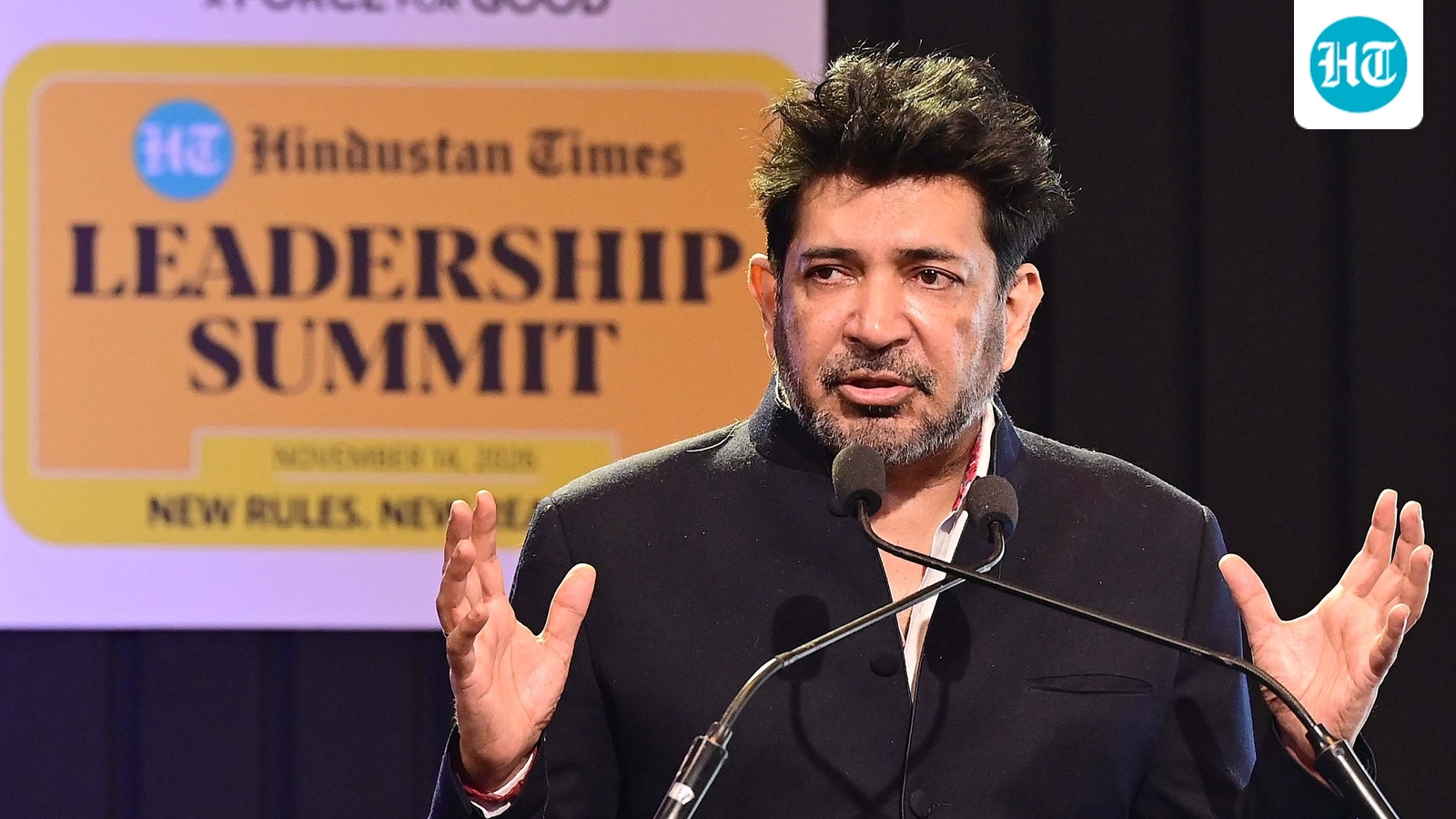
On Saturday at the Hindustan Times Leadership Summit, oncologist and author Siddhartha Mukherjee warned that artificial intelligence (AI) will be judged by its ability to make medicines faster, cheaper and better. He said that if AI does not achieve these goals, the AI revolution has failed. Mukherjee, co‑founder and chief executive of the drug‑discovery company Manas AI, noted widespread concern about AI’s rapid rise and argued that its potential to transform medicine is the key feature that could allay those concerns. He added that if AI fails to improve drug development, doubts about its value would return.
Mukherjee highlighted that medicine has been moving in the wrong direction: the number of approved drugs has been decreasing while the cost of each drug has been increasing, a trend known as Eroom’s Law, the reverse of Moore’s Law. He said that if AI can reverse this trend, it would mean truly mastering the ability to bring medicines to large numbers of people.
He said India could play a leading role in this change, noting that with appropriate regulatory and technological reform, India could reverse the trend. “We have a historic opportunity in this country,” he said.
Mukherjee explained that every drug binds to a protein in the body like a key fits a lock. He said that trying every possible key is impossible, as there are 10^24 small‑molecule drugs. Modern drug design instead identifies the target protein, finds its “keyhole,” and builds a chemical to fit it. Manas AI uses a combination of AI, a neural system, and what they call medicinal intelligence—rules of physics and chemistry—to do this.
For example, for daraxonrasib, a pancreatic cancer drug, a human researcher took about 10 years to find the keyhole, while Manas AI’s algorithm found it in two hours. Mukherjee said that Manas sends 50 to 100 proposed compounds every three weeks to Chinese chemical companies, which test them and return data in about three weeks. The model learns from each batch before the next is made until it reaches a medicine. He called this the design‑make‑test cycle, one of the fastest they have achieved.
Mukherjee also cited Immuneel, a cell‑therapy company he launched in Bengaluru three years ago in collaboration with Kiran Mazumdar‑Shaw. In cell therapy, doctors extract a patient’s T cells, “weaponise” them in a laboratory to kill cancer, grow them for 10 to 12 days and infuse them back. The treatment, used against leukaemia and lymphoma and now being extended to myeloma, is potentially curative and was not available anywhere in India before.
The article was published by the HT News Desk of the Hindustan Times.
Frequently asked questions
What is Eroom's Law?
Eroom's Law describes the trend that the number of approved drugs has been decreasing while the cost of each drug has been increasing, the reverse of Moore's Law.
How does Manas AI’s design‑make‑test cycle work?
Manas AI sends 50 to 100 proposed compounds every three weeks to Chinese chemical companies, which test them and return data in about three weeks. The model learns from each batch before the next is made until it reaches a medicine.
Who is Siddhartha Mukherjee?
Siddhartha Mukherjee is an oncologist, author, and co‑founder and chief executive of the drug‑discovery company Manas AI.