Technology
IIT Bombay Converts Garden Waste into Fuel Pellets, Cutting LPG Use by 60%
By Swati Gandhi
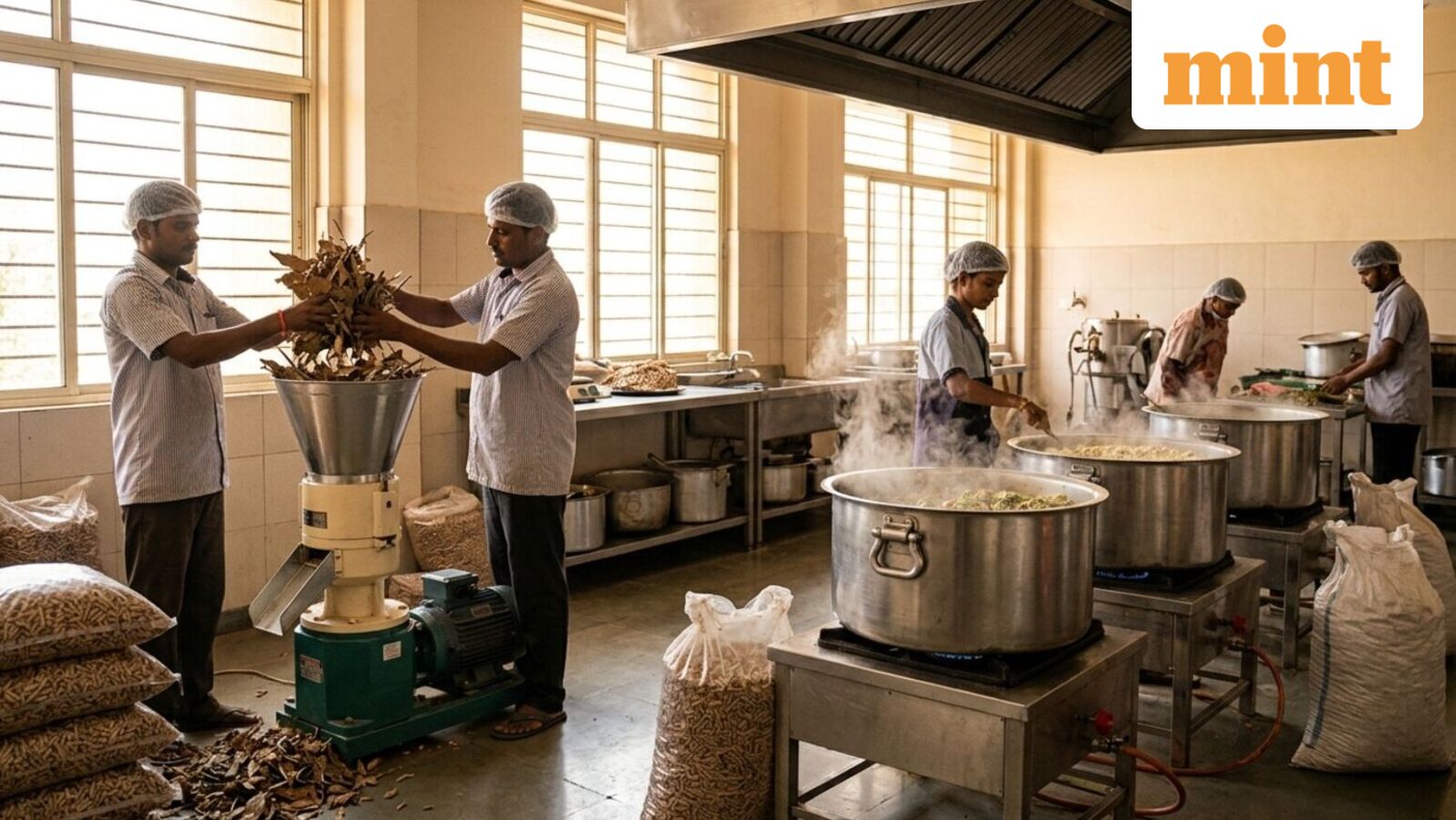
At the Indian Institute of Technology Bombay, fallen leaves and other garden waste are being turned into cooking fuel. The institute, which previously spent about ₹50 lakh a year on transporting and disposing of garden waste, now converts the material into biomass pellets that are used to prepare meals for roughly 1,200 students. The project has reduced liquefied petroleum gas (LPG) consumption by 60% in one hostel kitchen.
IIT Bombay generates about two tonnes of garden waste each day. The waste is collected, processed, and compressed into pellets with a calorific value of 16–18 MJ/Nm³, making them a more environmentally friendly alternative to LPG and other fossil fuels. The pellets are used in a downdraft gasifier that converts the biomass into producer gas—containing carbon monoxide, hydrogen, and methane—which is then fed to a premix burner to generate steam for cooking.
The initiative, titled “Gasifier‑based cook‑stoves to manage garden waste,” was started by professors Sandeep Kumar and Sanjay Mahajani. Professor Mahajani first explored biomass gasification in 2014, and after overcoming challenges such as clinker formation and smoke leakage, a patented gasifier was developed in 2016 that reduced clinker formation by about 100 times. In 2017, Kumar joined the effort to improve the burner system. The project received funding from the Tata Centre for Technology and Design.
The gasifier was installed in the staff canteen on 26 February 2025. A systematic study conducted in the following months, as reported in the 2024–25 annual report of the Research Hub for Green Energy and Sustainability (GESH IITB), recorded a daily reduction of 10 kg of LPG consumption.
The campus‑wide biomass pellet production plant can process up to two tonnes of material in a single shift each day, and the technology has undergone multiple stages of development, including assessments of environmental performance, fire safety, and operational reliability.