Politics
Schumer and Jeffries Likely to Retain Congressional Leadership Amid Party Divisions
By Evan Semones
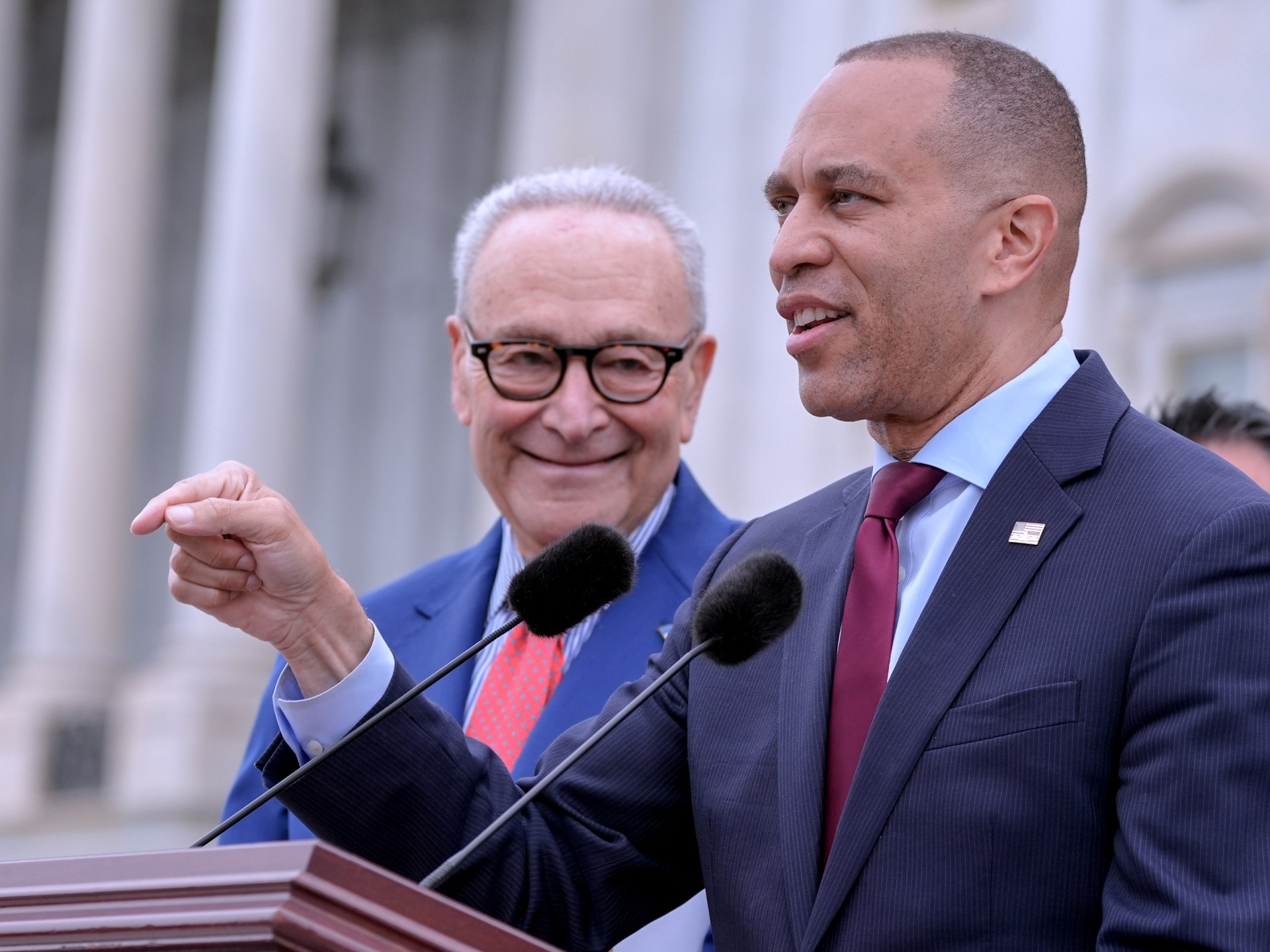
After Democrats secured a historic majority in the U.S. Congress, internal party tensions have surfaced over leadership continuity. Senate Minority Leader Chuck Schumer, 75, and House Minority Leader Hakeem Jeffries, 56, are expected to keep their posts as the party prepares to take control of both chambers in January. Schumer, who previously led the Senate majority during President Biden’s term, is seeking to become the Senate majority leader. Jeffries, the current House minority leader, is aiming for the speakership, which would make him second in the presidential line of succession.
Schumer’s supporters cite the party’s electoral gains as a key reason for his continued leadership. He helped Democrats win at least eight Republican‑held Senate seats, including in traditionally conservative states, and is credited with recruiting candidates such as former Ohio Senator Sherrod Brown and former North Carolina Governor Roy Cooper. Senator Ruben Gallego praised Schumer’s role in the election cycle, and Senator Kirsten Gillibrand highlighted his strategic leadership in the Senate campaign. Schumer himself expressed confidence that he has sufficient support, stating in an interview with The Washington Sun that he is “united” with his colleagues.
However, some Democrats question whether Schumer should remain in charge. Senator Chris Van Hollen announced a challenge for the Senate leadership, citing progressive calls for new leadership. Other senators, including independent Bernie Sanders, Elissa Slotkin, Raphael Warnock, and others, have expressed reservations or have not committed to supporting Schumer. An analysis by Al Jazeera noted that 12 Democratic senators publicly backed Schumer, while at least 10, including Sanders, said they would not. Only half of those opposed to Schumer have backed Van Hollen’s challenge.
Jeffries faces a different dynamic. He is the only candidate for the House speakership, with no prominent challenger. The New Democrat Coalition, a group of 142 centrist Democrats, endorsed his bid, describing him as “smart, strategic, and action‑oriented.” Some progressives, such as Representative Pramila Jayapal, have withheld support unless Jeffries commits to Medicare for All. Representative Alexandria Ocasio‑Cortez noted the absence of a challenger as a factor in the debate.
The leadership votes are scheduled for November 18 and 19 for House Democrats and an unannounced date in December for Senate Democrats. Both Schumer and Jeffries will face demands from progressives for more aggressive action against former President Trump and from moderates who prioritize a centrist approach. Even with control of both chambers, Democrats will need Republican support to overcome a filibuster in the Senate.
Schumer posted on X that he welcomes discussion about the caucus’s future and is proud of the party’s gains, noting that he has the votes to continue serving as Democratic Leader.
Frequently asked questions
Who are the current Senate and House minority leaders?
Senate Minority Leader Chuck Schumer and House Minority Leader Hakeem Jeffries.
Who challenged Chuck Schumer for Senate leadership?
Senator Chris Van Hollen announced a challenge for Senate leadership.
Who endorsed Hakeem Jeffries for House speakership?
The New Democrat Coalition, a group of 142 centrist Democrats, endorsed Jeffries.