Business & Finance
ICICI Prudential CIO Highlights Asset Allocation as Key to Navigating Market Volatility
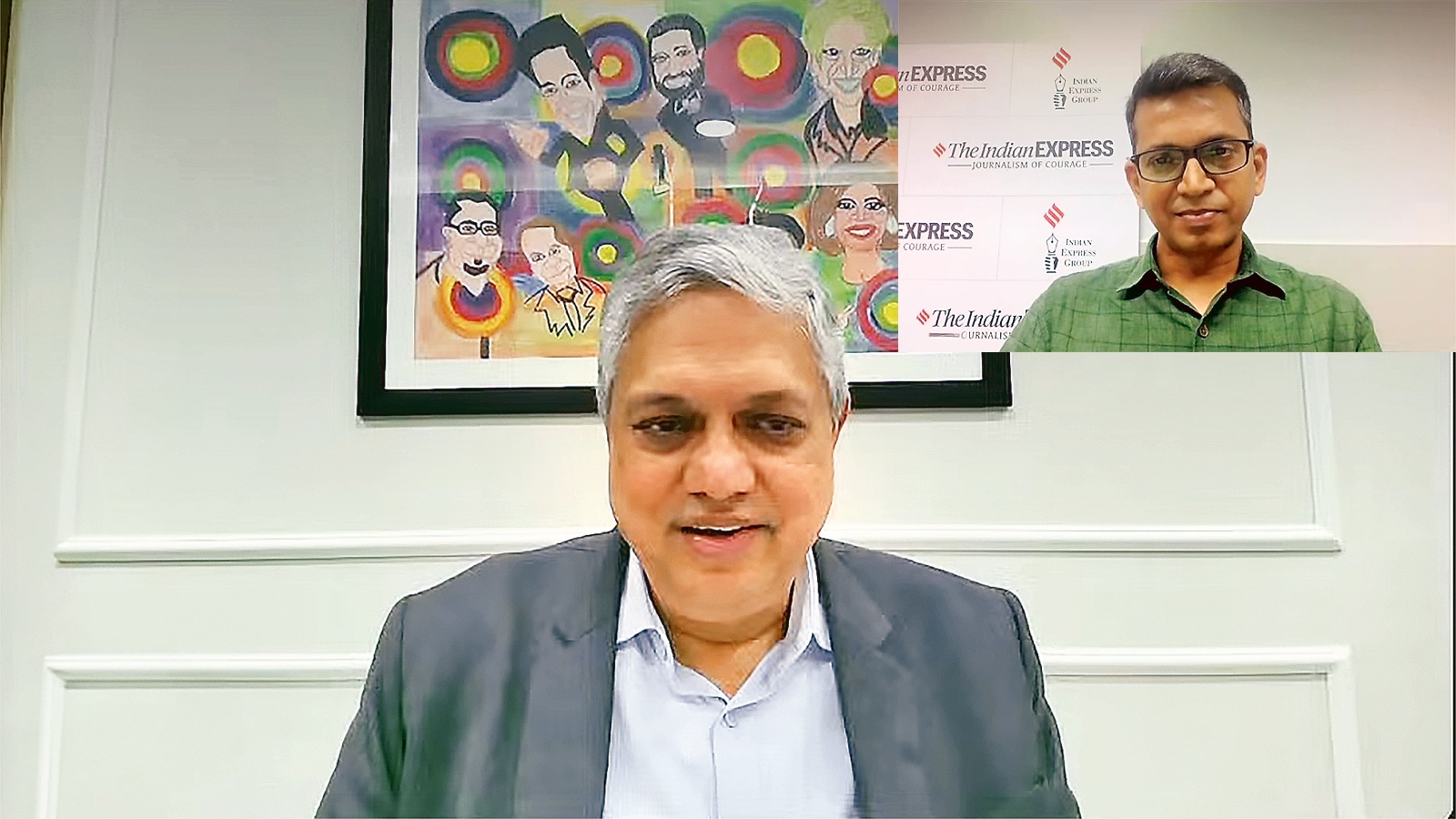
Sankaran Naren, Executive Director and Chief Investment Officer of ICICI Prudential Asset Management Company, explained on October 27 to The Indian Express that the Sensex had hovered around 73,000 for three years before its recent rise. He identified several factors that had kept the markets subdued: overvaluation three years ago, geopolitical tensions such as the war in Ukraine and the Gulf, record‑high crude oil prices, and strong growth in AI‑driven economies in the US, South Korea, Taiwan and Japan that drew investors away from India.
Naren noted that after March 2023, when money flowed into equity mutual funds, three groups of investors began selling: Indian promoters launching IPOs in an overvalued market, private‑equity firms that had invested pre‑2023 and were selling to Indian investors at attractive prices, and multinationals that had set up businesses in India and were now listing there for higher valuations. He said most of the capital collected ended up in these pockets, limiting market returns.
He expressed concern about the long‑term impact of artificial intelligence on India, acknowledging that while AI could be a structural trend, its effects remain uncertain. He also discussed the potential for India to become a $20‑trillion economy, noting that services remain a strong competitive advantage while manufacturing faces tougher competition from countries like Vietnam and Thailand.
Regarding sectoral opportunities if the US‑Iran conflict ends, Naren pointed to banking, oil marketing companies, and aviation as likely beneficiaries, while also noting that continued rate hikes could persist if oil prices remain high.
On domestic conditions, he highlighted controlled current‑account and fiscal deficits, robust credit growth, and a booming automotive and power‑demand sector, but warned of challenges such as a weak monsoon and potential El Niño effects. He mentioned the RBI’s FCNR scheme, which raised $127 billion in deposits to address foreign‑exchange needs.
Naren stressed the importance of asset allocation amid uncertainty, arguing that a diversified approach helps investors view volatility as an opportunity rather than a threat. He suggested a simple three‑category framework for investors: balanced advantage, balanced hybrid, and flexi‑cap funds. Balanced advantage funds adjust equity and debt exposure based on market conditions; balanced hybrids maintain 40‑60% equity and 40‑60% debt; and flexi‑cap funds invest across large, mid, small, and micro caps, offering the most unconstrained exposure. He also mentioned a multi‑asset category for those seeking gold exposure.
"If people start practising asset allocation, they will view volatility as an opportunity and not worry so much," Naren said, underscoring the value of a disciplined, diversified investment strategy in navigating current market challenges.