Business & Finance
Oil Prices Drop Amid Uncertainty Over US‑Iran Conflict and New Democratic Majority
By Reuters
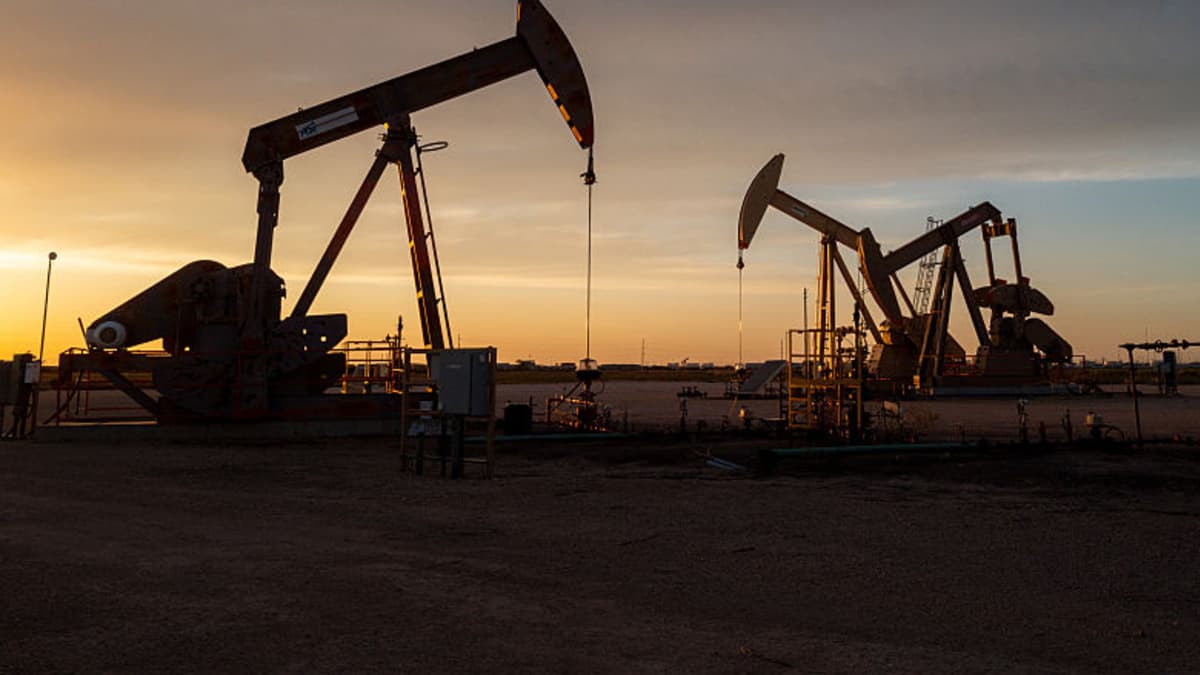
Oil prices fell on Wednesday as traders awaited Washington’s next move in the US‑Israeli‑Iran conflict, following Democrats’ takeover of Congress in the midterm elections. Brent futures slipped 2.5% to $101.02 a barrel, while US West Texas Intermediate crude fell 2.6% to $93.61. In the prior session, Brent had settled at its lowest level in nearly four weeks as market participants weighed talks to end the wars in Ukraine and Iran.
President Donald Trump acknowledged that the US‑Israeli war on Iran contributed to his party’s sweeping defeat, as Democrats gained control of the House of Representatives and the Senate. Priyanka Sachdeva, head of market insights at Phillip Nova, said, “President Trump’s conflicting signals, with military strikes continuing alongside statements downplaying further escalation, have made it difficult for traders to build strong directional conviction.” She added that profit‑taking and a reduction in speculative long positions were justified after the sharp rally in October.
The US carried out “defensive” strikes on Iran’s Qeshm Island targeting surface‑to‑air missiles used against US assets, a US official said on Tuesday. Markets remained on watch for any progress in talks to end the US‑Israeli war with Iran, as Qatar stepped up mediation efforts to avert an escalation of attacks after the US elections. A senior Iranian official told Reuters that Iran and the United States remain far from a deal to end their war. Trump told the Financial Times that the United States had no immediate plans to strike Iran.
Flows of crude, condensate and refined products, excluding LPG, averaged 17.1 million barrels per day in October, according to ship‑tracking data from Vortexa, down from 18.9 million bpd in September but still about three‑quarters of pre‑war levels. Saxo Bank analyst Ole Hansen said the continued recovery in crude shipments from the Middle East has begun to weigh on physical cargo prices, potentially helping to accelerate the normalisation of refining margins and, ultimately, lower fuel prices. Hansen noted that for consumers to feel the full benefit, refined product exports from Middle Eastern refineries must also recover, and that the rebound in flows remains notably subdued.
In the US, crude stocks fell by 5.27 million barrels in the week ended October 30, according to data from the American Petroleum Institute. Eight analysts polled by Reuters had expected, on average, a rise of about 880,000 barrels in crude inventories. Official data from the US Energy Information Administration is due at 10:30 a.m. EST (1530 GMT) on Wednesday.
Frequently asked questions
What were the recent changes in Brent and WTI crude prices?
Brent futures slipped 2.5% to $101.02 a barrel, while US West Texas Intermediate crude fell 2.6% to $93.61.
How did the US‑Iran conflict affect oil markets?
Traders awaited Washington’s next move in the US‑Israeli‑Iran conflict, and the conflict’s uncertainty contributed to the price drop.
What were the US crude inventory changes in the week ended Oct 30?
US crude stocks fell by 5.27 million barrels, contrary to analysts’ expectation of a rise of about 880,000 barrels.