Space
Voyager 1 Nears One‑Light‑Day Mark Amid Power‑Saving Upgrade and Recent Communication Gap
By Today News Hours Editorial Desk
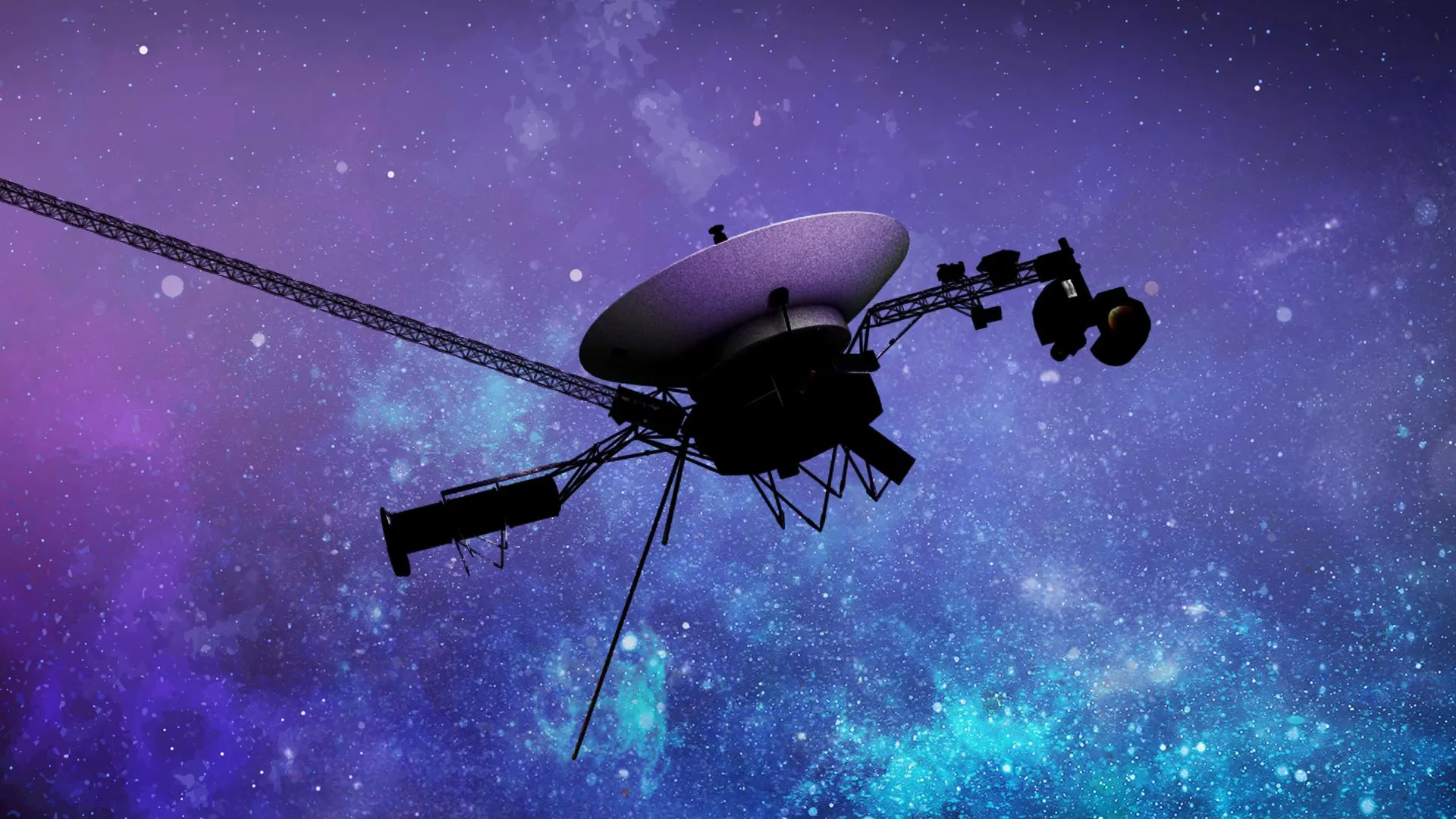
Nearly 50 years after launch, NASA’s Voyager 1 is approaching a historic milestone: it will be one light‑day from Earth on November 18, 2026, meaning a round‑trip communication will take 48 hours. The probe is still operational, but its power supply is dwindling as its radioisotope thermoelectric generators lose about 4 watts per year. To extend the mission, engineers completed a complex energy‑conservation project in early September, nicknamed the “Big Bang.” The team replaced three high‑power devices with lower‑power alternatives, a coordinated effort that required simultaneous swaps and took months of preparation. The upgrade is expected to keep Voyager’s remaining scientific instruments running longer than previously anticipated.
Voyager 1 has already deactivated two of its original ten scientific instruments after the outer‑planet encounters. The remaining instruments study the outer heliosphere and, after crossing the heliopause, the interstellar medium. Preserving these instruments is critical because no other mission currently samples that region.
On October 18 and 19, the Deep Space Network failed to receive Voyager’s signal during two scheduled contacts, when the probe was about 16 billion miles (24 billion km) from Earth. The signal returned on October 20, roughly 48 hours after the interruption. Engineers found that one set of thrusters had ceased operating and the spacecraft automatically engaged backup thrusters as part of its fault‑protection system. The cause of the interruption remains unknown.
Voyager 1 is traveling through interstellar space at about 38,000 mph (61,155 kph). When it reaches 16.09 billion miles (25.89 billion km) from Earth on November 18, it will be the first human‑made object to reach a one‑light‑day distance. The milestone will not alter the spacecraft’s trajectory or environment; it simply underscores the vast distances involved in deep‑space communication.
The mission continues to demonstrate the endurance of a spacecraft launched in 1977, even as power, aging equipment, and unexpected technical issues challenge its longevity.
Frequently asked questions
When will Voyager 1 be one light‑day from Earth?
Voyager 1 will be one light‑day from Earth on November 18 2026.
What was the "Big Bang" upgrade?
The "Big Bang" was a complex energy‑conservation project completed in early September that replaced three high‑power devices with lower‑power alternatives to extend the mission.
What caused the communication gap on October 18‑19?
One set of thrusters ceased operating, causing the spacecraft to automatically engage backup thrusters; the exact cause remains unknown.