Space
SpaceX Dragon Completes 35th ISS Resupply Mission with Pacific Splashdown
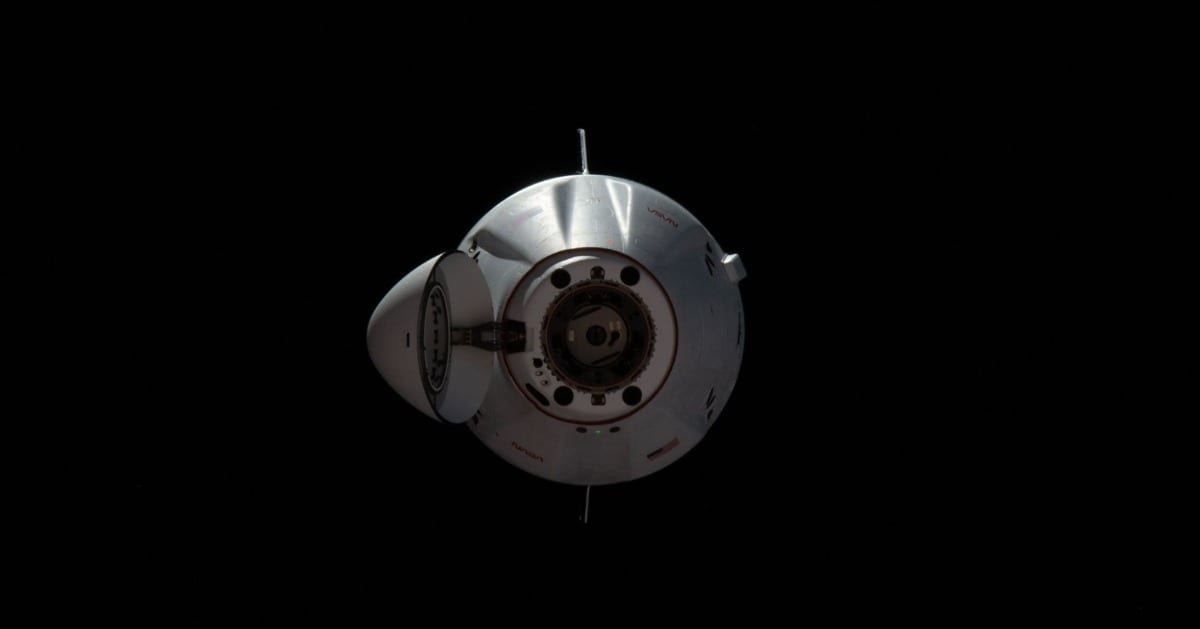
A SpaceX cargo Dragon spacecraft splashed down in the Pacific Ocean on November 21, ending its 35th commercial resupply mission to the International Space Station (ISS). The Dragon undocked from the station at 12:05 pm ET on November 20 and landed 29 hours later at 5:03 pm ET. The spacecraft carried more than 6,300 pounds of scientific experiments, supplies, and the final pair of International Space Station Roll‑Out Solar Arrays (iROSA). The new arrays increased the station’s power generation capacity by about 30 %, from 160 kW to roughly 215 kW.
NASA reported that Dragon returned with several experiments and research samples, including a 3‑D‑bioprinted blood vessel construct used to study vascular aging and cardiovascular disease, frozen tumor organoids treated aboard the station, frozen microbial samples to study antibiotic‑resistant bacteria in space, and a lighting system tested to support astronauts’ sleep and overall health during long‑duration missions.
The Dragon launched on October 13, docked with the Harmony module two days later, and completed its mission with the Pacific splashdown. Support personnel will retrieve the cargo‑packed spacecraft for analysis.
The next cargo resupply mission is scheduled to launch from Cape Canaveral Space Force Station on November 29 aboard a SpaceX Falcon 9 carrying Northrop Grumman’s Cygnus XL spacecraft. The mission, known as Northrop Grumman Commercial Resupply Services 25 (CRS‑25), will arrive at the ISS on December 1, where astronauts Jessica Watkins and Luke Delaney will use Canadarm2 to capture the Cygnus XL and install it at the Unity module’s Earth‑facing port for cargo unloading. The Cygnus will carry experiments to improve drug delivery for cancer and osteoarthritis, predict cancer spread, advance treatments for muscle loss, improve radiation sensing, and advance food production. It will remain docked until May 2027, then depart with discarded cargo and burn up during re‑entry.
Frequently asked questions
How much cargo did the Dragon carry on its 35th mission?
More than 6,300 pounds of scientific experiments, supplies, and the final pair of ISS Roll‑Out Solar Arrays (iROSA).
What increase in power generation did the new iROSA provide to the ISS?
The new arrays increased the station’s power generation capacity by about 30 %, from 160 kW to roughly 215 kW.
When and where is the next ISS resupply mission scheduled to launch?
The next cargo resupply mission, Northrop Grumman Commercial Resupply Services 25 (CRS‑25), is scheduled to launch on November 29 from Cape Canaveral Space Force Station aboard a SpaceX Falcon 9 carrying Northrop Grumman’s Cygnus XL spacecraft.