World
Trump Meets National Security Team to Decide on Possible Iran Strikes
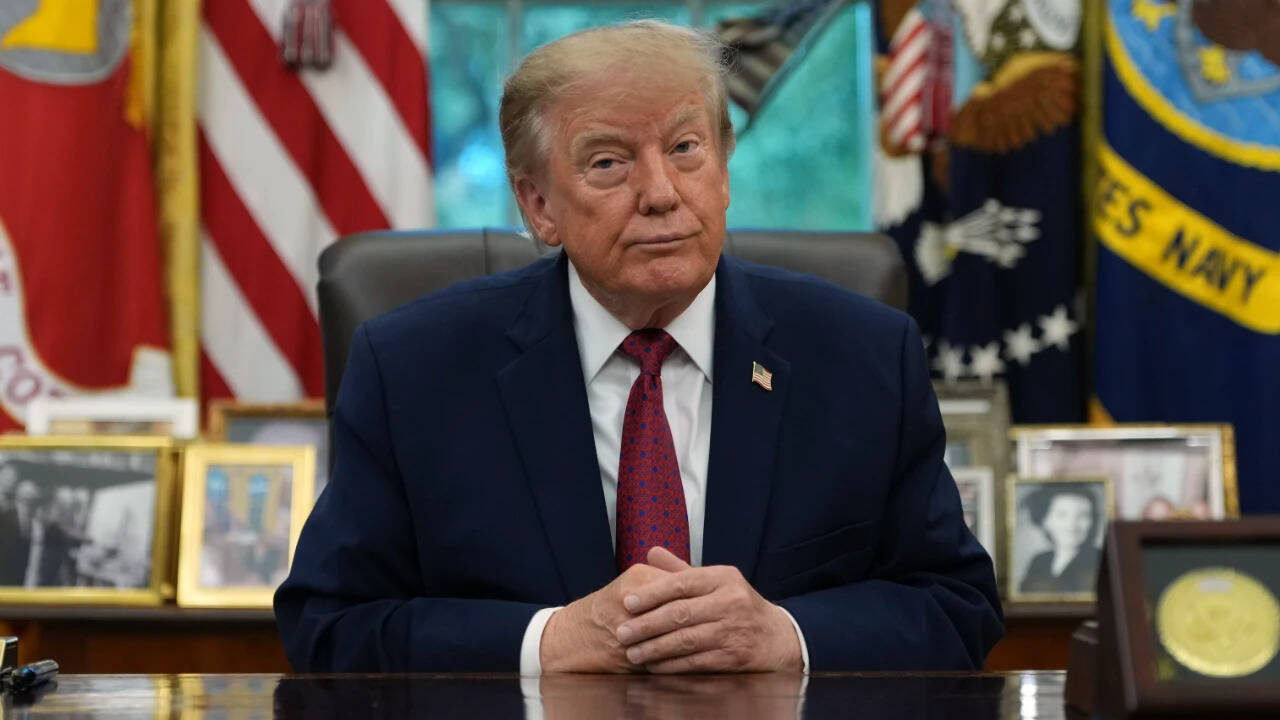
President Donald Trump convened his national security advisers at the White House on Wednesday and Thursday to discuss whether Washington will resume military operations against Iran. The meetings were the first between Trump and his top advisers on the issue since the November 3 midterm elections. In the Oval Office, Trump said the administration would soon decide whether to increase strikes to neutralise Iran’s nuclear programme. He added that he would prefer not to destroy the rest of the country if possible, but that a decision would be made shortly.
Trump’s options include launching fresh strikes, continuing economic pressure or reaching an agreement that requires significant concessions. The U.S. Central Command is finalising preparations for a potential resumption of major combat operations in Iran, although it has not yet received a new directive from Washington. A new moon on November 9, which would bring little to no moonlight, is described by officials as favourable for military operations. A third U.S. Navy aircraft carrier strike group could also signal preparations for renewed strikes, though the USS Theodore Roosevelt is scheduled for a port call in Singapore and is not expected to reach CENTCOM’s area of responsibility before mid‑November.
Trump also spoke by telephone with Iraqi Prime Minister Ali Faleh Al‑Zaidi, who urged that Iraqi territory not be used as a launchpad for strikes against neighbouring countries. The Iraqi Prime Minister’s Office confirmed that Iraq calls for respect of state sovereignty and non‑use of its territory for aggression.
While Washington weighed its next move, Iranian Foreign Minister Abbas Araghchi held telephone conversations with regional counterparts and mediators from Qatar, Saudi Arabia, Turkey, the United Arab Emirates, Oman and Egypt. Qatari mediators continued discussions with Tehran and the White House over a draft proposal that envisages a series of steps over two days to build confidence ahead of a broader agreement. Under the proposal, the U.S. would lift its naval blockade of Iran and release some of the country’s frozen funds on the first day. In return, Iran would formally invite the International Atomic Energy Agency to send inspectors to nuclear sites that were bombed, based on an agreement reached in Cairo a year ago. On the second day, the Strait of Hormuz would reopen, after which nuclear negotiations would resume, focusing on Iran’s stockpile of highly enriched uranium.
Iran’s Supreme National Security Council secretary Mohsen Rezaei reiterated Tehran’s position that negotiations would not resume until its seven conditions were met. Rezaei met Russian President Vladimir Putin at the Kremlin on Thursday and delivered a message from Iran’s Supreme Leader Mojtaba Khamenei. Rezaei said that until the Americans fulfil the seven conditions, the Strait of Hormuz will not be opened nor will there be any negotiations. He also reported that Putin condemned U.S. and Israeli military strikes against Iran, including attacks on its nuclear facilities, and expressed Moscow’s readiness to help end the war. The two sides also discussed energy cooperation, including the construction of gas pipelines connecting Russia and Iran.
Frequently asked questions
What options did President Trump discuss for addressing Iran's nuclear program?
He said the administration would soon decide whether to increase strikes to neutralise Iran’s nuclear programme, and he mentioned options such as launching fresh strikes, continuing economic pressure, or reaching an agreement that requires significant concessions.
What preparations has the U.S. Central Command made for potential operations in Iran?
The U.S. Central Command is finalising preparations for a potential resumption of major combat operations in Iran, although it has not yet received a new directive from Washington.
What are the key steps in the draft proposal discussed by Qatari mediators with Iran and the U.S.?
The proposal envisions two days: on the first day the U.S. would lift its naval blockade of Iran and release some frozen funds, and in return Iran would invite the IAEA to send inspectors to bombed nuclear sites; on the second day the Strait of Hormuz would reopen and nuclear negotiations would resume focusing on Iran’s stockpile of highly enriched uranium.