India
Women of Hupari Drive Silver Trade Amid Economic Challenges
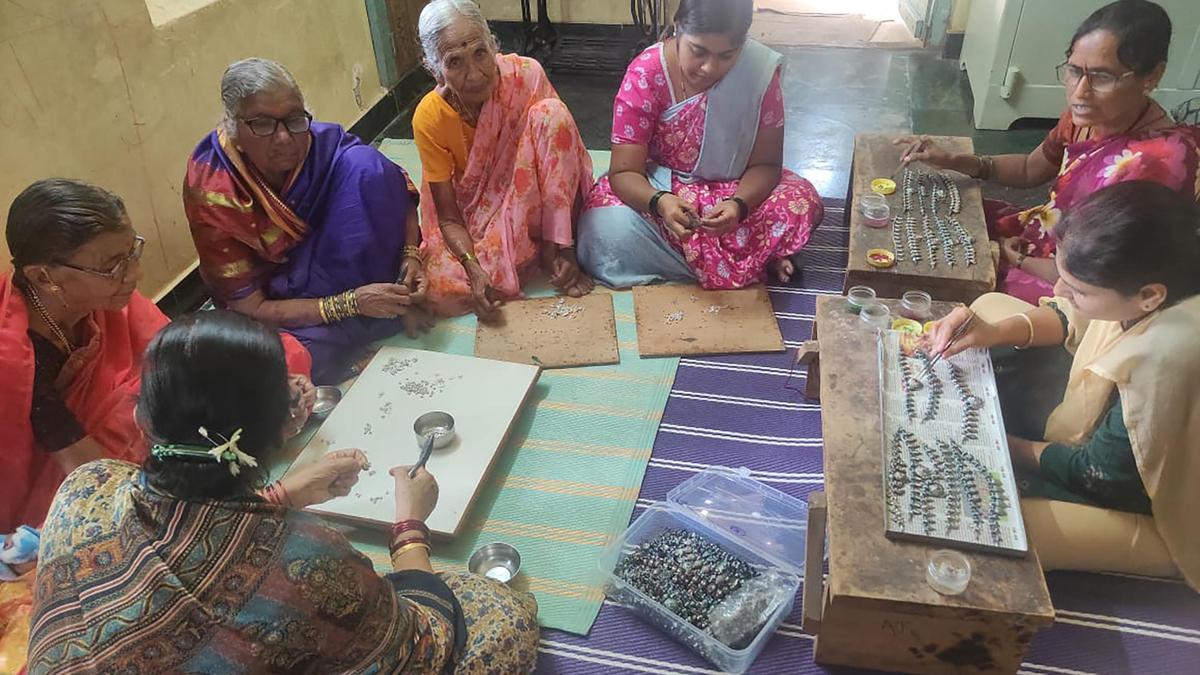
On an afternoon just about a month before Deepavali, 76‑year‑old Kanchan Katkar works in her dimly lit home in Hupari, a town in Kolhapur district known as Maharashtra’s Silver Capital. Using iron tongs that fit her palm, she picks up silver ghungroos and attaches them to chain loops. “I have been doing this for decades and will continue to do this as long as I am able,” she says, her voice trembling gently.
Katkar grew up in Hupari, where she was one of the few girls to finish school in 1970. After her sisters married, she chose to remain single to care for her parents, who had fought in India’s freedom struggle. She questioned the custom that only sons should care for ageing parents, asking, “Why can’t daughters?” Her parents eventually accepted her decision. She learned sewing and soon entered the silver industry, saying that economic self‑reliance was the first step for women seeking autonomy.
Hupari’s silver trade, which began in 1904, has an annual turnover of ₹1,000 crore. Women make up 60‑70 % of the town’s 25,000‑strong artisan workforce, according to the Chandi Karkhandar Association (Silver Manufacturers Association), whose 4,000 members are mostly silver‑business owners. Men typically handle heavy factory tasks such as melting silver, rolling strips, and soldering, while women finish the ornaments at home. The town produces seamless ghungroos, anklets, toe rings, and waistbands. Women use jaali (filigree) techniques to twist and mould silver wires into geometric and nature‑inspired motifs, and meenakari (enamelling) to add colour.
Despite hours of labour, many women earn only ₹200‑₹250 a day because there are no organised labour unions to demand higher wages. A piece rate of ₹400 for 2,000 ghungroos is common, and while a few women can complete 2,000 beads in a day, most make far less. Dinkar Sase, vice‑president of the association, acknowledges that the industry “rests on the shoulders of women.” The association, founded in 1944, opened membership to female manufacturers only in 2014. Even today, husbands often act as the public faces of membership, though more women are becoming members.
The association’s annual report describes Hupari as a “saubhagyarupi nari,” a woman embodying grace and auspiciousness under the village deity, Goddess Ambabai. Female artisans say no formal training is needed because the craft is passed down through generations, yet leadership remains male‑dominated. About 8,000 manufacturing operations are male‑led at the commercial front, with men travelling to trade ornaments across Indian cities while women manage daily operations at home.
The industry faces new challenges, including meeting Gen Z’s demand for trend‑forward designs. Sharwari Waingade, in her 40s, is designing contemporary silver pieces such as oxidised‑silver lines. She entered the craft after marrying Rajesh, whose family has a long history in Hupari’s silver manufacturing. Together they use traditional dies while also creating new designs for a strong B2B clientele.
Women’s work is woven into the region’s social fabric. Ambutai, 64, says that any woman in Hupari and nearby villages gets work by default. She and other local women run self‑help groups to manage earnings independently. Navita, who married into a small ornament‑manufacturing family 15 years ago, learned the craft after being forced into marriage at a young age. She now manages a workforce of five and trains other women, encouraging them to save earnings so they can choose their partners.
Jayshree Lohar, 51, and her husband Prakash, 57, run a manufacturing unit and have encouraged their children to pursue higher education rather than the family trade. Their son works in the United States and their daughter works in Pune.
Hupari’s silver industry faces structural bottlenecks: global silver price fluctuations compress profit margins, reliance on hand tools limits production speed, and limited access to formal banking forces small workshop owners into high‑risk informal credit. Low piece‑rate wages and demanding physical labour make it difficult to retain skilled artisans or attract younger generations. The industry also depends on middlemen, preventing artisans from capturing full value.
The proposed Silver Ornament Cluster and the Geographical Indication tag awarded to Hupari Silver Craft in 2024 are seen as potential pathways to sustainability. However, many artisans, including Katkar, believe that women must be brought to the forefront and given leadership opportunities to transform the trade.
After the Deepavali orders leave Hupari’s narrow alleys, the soft clinking of silver will continue to echo in its homes all year round.
Frequently asked questions
What is the annual turnover of Hupari's silver trade?
₹1,000 crore.
What percentage of Hupari's artisan workforce are women?
60-70%.
What is the common piece rate for 2,000 ghungroos?
₹400.