Business & Finance
Zimbabwean Businessman’s Estate Opens Accounting Amid Kenyan Company Scrutiny
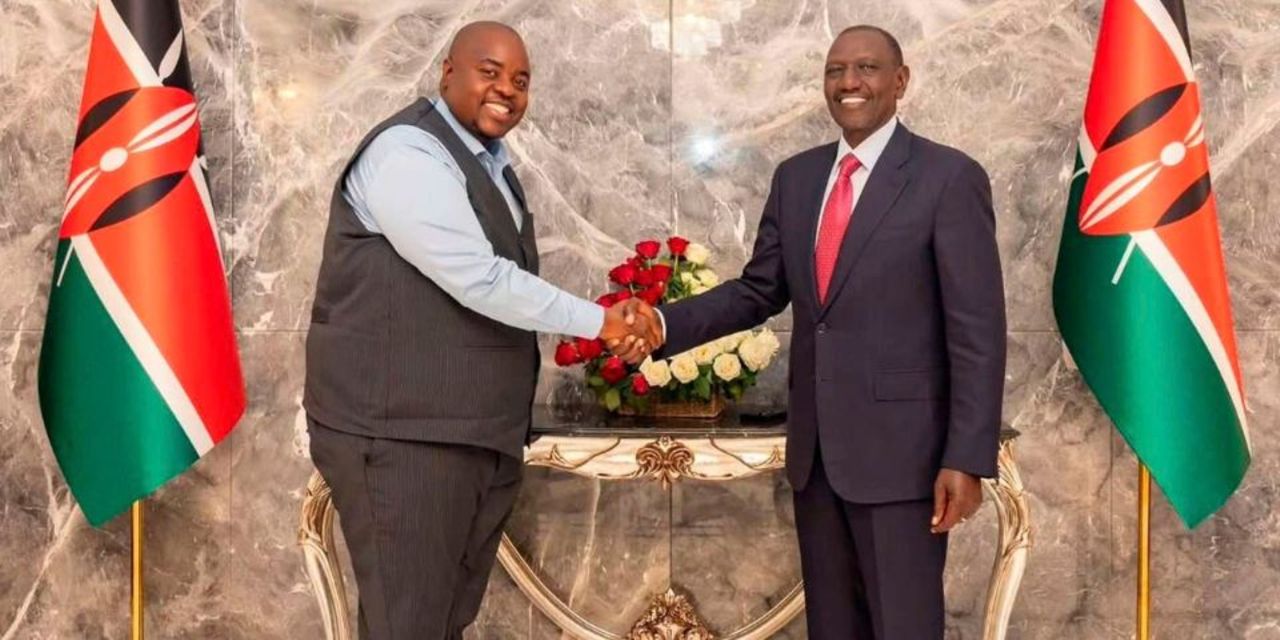
The family of the late Zimbabwean businessman Wicknell Chivayo has begun a formal accounting of his fortune weeks after his death, a process that is already drawing fresh attention to the opaque Kenyan companies and political access that defined the final chapter of his rise. Chivayo, who died with his wife Lucy Muteke in a helicopter crash near Marondera on 30 September 2026, left behind an estate whose scale he publicly placed above 100 million dollars. The family registered the estate with Zimbabwe’s Master of the High Court roughly three weeks ago and held an initial meeting, yet no executor has been appointed. Until that appointment is made, the full inventory of assets, liabilities and claims cannot begin. Officials at the Master’s office confirmed the registration but declined to discuss the contents of an estate understood to run into the tens of millions. The timing collides with an unresolved 25‑million‑dollar matrimonial dispute brought by his former wife, Sonja Madzikanda. She sought a lump‑sum payment, substantial monthly maintenance, lifestyle costs, properties in Harare and Johannesburg, and a fleet of luxury vehicles, arguing the couple had entered a valid customary union in 2017. Chivayo’s lawyers had dismissed the claim as frivolous. The Supreme Court had not ruled when he died, and the absence of an executor leaves that litigation suspended while the estate is sorted. In Kenya the accounting lands on ground already contested. Earlier this year reports linked IMC Construction Kenya, a company repeatedly described as wholly owned by Chivayo, to a Chinese‑led consortium seeking the expansion of Jomo Kenyatta International Airport. Initial figures put the project near 375 billion shillings. Transport Cabinet Secretary Davis Chirchir rejected the claims outright, stating that neither Chivayo nor IMC Construction Kenya had submitted a bid or played any role. The government later signed a design‑and‑build contract with China Road and Bridge Corporation at a lower figure of about 154.2 billion shillings. The Consumers Federation of Kenya nevertheless went to the High Court, questioning transparency, beneficial ownership and financing. In mid‑October Justice Gregory Mutai declined to halt the project, noting that the assertions tying Chivayo to the consortium rested on media reports rather than evidence placed before the court. The judge ordered the preservation of records and directed further disclosure, leaving the underlying questions of ownership and process alive. Those records, and any Kenyan corporate filings associated with IMC or related entities, now form part of the trail the Zimbabwean estate process may eventually have to follow. Chivayo’s visibility in Kenya rested less on documented contracts than on repeated access. He posted photographs and videos of meetings at State House, visits to official residences, and one widely shared moment in August when President William Ruto personally drove him toward a helicopter after a traditional engagement ceremony for the President’s daughter Charlene at the Kilgoris residence. After the crash Ruto described him as a dear friend and extended condolences. The pattern of access mirrored Chivayo’s broader regional profile: public proximity to leaders in Zimbabwe, Tanzania, Uganda, Nigeria and elsewhere, often coinciding with large infrastructure or energy bids. The fortune under examination was built primarily through Intratrek Zimbabwe and related entities on government‑linked energy work, including the long‑stalled Gwanda solar project that received substantial advance payments yet produced no power. Additional contracts covered power‑station refurbishment and hydroelectric schemes. In Zimbabwe he also faced questions over election‑material supply contracts and faced, then survived, criminal proceedings tied to the solar deal. Publicly he distributed luxury vehicles, cash and gifts on a scale that itself drew scrutiny; after his death, reports emerged that Harare car dealers were owed roughly 5.1 million dollars for vehicles supplied on credit. Properties in Harare, Cape Town and Eswatini, plus private jets, formed part of the visible portfolio, though independent verification of the full asset base remains limited. Whether any Kenyan company or interest sits on the estate’s books is precisely what the registration is meant to establish. No Kenyan authority has confirmed direct ownership by Chivayo of local firms, and the government’s denial on the airport project stands. Yet the combination of corporate registration in Kenya, the court‑ordered preservation of project records, and the documented personal access means any complete accounting will have to test those links. For the two minor children he left behind, and for creditors and claimants in Zimbabwe, the outcome will decide what remains after liabilities and the pending matrimonial claim are settled. In Kenya the process revives an older question: how far private influence travelled inside public infrastructure decisions, and whether any residue of that influence can still be traced once the numbers are finally counted.
Frequently asked questions
When did Wicknell Chivayo die?
He died on 30 September 2026 in a helicopter crash near Marondera.
Has an executor been appointed for Chivayo's estate?
No executor has been appointed yet; the inventory cannot begin until one is appointed.
What is the amount of the matrimonial dispute filed by Chivayo's former wife?
The dispute is for 25 million dollars.