Business & Finance
South Korean Anchor Breaks Down as KOSPI Plunges 6% on Samsung‑Linked Losses
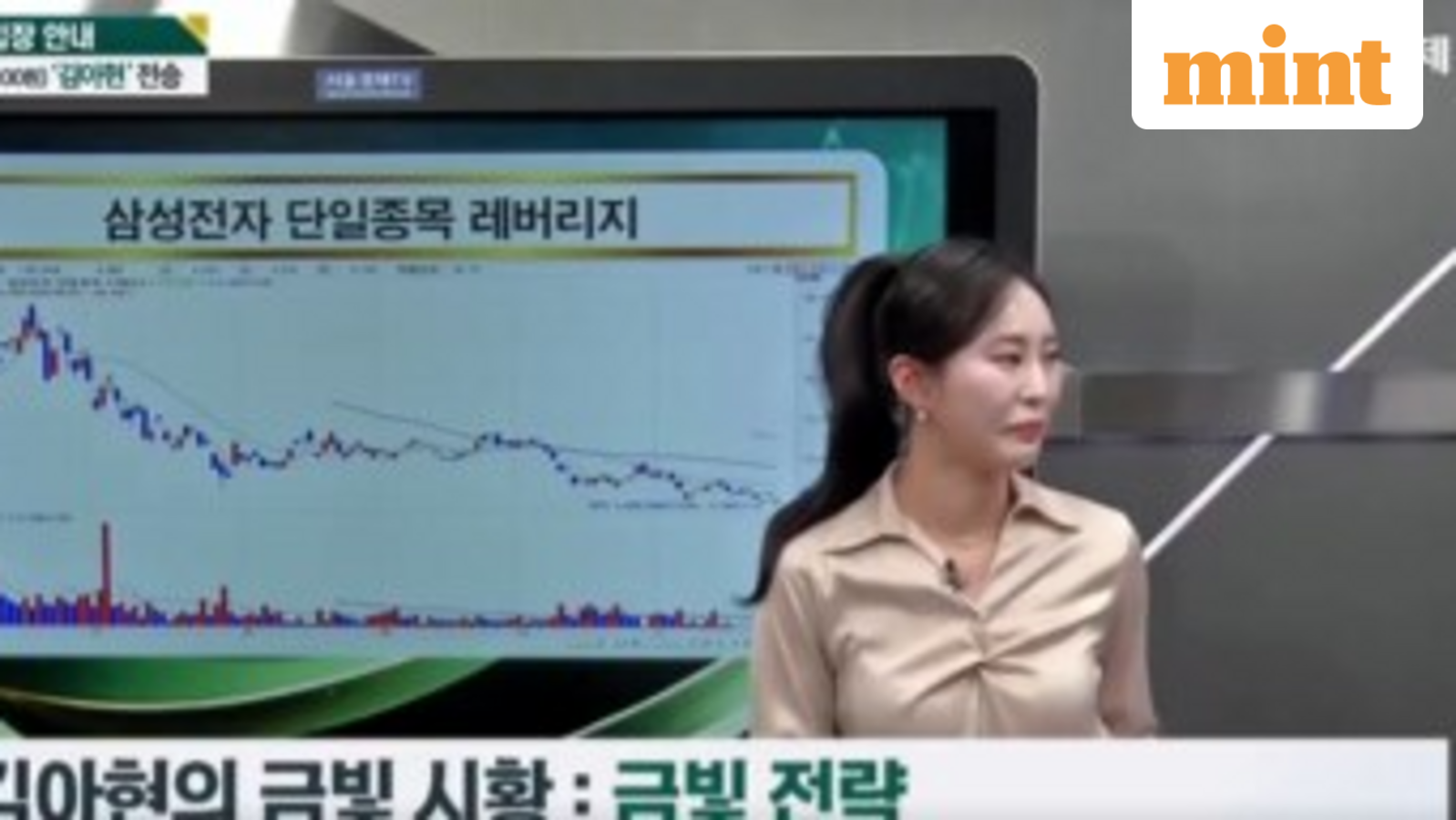
A sharp sell‑off in South Korean stocks turned emotional on Tuesday when financial television anchor Kim Ah‑hyun struggled to hold back tears during a live broadcast. She watched a Samsung Electronics‑linked leveraged investment product fall more than 15% in a single session. The moment, which has since spread across social media, came as South Korea’s benchmark KOSPI index suffered one of its steepest single‑day declines this year. The index fell 6.16%, shedding 308.52 points to close at 4,697.51 on November 25, wiping out the previous session’s gains and marking its lowest closing level since January 13.
Kim, who hosts Seoul Economic TV’s financial programme “Kim Ah‑hyun’s Golden Stocks,” was discussing the difficult conditions facing investors when a chart showing a 15.21% fall in a single‑stock leveraged product linked to Samsung Electronics appeared on screen. She fell silent for several seconds, lowered her head and appeared visibly emotional before looking toward the production team for assistance. The broadcast subsequently cut away from the chart.
The sharp fall in the KOSPI followed a strong rally a day earlier, when the index had gained 4.79% amid renewed enthusiasm for artificial intelligence stocks after Nvidia CEO Jensen Huang’s return to his position. However, the mood changed sharply on November 25. Falling U.S. chip stocks and reports that Washington could impose fresh tariffs on 16 economies added to investor anxiety, triggering heavy selling across Seoul’s markets. The KOSPI opened nearly 4% lower, briefly triggering a temporary halt in programme trading sell orders. It later touched an intraday low of 4,672.55 before recovering slightly toward the close.
South Korea’s two biggest semiconductor companies bore much of the damage. Samsung Electronics shares fell 9.87%, while SK Hynix plunged 11.05%. Foreign investors sold a net 1.8993 trillion won, worth approximately $1.4 billion, in South Korean shares.
In a subsequent livestream, Kim explained that her reaction came after hearing repeated accounts of retail investors suffering substantial losses. She described her emotions as “tears of anger” and urged investors not to lose hope despite the difficult market conditions.
The incident struck a chord online, with footage of the broadcast circulating widely on overseas social media platforms. The sharp sell‑off has also prompted South Korean authorities to consider additional support for the stock market. According to reports, the South Korean government is examining an expansion of its securities market stabilisation fund, which currently stands at 10.76 trillion won, or around $8 billion. The Korea Development Bank has reportedly approached 25 financial institutions to assess their capacity to contribute more funds. No final decision on the expansion has been announced.
There was some relief on November 26, when the KOSPI recovered after the previous day’s steep losses. The index rose 0.3% to close at 4,711.21, while Samsung Electronics gained 0.4% and SK Hynix advanced 2.2%. Investors also kept an eye on the Bank of Korea’s interest rate decision, looking for signals on the direction of monetary policy amid the market turbulence.
Frequently asked questions
What caused the KOSPI to drop 6.16% on November 25?
The KOSPI fell due to a sharp sell‑off triggered by a 15.21% drop in a Samsung‑linked leveraged investment product, falling U.S. chip stocks, and reports of potential new tariffs, leading to heavy selling across Seoul’s markets.
What action is the South Korean government considering to support the stock market?
The government is examining an expansion of its securities market stabilisation fund, which currently stands at 10.76 trillion won, to provide additional support to the market.