Politics
Missouri to Use GOP-Favored Congressional Map After Federal Judge Overrides State Court Ruling
By John Fritze
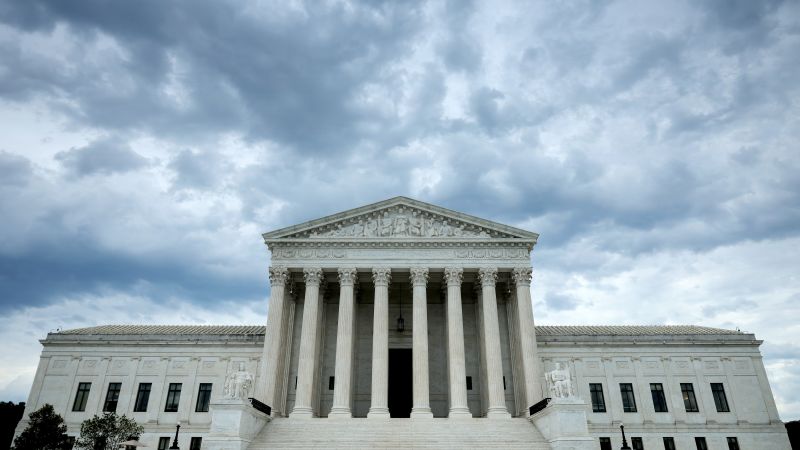
A flurry of conflicting court rulings on Tuesday created confusion over Missouri's congressional map just weeks before the November midterm elections, as state officials and opponents of a Republican-favored redistricting plan rushed between multiple courts.
A federal district court ordered Missouri to proceed with a congressional map that would give Republicans a chance to flip an additional US House seat, intervening in the case shortly after the US Supreme Court rejected an emergency appeal from state Republican officials seeking to use the same map.
US District Judge Stephen Clark issued a temporary order late Tuesday requiring the state to use a map created last year that reshapes a Democratic district based in Kansas City. The order came just minutes after Supreme Court Justice Brett Kavanaugh denied a request from Missouri Republicans to implement that same map.
Clark, who was appointed to the bench by President Donald Trump, wrote that switching maps between the primary and general elections "would wreak havoc on the fairness and orderliness of Missouri's congressional elections, calling into question the candidacy of those nominated in the primaries and the votes of those who voted in the primaries." He added that "widespread voter confusion would inevitably follow."
Earlier Tuesday, the Supreme Court had denied Missouri's request to use the same map. Kavanaugh, who oversees emergency cases from the Midwest region, issued the decision without referring it to the full court and without dissent, suggesting he did not view the appeal as significant enough for broader review. He did not explain his reasoning.
Clark's ruling stated that plaintiffs in a separate case, led by Republican Rep. Bob Onder, had adequately argued that changing maps between the primary and general elections could raise equal protection concerns. Groups opposing the Missouri map quickly appealed and filed emergency motions seeking to halt Clark's order.
Missouri Attorney General Catherine Hanaway, a Republican, said the state was "prepared to follow and comply" with the lower court's decision, noting the urgency since Missouri was set to finalize its general election ballots Tuesday evening. "We maintain that changing the congressional map in between the primary and general elections is simply not feasible and profoundly unjust to Missouri voters," she said.
The Supreme Court's ruling represents the first of several expedited election-related cases the court is expected to address in the coming days ahead of the midterms. The justices are also considering a case involving President Trump's effort to alter how mail ballots are distributed to voters, and the Trump administration has asked the court to reinstate a citizenship records system for reviewing state voter rolls.
Missouri adopted its current 7-1 Republican-favored map under pressure from Trump, who has encouraged a broader mid-decade redistricting battle in both Republican and Democratic-led states. Richard von Glahn, executive director of People Not Politicians Missouri, the group that challenged the map, said following the Supreme Court's initial ruling, "Today the law won. The Missouri constitution is clear as was the Missouri Supreme Court."
If Missouri's map were ultimately blocked, Republicans would still gain a net of nine House seats nationally due to redistricting efforts in other states, according to the article.
The new map, enacted last year, was used in Missouri's August primary election. However, the state's highest court ruled last week that officials had improperly dismissed a petition with more than 300,000 signatures seeking a voter referendum on the map before it took effect.
The map targets the 5th Congressional District, currently held by Democratic Rep. Emanuel Cleaver, by dividing its Kansas City base and extending it into rural, Republican-leaning areas of the state.
Missouri officials had appealed to the US Supreme Court, arguing that the state court's ruling would cause a "federal-election-administration disaster" and "unprecedented chaos." Referendum organizers countered that any election emergency was of the state's own making, noting that opponents submitted their referendum petition late last year, but state officials waited until August 4 — the same day as the state's primary — to declare that the constitutional right to a referendum did not apply to redistricting measures. The state supreme court rejected that interpretation.
The conservative-majority US Supreme Court has played a significant role in shaping this year's midterm elections. Its earlier decision weakening a key part of the Voting Rights Act prompted new redistricting efforts in several Southern Republican-led states. The court has also allowed Texas to implement a Republican-favored map while permitting California to use a map benefiting Democrats.