World
US Midterm Losses Undermine Netanyahu’s Position in Israel’s PM Race
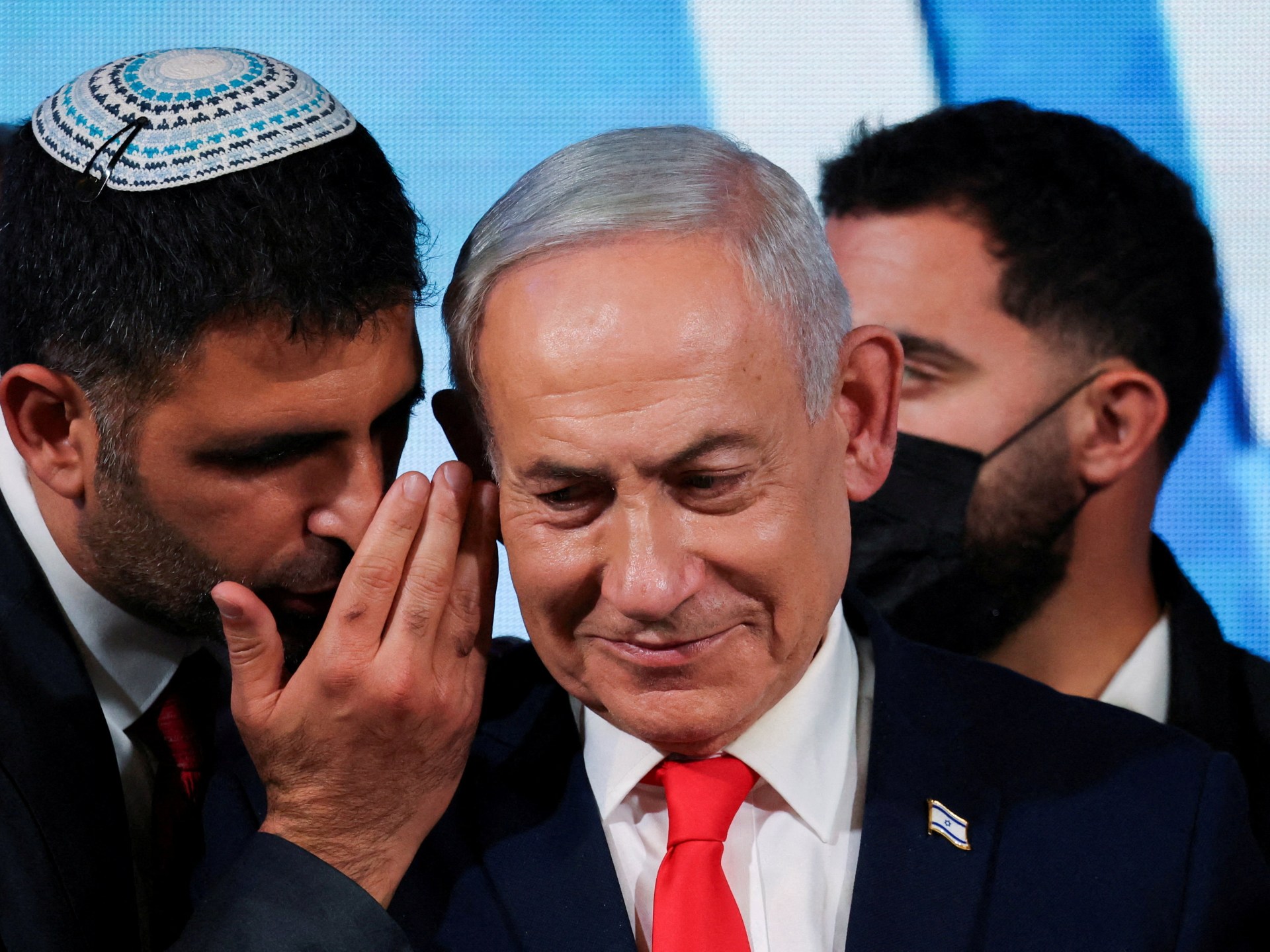
The Republican rout in the U.S. midterm elections has weakened Prime Minister Benjamin Netanyahu’s claim to be the key to strong U.S.–Israel ties. Netanyahu long promoted himself as the leader who would keep the United States, Israel’s most important ally, close. His endorsement from former President Donald Trump during the run‑up to Israel’s parliamentary elections, the same year Washington and Tel Aviv fought a joint war against Iran, reinforced that image. The U.S. midterms, however, saw the Republican Party suffer a disastrous defeat, with early analyses pointing to the Iran war and Israel’s relationship with the United States as contributing factors. U.S. Vice President J.D. Vance highlighted both issues.
Netanyahu’s argument that he is the secret sauce of the U.S.–Israel relationship now appears weaker. Critics say his policies—leading to a genocidal war in Gaza, the Iran conflict, and numerous regional attacks—have made Israel politically toxic in the United States. Many Israelis fear that the country can no longer rely on unquestioned U.S. support. As Israeli leaders scramble to form a government after the parliamentary elections, the opposition has blamed Netanyahu for the U.S. backlash and argued that he should not be allowed to form the next government.
Yair Lapid, a former prime minister whose party is part of the bloc seeking to unseat Netanyahu, posted on social media that U.S. voters are not against Israel itself but against “extremist ministers who say crazy things.” He said they are against settler violence, a government they don’t understand, and mainly against Netanyahu, describing anything connected to him as toxic. Avigdor Lieberman, another opposition leader, echoed the view that Trump’s announcement that U.S. military aid to Israel would end was traded for his endorsement of Netanyahu. Lieberman wrote that Trump’s support for Netanyahu cost $3.8 billion a year. He warned that with America stopping the money it has channeled to Israel for many years, the defense budget—already 7 percent of GDP—will have to rise, and Israelis will feel it in their pockets.
Ahron Bregman, an Israeli security analyst and senior teaching fellow at King’s College London, said Netanyahu continues to turn one segment of the population against another. He is now trying to delegitimize Arabs by claiming they stole the elections to stop the opposition from having Arab partners.
Israel’s general election on October 27 left Netanyahu’s right‑wing bloc with 53 seats, eight short of the 61 needed to form a government. The opposition bloc led by former army chief Gadi Eisenkot won 48 seats, while the Arab‑led parties—the United Arab List (Ra’am) and the Joint List—have 19 seats. The Arab‑led parties have said they will support Eisenkot for prime minister. Eisenkot and other opposition leaders have rejected suggestions of a unity government with Netanyahu, leaving him without a clear path to a majority.
It is now up to Israeli President Isaac Herzog to nominate a politician to form a government, but he has yet to do so. Eisenkot’s self‑styled Zionist bloc, which has previously ruled out serving alongside the Arab‑led parties, stands to benefit from their backing outside the government, despite Netanyahu’s attacks. Eisenkot’s prospects were boosted further on Thursday when United Torah Judaism (UTJ), Netanyahu’s longtime ultra‑Orthodox ally, declined for the first time since 2009 to recommend him or anyone else to form a government, an apparent defection that weakens the prime minister’s position while giving a boost to his opponents.
Eisenkot replacing Netanyahu as Israel’s prime minister does not necessarily mean he will be able to reverse Israel’s declining popularity in the United States. An April Pew Research Center poll suggested that public attitudes in the U.S. are as negative toward Israel as they are toward Netanyahu. Shibley Telhami, director of the University of Maryland Critical Issues Poll, said most Americans would not change their view of Israel even if there is a new government without Netanyahu. He added that any government of Israel would be swimming against the rising public tide and that it would be unlikely to restore relations to where they were five years ago.
Frequently asked questions
How did the U.S. midterm elections impact Netanyahu's claim to be key to U.S.–Israel ties?
The Republican rout weakened his claim, undermining his position in Israel’s parliamentary race.
What were the seat counts for Netanyahu's bloc, the opposition, and Arab‑led parties in the October 27 election?
Netanyahu's bloc had 53 seats, the opposition 48 seats, and Arab‑led parties 19 seats.
What did Avigdor Lieberman say about the cost of Trump’s endorsement of Netanyahu?
Lieberman said Trump’s endorsement cost $3.8 billion a year in U.S. military aid to Israel.