Politics
Far‑Right Parties Secure 13 Seats but Remain Marginal in Israel Election
By AFP
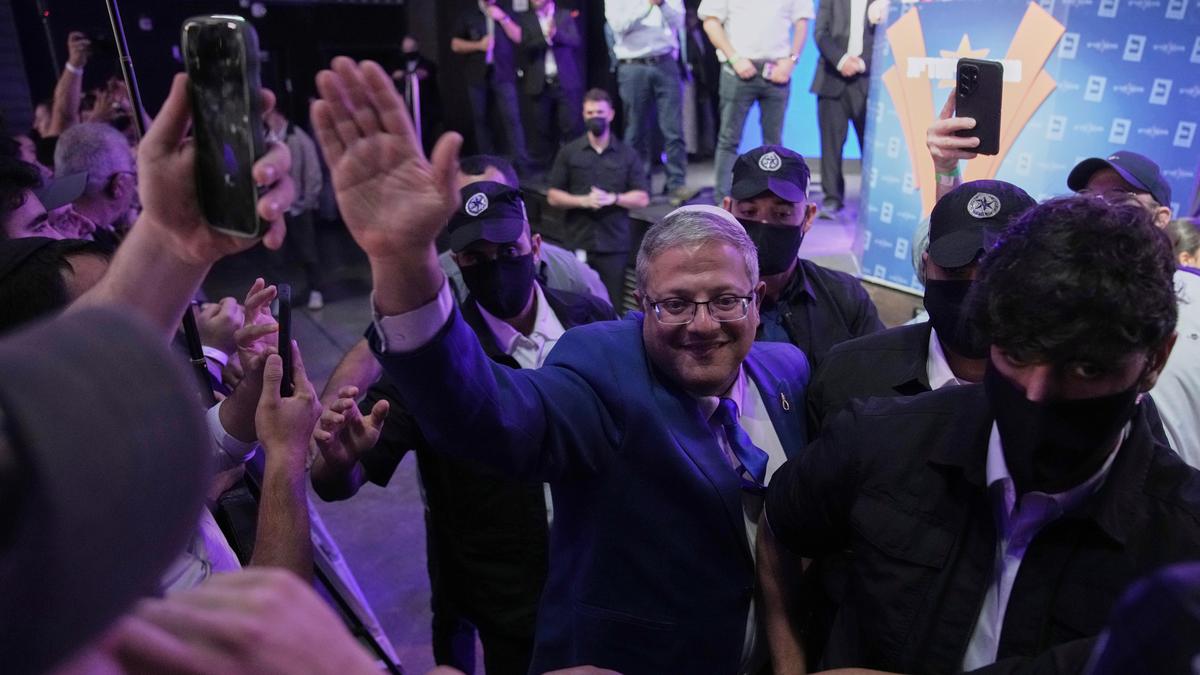
Itamar Ben Gvir, the far‑right Israeli firebrand who gained international notoriety as part of the outgoing government, did not achieve the gains many expected in the recent election. Bakery employee Yaakov Peretz, speaking under the sun in Sderot, said he believes Ben Gvir will remain a central force and that Prime Minister Benjamin Netanyahu needs a strong, stable right‑wing ally.
Far‑right parties, including Ben Gvir’s Jewish Power and Bezalel Smotrich’s Religious Zionism, had hoped for a watershed result. By the time the results were announced, the two parties had won a combined 13 seats, the same number they held before the vote. While this does not make them an ascendant force, it cements their place in the political landscape.
Ben Gvir, who served as national Security Minister in Netanyahu’s government, has called for the “voluntary” emigration of Palestinians from Gaza and the West Bank, routine killings of “30 or 40” people in Gaza per night, and for cutting food and sanitation for Palestinian prisoners to the bare minimum. He had openly expressed a desire to become Defence Minister before the election.
Netanyahu’s bloc, which includes Ben Gvir and Smotrich’s parties, won 53 seats in the October 27 vote, falling short of the 61 needed to stay in power. The opposition, led by former army chief Gadi Eisenkot, secured 48 seats but could cross the threshold if it partners with Arab‑Israeli parties that won an unprecedented 19 seats—a scenario far‑right supporters view as a nightmare.
Tel Aviv University political science professor Yael Shomer noted that the far right’s influence in government is expected to shrink even as its support at the ballot box grew. She estimated the far‑right parties received about 100,000 more votes than in 2022, but turnout was the highest since 1999. Shomer said the outcome “seems like a disappointment on their behalf and for their supporters.”
In Sderot, where the Hamas attack of October 7, 2023 killed 53 people, the far‑right’s hard‑nosed security stance resonated. Peretz, who lost a firefighter relative in the attack, said the incident strengthened his conviction that radical positions are needed to defend the country. He expressed concern about a coalition that excludes the far right, even a unity government between Netanyahu and Eisenkot that also boxes out Arab‑Israeli and left‑wing parties.
At the Sderot market, 67‑year‑old Susan Buskila said she voted for Netanyahu’s Likud, while her children supported Ben Gvir and Smotrich. She wants both men to keep their places in government, arguing they represent religious, Zionist youth who love the country rather than those seeking political posts and money.
Buskila warned that an alliance between Eisenkot and Arab parties could loosen the military’s grip on Gaza and lead to a resumption of Hamas rocket fire on Sderot. Shahar Yaakov, a 43‑year‑old shopkeeper and Ben Gvir voter, said he was “extremely disappointed” by the results and that the prospect of Arab parties in a hypothetical Eisenkot‑led government was “the worst possible situation.” He called for unity in the country before pursuing peace with Palestinians or Arab nations.