Law & Justice
Arkansas Court Upholds Boundary Route for Allen Easement After $8,000 Payment
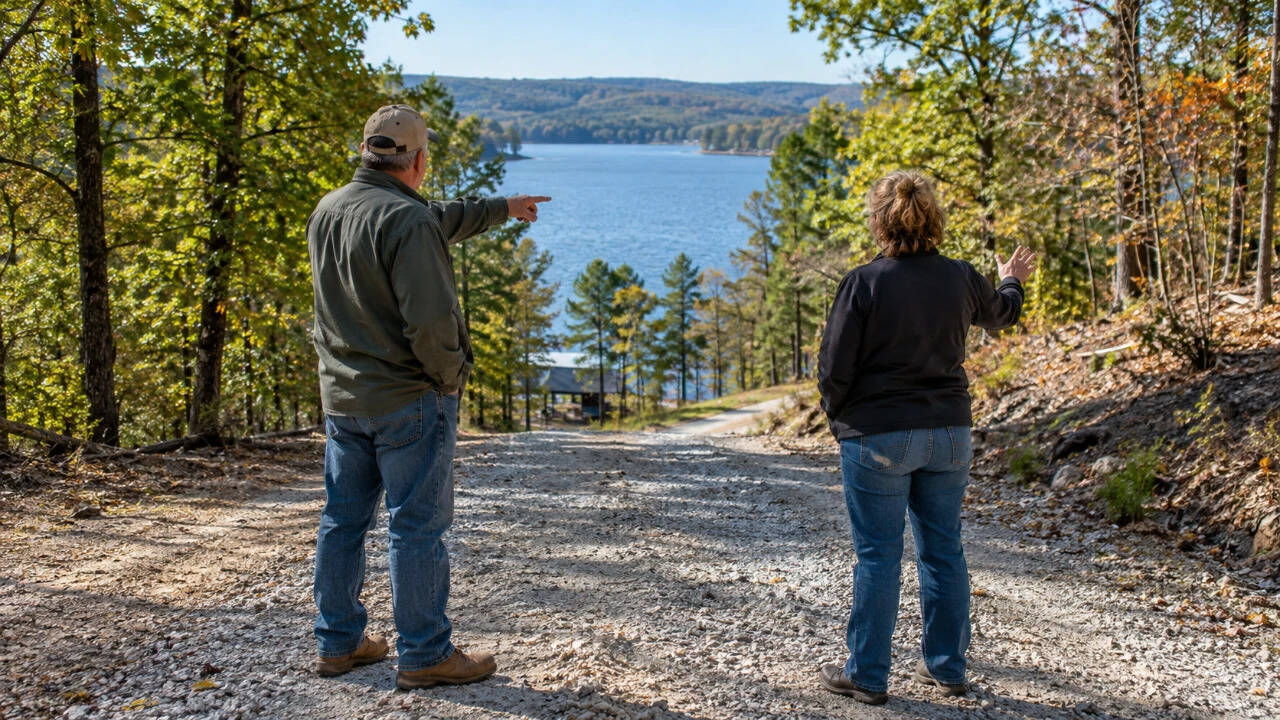
Connie and Delmar Allen, who own land near Beaver Lake in Benton County, Arkansas, were unable to reach their property by road and had agreed in 2023 to pay $8,000 for an 18‑foot easement across their neighbours’ land. The neighbours, Catherine and Jeffrey Wyant, owned the parcel between the Allens’ property and Old Bill Evans Road. The Allens sought a permanent legal right to cross the Wyant property to reach their land.
The parties signed an agreement that included a simple drawing showing the neighbouring plots and a line marking the proposed access route. The agreement also stated that a proper survey would be prepared later to give the road a more exact description. After the payment was made and the Wyants signed the necessary documents, the Allens and the Wyants disagreed over the road’s exact location. The Allens’ proposed route would start at Old Bill Evans Road and run northwest across part of the Wyants’ property, while the Wyants wanted the road to run west along the southern edge of their land.
The Allens returned to court in February 2024, asking the court to enforce the easement and to hold the Wyants in contempt for refusing to cooperate. The Benton County Circuit Court selected the route along the southern boundary of the Wyants’ property and rejected the contempt request. The Allens appealed, arguing that the decision was unclear and that the survey provision gave them flexibility.
The Arkansas Court of Appeals upheld the circuit court’s decision. The appeals court held that the original agreement and drawing already provided enough information about the intended route, and that the later survey was meant to add details, not to allow an entirely different road to be chosen. The court noted that the Allens had discovered that building the road along the southern boundary would be expensive due to slope and drainage issues, but said these difficulties did not invalidate the agreement.
The ruling was not unanimous. Judge Brandon J. Harrison dissented, questioning whether the Allens could actually build a road along the approved route because of a gorge 60 to 80 feet deep that would require significant filling. Judge Stephanie Potter Barrett, who joined the majority, said the court’s job was to interpret the agreement rather than select a more convenient route.
The October 28 ruling leaves the Allens with a legal right to cross the Wyants’ property, but only along the route approved by the court.