Law & Justice
Myanmar‑India Drug Trade Relies on Barter, Says Enforcement Directorate
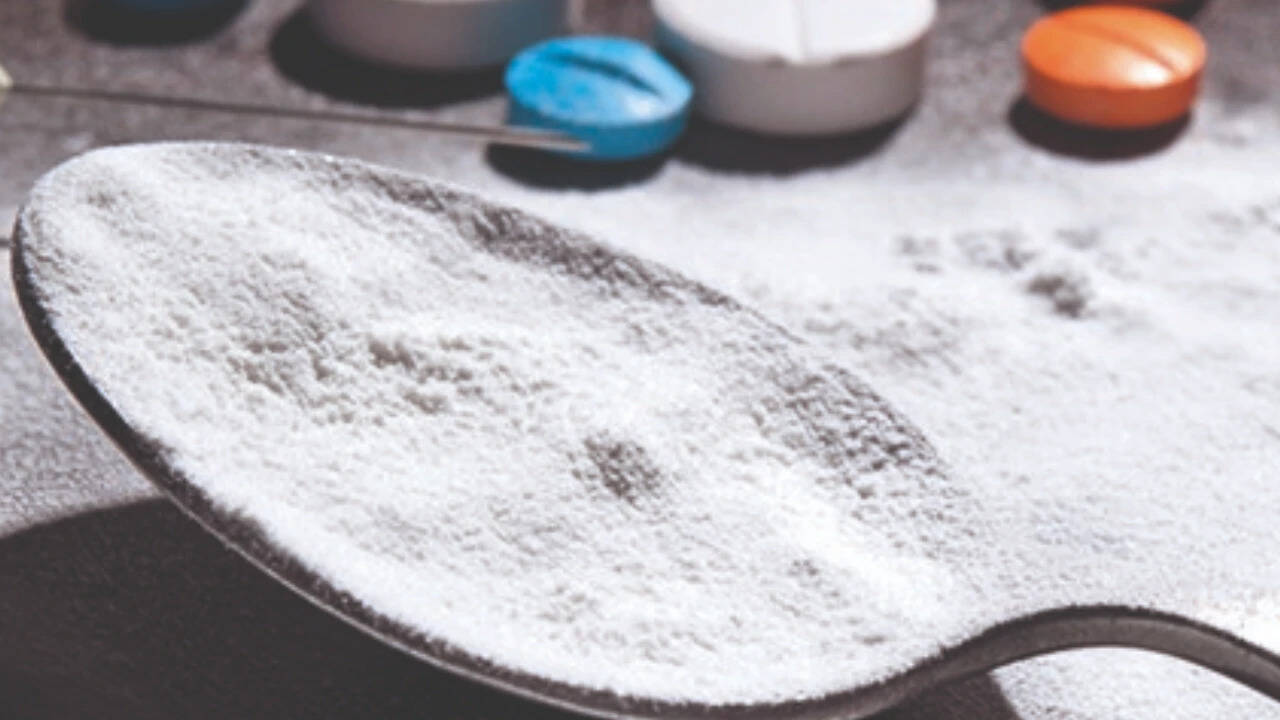
The Enforcement Directorate (ED) has reported that international drug syndicates operating from the Golden Triangle—Myanmar, Thailand and Laos—are using a barter system to smuggle heroin and methamphetamine into India. According to the ED’s investigation, no cash crosses the Myanmar border; instead, drugs are paid for with goods such as petrol, diesel, flour, edible oil, groceries, medicines, footwear and clothing supplied by the syndicates’ Indian network.
The ED’s week‑long searches at 38 sites across India’s Northeastern states revealed that Myanmar has become the world’s largest illicit opium‑producing region, surpassing Afghanistan. Precursor chemicals are moved from India to Myanmar where they are processed into finished heroin, brown sugar and methamphetamine tablets. These products are then transported across the Tiau River at Zokhawthar, opposite Khawmawi in Myanmar, staged at Champhai, and moved along the Champhai‑Aizawl road and NH‑06A to Aizawl, Vairengte, Assam and other parts of India.
The ED has identified intermediaries who supply goods to the syndicates in Myanmar. More than 1,400 mule bank accounts—mostly belonging to traders who procure and supply these goods—have been frozen. Transactions involving goods worth over ₹270 crore have been detected, and six individuals have been arrested. The ED said that illicit money exchangers, or hawala networks, in Champhai handled these transactions, including ₹125 crore in cash received from Assam, Nagaland, West Bengal, Tripura and Delhi.
Significantly, the ED noted that drug money reaching hawala accounts in Aizawl and Champhai largely originates from Delhi, Kolkata and Mumbai. Illegal money is converted into commercially marketable goods, which are then sent to Mizoram border towns and onward to Myanmar.
"The banking system is used only for the Indian leg of the transaction, where the payment appears as an ordinary trade payment backed by a GST invoice. The cross‑border leg moves as goods and leaves no money trail," the ED said. "Fuel, flour and groceries have become the currency in which Myanmar‑based drug suppliers are paid."
The probe continues to identify consignees in border towns, those who move goods across the border, Myanmar‑based recipients, petrol pumps, shops and suppliers paid in the same manner, and money exchangers directing the accounts. The ED is also tracing and attaching further proceeds of crime as it works to dismantle the financial networks that sustain narcotics trafficking.
Frequently asked questions
How does the barter system work in the Myanmar-India drug trade?
Drugs are paid for with goods such as petrol, diesel, flour, edible oil, groceries, medicines, footwear, and clothing supplied by the syndicates’ Indian network, leaving no money trail.
What actions has the Enforcement Directorate taken against the drug syndicates?
The ED froze more than 1,400 mule bank accounts, detected transactions involving goods worth over ₹270 crore, and arrested six individuals.
Which Indian states are involved in the drug smuggling routes?
The routes involve Northeastern states including Mizoram, Assam, and the Champhai-Aizawl road and NH-06A to Aizawl, Vairengte, and other parts of India.