Law & Justice
Supreme Court Allows Income‑Tax Department to Reopen 2010 Property Deal Probe of Former CJI’s Sons

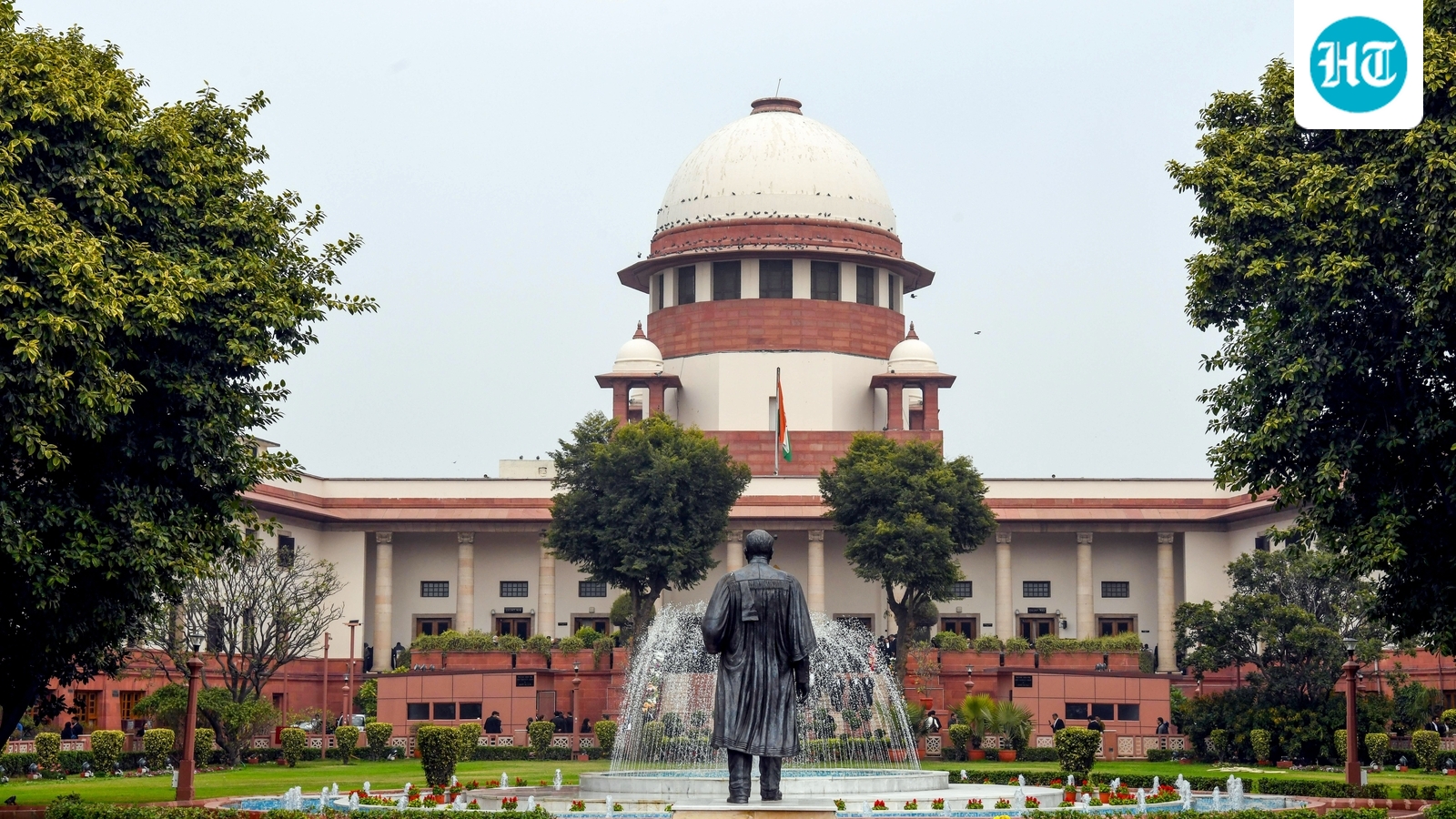
The Supreme Court has permitted the income‑tax department to reopen assessments of Chetan and Nitin Sabharwal, the sons of former Chief Justice of India YK Sabharwal, over share transactions that financed their 2010 purchase of a prime property on Delhi’s Sikandra Road. A bench of Justices JB Pardiwala and K Vinod Chandran dismissed four appeals filed by the brothers, upholding the validity of notices issued by the assessing officer (AO) in March 2015 to reopen their assessments for the financial years 2007‑08 and 2008‑09, corresponding to assessment years 2008‑09 and 2009‑10. The proceedings had been stayed by the Supreme Court in August and September 2019, pending consideration of their appeals against a Delhi high court judgment that had allowed the reassessment to proceed.
The dispute centres on the brothers’ sale of shares in Pawan Impex Pvt Ltd and SVIIT Software Pvt Ltd to GYS Real Estate Pvt Ltd under agreements executed in October 2007. The aggregate consideration for the two transactions was ₹255 crore – ₹195 crore for Pawan Impex and ₹60 crore for SVIIT Software. Each brother was entitled to a quarter of the consideration. The tax department’s investigation raised questions about the valuation of these shares, concluding prima facie that their sale prices were substantially higher than could be justified by the cost of the underlying land and buildings. The department also found that a substantial part of the proceeds had been channelled into the purchase of a property on Sikandra Road in April 2010, with the brothers claiming exemption from capital gains tax under Section 54F of the Income Tax Act. The two brothers jointly purchased an undivided and undefined half share in the residential property for ₹61 crore. The acquisition was made within two years of the share transactions and formed the basis of their claim for the tax exemption.
In its October 28 judgment, the Supreme Court held that the investigation report by the director general, which came after the original assessments, provided tangible material for the AO to form a reasonable belief that income chargeable to tax had escaped assessment. It rejected the brothers’ argument that the reopening was based on a mere change of opinion, emphasising that the power to reassess cannot be confused with the power to review an earlier assessment. “The expression ‘reason to believe’ in Section 147 of the Act means cause or justification,” Justice Pardiwala, who authored the judgment, said, explaining that the AO must have tangible material with a rational connection or live link to the belief that income had escaped assessment. The officer need not, at the stage of issuing a notice, have conclusively established the alleged escapement of income through legal evidence.
The court also distinguished between the brothers’ original assessments. Chetan’s returns had undergone scrutiny under Section 143(3) of the Act, while Nitin’s returns had merely been accepted through intimations under Section 143(1). In the latter case, the court said, no assessment or opinion had been formed in the first place, making the plea of a change of opinion untenable. Regarding Chetan, the bench noted that although the assessing officer had examined aspects of the share transactions during the original scrutiny, the assessment orders did not reflect any conscious application of mind to the specific questions of share valuation, the investment of the proceeds in the Sikandra Road property or the claim under Section 54F. The subsequent investigation had brought these aspects to light, the court said, and therefore the reassessment could not be characterised as a mere change of opinion.
The brothers had argued that the share transactions had been disclosed to the tax authorities and that the capital gains had been duly offered for taxation in the relevant assessment year. They also contended that an alleged overvaluation of shares could not, by itself, establish escapement of income in the hands of the sellers, particularly when the genuineness of the sale itself had not been questioned. Rejecting this line of argument at the threshold stage, the bench said the recorded reasons for reopening did not rest solely on the alleged overvaluation. They also referred to the timing of the share purchase agreements, the receipt of consideration in subsequent years and the brothers’ claim of deductions under Section 54F after investing the proceeds in the Sikandra Road property. The court said the possibility that proceeds substantially exceeding the actual value of the shares had been used to acquire capital assets under the guise of sale consideration was a matter that could legitimately be examined in reassessment proceedings.
The Sikandra Road acquisition had attracted considerable controversy in 2010, when the brothers, along with real estate developer Kabul Chawla, were reported to have acquired the prime property in Lutyens’ Delhi for around ₹122 crore. The transaction came under scrutiny because the three buyers had not participated in the original 2006 court‑supervised auction, in which Triveni Infrastructure had emerged as the highest bidder at ₹117 crore, ahead of Prime Commercial Ltd, which had offered ₹115 crore. A series of subsequent orders of the Delhi high court had allowed extensions and changes in the arrangements for payment, eventually enabling the Sabharwal brothers and Chawla to step in and complete the purchase. Prime Commercial challenged the transaction, alleging that the concessions granted to the original bidder and the subsequent substitution of buyers had deprived it of its right as the second‑highest bidder. The high court’s division bench dismissed its challenge in July 2016.
The property deal had also revived scrutiny of allegations levelled against the former CJI during his tenure, concerning the possible business interests of his sons in the context of the Supreme Court’s drive to seal commercial establishments operating from residential areas in Delhi. Justice Sabharwal had headed the bench overseeing the sealing proceedings, including the February 2006 order that set the drive in motion. Critics, including senior advocates associated with the Campaign for Judicial Accountability, alleged that his sons’ links with real estate and shopping mall developers created a conflict of interest, since the sealing drive could benefit commercial complexes in which they had business interests. Justice Sabharwal denied the allegations, describing them as baseless.
Frequently asked questions
Which brothers were the subject of the reopened assessments?
Chetan and Nitin Sabharwal, sons of former Chief Justice YK Sabharwal.
What was the basis for the income‑tax department's reassessment?
The department questioned the valuation of shares sold in 2007 and the use of proceeds to purchase a Sikandra Road property in 2010, claiming a Section 54F exemption.