Law & Justice
Madras High Court Advocates Association Files PIL Challenging 1965 Cabinet Decision on English as Common Language
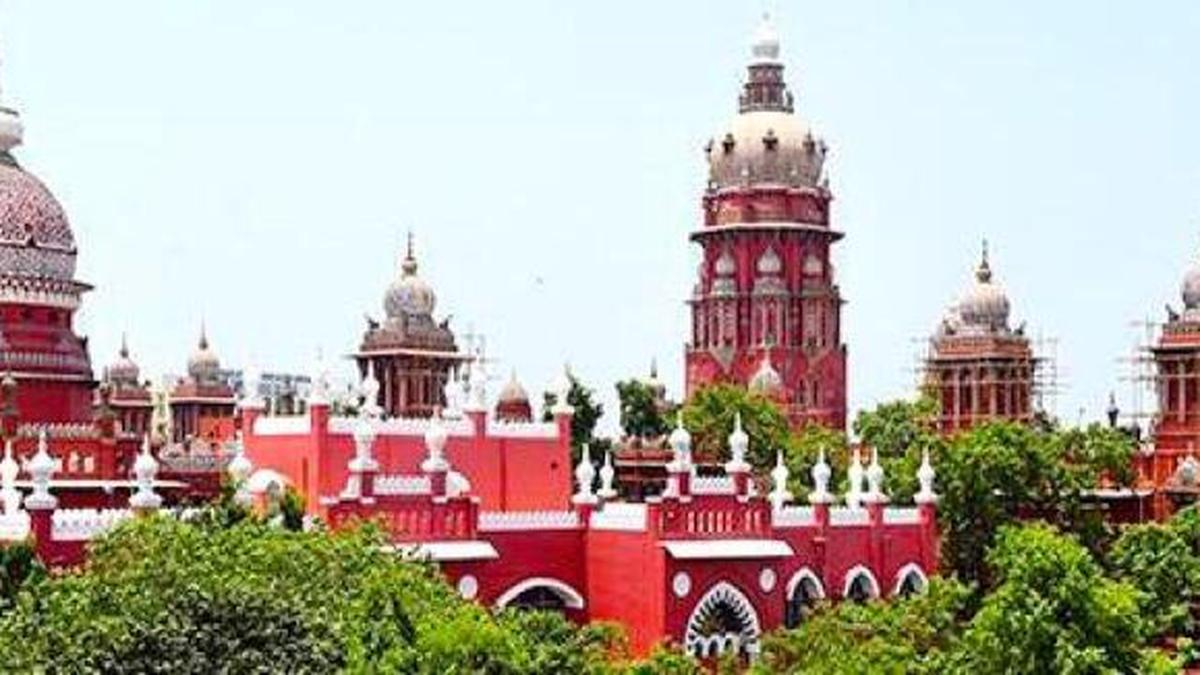
The Madras High Court Advocates Association (MHAA) has filed a public interest litigation petition in the Madras High Court to challenge the constitutional validity of a 1965 Union Cabinet Committee decision that English should remain the common language for the Supreme Court and all High Courts until Hindi could replace it. The case will be heard by a First Division Bench of Chief Justice Sushrut Arvind Dharmadhikari and Justice G. Arul Murugan on Monday, November 2, 2026.
MHAA argues that the bar on using regional languages in High Courts violates Articles 14 (equality), 19 (freedom of speech and expression) and 21 (right to life) of the Constitution. In its affidavit, MHAA secretary S. Arivazhagan said the association learned of the 1965 Cabinet decision only last year from an advocate who had obtained the details under the Right to Information Act, 2005, and therefore chose to challenge it now. The association does not want the Cabinet decision to impede the long‑pending demand to make Tamil the official language of the Madras High Court.
The association notes that a conference of Chief Justices of all High Courts was held in the first week of March 1965 under the chairmanship of then Chief Justice of India P.B. Gajendragadkar. The resolutions passed were not released to the press but were forwarded to Prime Minister Lal Bahadur Shastri, Union Home Minister Gulzarilal Nanda and all Chief Ministers on March 26, 1965. The CJI’s letter to the Ministry of Home Affairs (MHA) stated that the conference recommended a common language for the Supreme Court and all High Courts, with English to continue until Hindi became “rich and ripe enough” to take its place, and that regional languages should not be introduced.
On May 17, 1965, the MHA submitted a note to the Cabinet Committee, which considered regional language policy. The note warned that allowing regional languages in High Courts could hinder the elevation of High Court judges to the Supreme Court and the appearance of lawyers before the courts, and could fragment the judicial system. It suggested that the Cabinet might accept the Chief Justices’ recommendation that English remain the common language until Hindi could replace it. The note also noted that Article 348(2) of the Constitution allows Governors, with the President’s consent, to authorise the use of regional languages in High Court proceedings (but not in judgments, decrees or orders). The MHA argued that the President could deny consent because the CJI and the Chief Justices of the High Courts opposed the introduction of regional languages, and it proposed that the CJI be consulted before the President gave consent.
The Cabinet Committee approved the note on May 21, 1965. MHAA questions how a new procedure of consulting the CJI could be introduced by executive decision when Article 348(2) does not prescribe such a requirement, and argues that the Centre’s insistence on mandatory consultation is unwarranted.
MHAA also points out that the Centre rejected proposals from the Tamil Nadu government to permit Tamil in the Madras High Court in December 2006 and June 2014, and that the outcome of a resolution passed by the Tamil Nadu Legislative Assembly on September 3, 2026, is unknown. The association demands that the Centre disclose its decision and notes a lack of uniformity in how similar proposals from other states have been treated. It cites that proposals from West Bengal, Gujarat and Karnataka to allow Bengali, Gujarati and Kannada in their High Courts were rejected, whereas Rajasthan High Court was permitted to use Hindi in 1950, and Uttar Pradesh, Madhya Pradesh and Bihar were allowed to use Hindi in 1969, 1971 and 1972 respectively under Article 348(2) and Presidential consent. MHAA concludes that these authorisations demonstrate that English need not remain the exclusive language of every High Court proceeding.
Separately, the Madurai Bar Association, represented by secretary R. Venkatesan, has filed a PIL seeking a declaration that litigants have the right to file pleadings, present oral arguments and receive judgments, orders and decrees in a language they understand. The petition, filed through advocate M. Velmurugan, also requests a direction to the Centre to take all necessary steps under Article 348(2) of the Constitution and Section 7 of the Official Languages Act, 1963 to declare Tamil the primary language of the Madras High Court and its Madurai Bench.
Frequently asked questions
When will the Madras High Court hear the MHAA PIL?
Monday, November 2, 2026.
Which constitutional articles does MHAA claim are violated by the 1965 Cabinet decision?
Articles 14, 19, and 21.