Law & Justice
Colombia’s Budget Cuts Threaten Special Jurisdiction for Peace Court
By Daniela Diaz Rangel, Joshua Collins
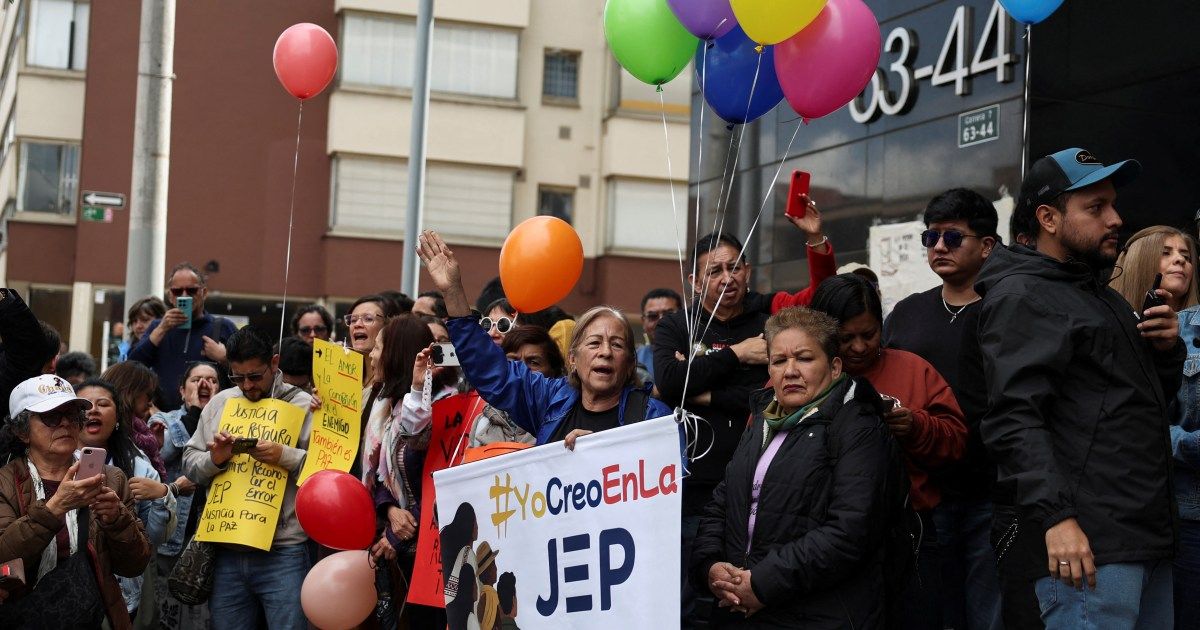
Bogota, Colombia – Angela Cordon was a teenager when her father and uncle disappeared in the southwestern department of Huila. Her uncle, Reynaldo Cordon Herrera, a grocer, vanished after a truck trip on 22 January 2003. A month later, her father, Guillermo Cordon Herrera, set out to find his brother and contacted rebel fighters he believed responsible. He never returned, and neither he nor his brother’s bodies were recovered. Their deaths are part of the more than 450,664 killings in Colombia’s six‑decade internal armed conflict.
Since the disappearance, Angela and her family have sought information about their loved ones. She says the Special Jurisdiction for Peace (JEP), a transitional justice court created in 2016 under the 2016 peace deal with the Revolutionary Armed Forces of Colombia (FARC), has been key to her search. The court prosecutes and investigates crimes committed during the conflict.
The administration of President Abelardo de la Espriella announced a 2027 budget that will cut JEP’s funding by about 181 billion Colombian pesos (roughly US$57 million). A Senate committee also advanced a bill to eliminate JEP by March 2028, proposing to transfer its functions to the general court system. De la Espriella says the reductions are necessary to manage Colombia’s public debt, which exceeds US$370 billion, and to allocate resources to a justice system that serves everyone.
Critics argue the cuts will hinder JEP’s work. Angela warns that fewer resources mean fewer field missions and less humanitarian personnel, potentially preventing the court from returning to sites of her father and uncle’s captivity and execution. She says the court has also helped locate remains of former FARC members.
Lawyer Ana Maria Rodriguez, who represents victims of the conflict, calls the accusation that JEP is biased against military members “patently false.” She notes that JEP has convicted top FARC leadership and that its work is a model studied worldwide. Rodriguez fears that reduced funding will lead to fewer convictions and increased impunity, as many perpetrators have not faced justice outside JEP.
More than 20 Colombian congress members signed an open letter to the International Criminal Court (ICC) expressing concern that the budget cuts could jeopardise investigations, trials and sentence execution. Alberto Yepes, a spokesman for the Colombia‑Europe‑United States Coordination Group, links the cuts to President de la Espriella’s hard‑line security policies, suggesting the government may seek impunity for military leaders.
In addition to funding cuts, the government is reportedly considering a 116‑page counter‑terrorism bill that would increase penalties for certain offences, criminalise some protest forms and make it harder to suspend military operations. Yepes says these measures could shield law enforcement from accountability.
The JEP has been instrumental in providing closure to families like Angela’s, and many fear that its elimination or severe underfunding would be disastrous for victims of Colombia’s conflict.
Frequently asked questions
What is the amount of funding cut for JEP?
181 billion Colombian pesos (roughly US$57 million).
When does the Senate bill propose to eliminate JEP?
By March 2028.
Why does President de la Espriella justify the cuts?
To manage Colombia’s public debt exceeding US$370 billion and allocate resources to a justice system that serves everyone.