World
Moby‑Dick’s Long‑Road From Failure to Classic
By Teja Lele
When Herman Melville first published Moby‑Dick; or, The Whale in October 1851, the book sold poorly, received mixed reviews, and did not revive his declining reputation. By the time Melville died in 1891, both he and the novel were largely forgotten. The novel, however, grew far beyond the sea adventure Melville had originally set out to write. Drawing on his own sea experiences, whaling literature and the 1820 Essex disaster, Melville expanded the story into a 135‑chapter work that blends adventure, philosophy, whale lore, religious references and humor. The narrative follows Ishmael, a wanderer who befriends tattooed harpooner Queequeg and joins the Pequod under Captain Ahab, who is obsessed with killing the great white sperm whale Moby‑Dick. Ahab’s pursuit, the crew’s struggle, and the novel’s mix of narrative and essay‑like sections have made it a subject of enduring study.
Melville’s relationship with Nathaniel Hawthorne also shaped the novel. The two met on 5 August 1850 and corresponded thereafter. Hawthorne praised the book in a now‑lost letter, and Melville dedicated Moby‑Dick to Hawthorne’s “genius.” Their friendship is debated, but it coincided with Melville’s shift from straightforward adventure to a symbolic, mixed‑form novel.
Publication history: Melville first contracted with British publisher Richard Bentley for a book then called The Whale. He kept the printing in New York to oversee proofs while revising the manuscript. The British edition, 500 copies, was issued on 18 October 1851 and omitted the epilogue. Reviewers questioned how the narrator could survive the Pequod’s destruction. The American edition, published by Harpers on 14 November 1851 under the title Moby‑Dick, included the epilogue revealing Ishmael’s survival on Queequeg’s coffin and rescue by the Rachel. The poor British reviews harmed the book’s reception in America, and Melville’s career continued to decline.
By 1856 Hawthorne noted that Melville had “pretty much made up his mind to be annihilated.” When Melville died in 1891, Moby‑Dick was out of print and another major work, Billy Budd, remained unpublished. Interest revived in the 20th century, beginning with Melville’s birth centenary in 1919, a 1921 biography by Raymond Weaver, and a 16‑volume edition of his works issued between 1922 and 1924. The revival brought praise from writers such as William Faulkner and D.H. Lawrence, who called it “the greatest book of the sea ever written.” Today the novel is read as a sea adventure, philosophical novel, comedy, tragedy, and catalogue of Melville’s knowledge and imagination about the natural world.
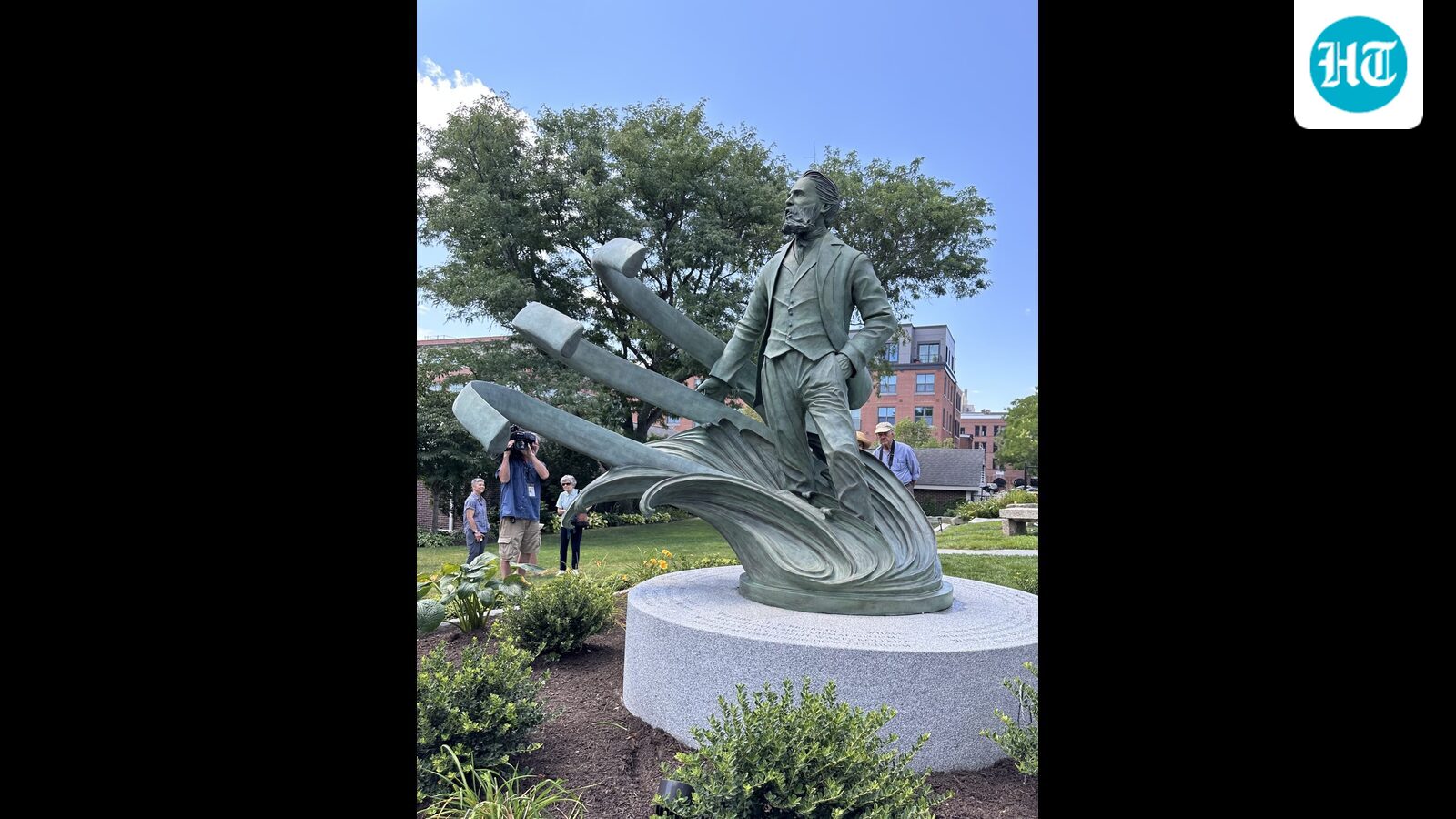
In 2026, Melville returned to New Bedford, the city that helped shape the book. On 14 August a 7.5‑foot bronze statue by Stefanie Rocknak was unveiled outside Seamen’s Bethel, where Melville worshipped before sailing from the harbour aboard the Acushnet. The sculpture, surrounded by whale ribs and waves, looks toward the harbour and sea and draws on the scene in Chapter 9 where Father Mapple delivers a sermon about Jonah and the whale. Mayor Jon Mitchell said the statue commemorates Moby‑Dick’s broad and indelible imprint on American culture, noting that it is the most famous work of prose in the English language, has inspired countless artists, is the most assigned novel on college campuses, and has shaped America’s national identity.