World
Olive Harvesters in Southern Lebanon Face Drones, Shelling and Unexploded Ordnance
By Today News Hours Editorial Desk
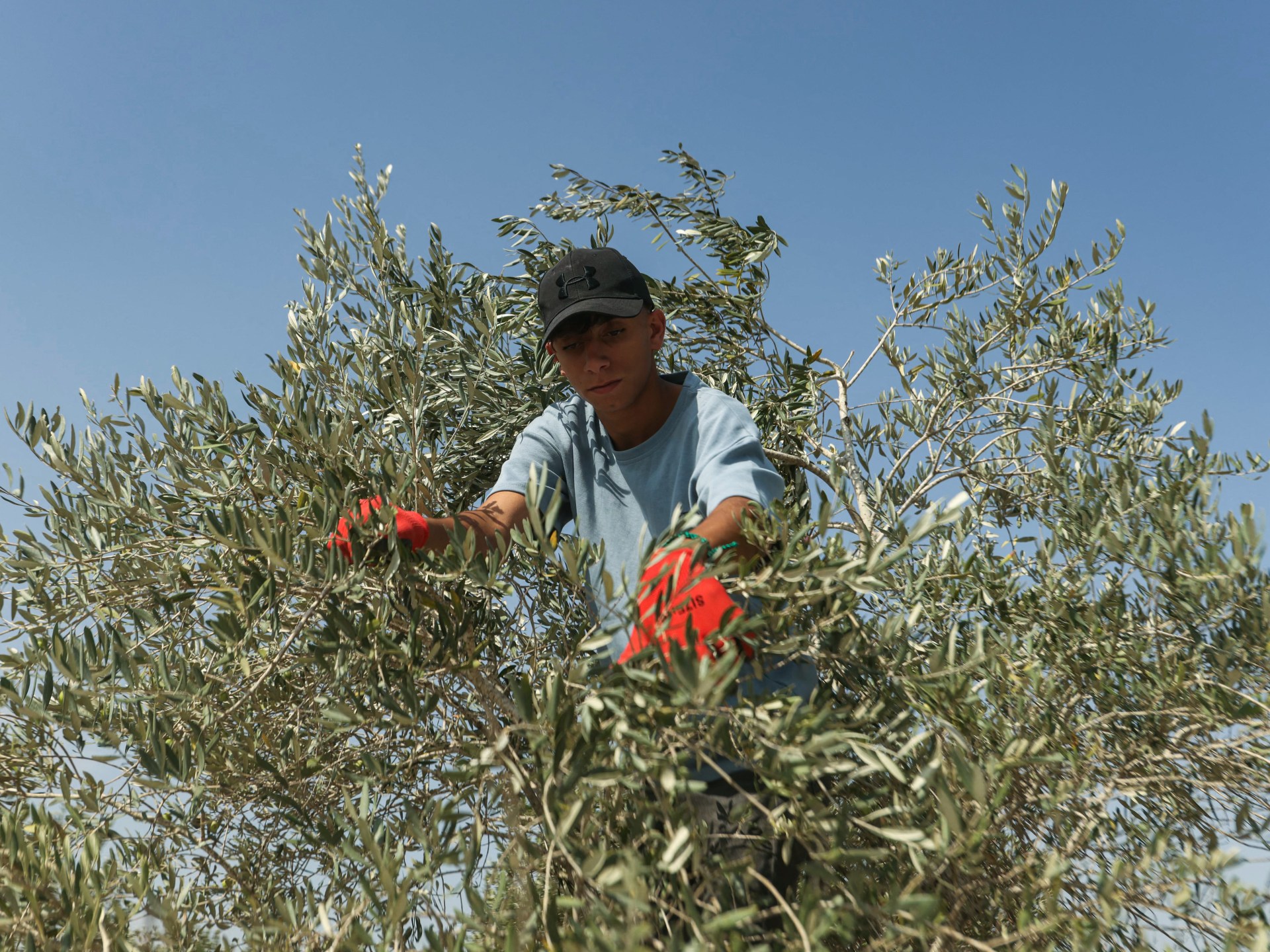
Every year, Khaled Farhat tends to the olive trees in Majdel Selm, a village 20 minutes from the Israeli border. The area lies north of Israel’s “Yellow Line,” where the Israeli military has been demolishing homes and infrastructure. To reach his grove, Farhat had to request access from the local municipality, which forwarded the request to the Lebanese Army. The army coordinates with a mechanism established after the June Tripartite Framework Agreement between the United States, Israel and Lebanon to issue permits for locals to tend to their olive groves.
Ramy Zurayk, a professor at the American University of Beirut who specializes in landscape design and ecosystem management, said the widespread damage to farms and buildings in southern Lebanon, along with movement restrictions, is part of Israel’s effort to “sterilize” the area. He described the Israeli project as an attempt to eliminate humans and living organisms from the land by destroying habitats and landscape components that sustain life.
Lebanon’s Environment Minister Tamara Elzein reported that more than 16,000 hectares (about 40,000 acres) of land have been torched since Israel began bombing and later invading Lebanon in October 2023, including the use of white phosphorus. Israel continues to occupy nearly 630 square kilometres (243 square miles) of southern Lebanon, which includes farmland and dozens of villages.
In areas where olive groves remain intact, the occupation has complicated the harvest. Farmers and landowners work under Israeli drones overhead and live with the fear of unexploded ordnance. An hour before the interview, an Israeli shell landed near Farhat’s grove. He said, “Drones are constantly in the sky. You look up and see one, two, three of them sometimes just moving back and forth. Warplanes sometimes pass by and carry out strikes nearby, taking a toll on us psychologically and emotionally.”
Farhat was given only a two‑week window to work his land, and the neglect of his farmland is already evident. He explained that weeds could not be cleared because the land was inaccessible during displacement. “We’re in the middle of the harvest now. If we manage to finish harvesting everything directly from the trees within this timeframe, then great. Otherwise, whatever remains will go unharvested.”
The presence of unexploded ordnance, including cluster bombs, poses a serious danger. In early October, at least two people were killed in olive groves in south Lebanon. A retired soldier was killed in Yater village in the Bint Jbeil district by Israeli artillery fire, and an engineer was killed when Israeli ordnance exploded while he was harvesting olives in Froun, also in Bint Jbeil. A day later, a member of Lebanon’s police force tending farmland in the southern village of Ain Ebel was also killed in an explosion.
Hicham Hoteit, a journalist and olive farmer from Babliyeh, told Al Jazeera that there is a constant fear of being targeted by Israeli attacks, especially near sites of previous attacks, and of encountering cluster bombs or other remnants of war. Explosives have been a recurring problem for farmers in southern Lebanon since the final days of the 2006 war, when Israeli forces dumped cluster bombs containing between 2.6 and four million submunitions in the area.
Hiba Ghandour, Lebanon’s programme manager for the Mines Advisory Group (MAG), said that many submunitions were scattered across farmland and orchards, and many failed to explode on impact. She cited a 2022 Lebanese Mine Action Center report that the government announced only 5 million square metres of land remained contaminated with cluster munitions, representing 18 percent of the baseline to be cleared. Since October 2023, the situation has become more complex, with new explosive hazards added by recent hostilities. MAG has identified 444,000 square metres of confirmed hazardous areas for farmers, but research is ongoing and the figure is likely to rise.
Despite these dangers, Lebanon’s dire economic situation has pushed many Lebanese to work their lands out of necessity. Ghandour noted that clearing agricultural land is especially challenging because contamination can be concealed within vegetation or beneath soil, which takes longer to clear. When people are under pressure to earn a living, they often feel they have no choice but to return to their land before it has been made safe, making clearance all the more difficult.
Political analyst Bassel Doueik told Al Jazeera that many Lebanese citizens have been harassed by Israeli forces and barred from harvesting their olive trees. He cited Kfarshouba, a predominantly Sunni border village, where about 200 Israeli soldiers entered on Monday, searched houses, and at least three Merkava tanks and other military vehicles infiltrated the area.
The widespread use of white phosphorus has led some Lebanese to hesitate buying produce from the south over concerns that it could be exposed to hazardous chemicals. Zurayk said in a panel hosted at his university on October 21 that the panic was unfounded and there was no evidence that any of the olives or other produce from south Lebanon was dangerous to consume.
For many in Lebanon, harvesting olives is serious work but also an opportunity for families or communities to come together. Many people with farmland across south Lebanon said this year, due to the threat of Israeli attacks, they will leave their children and other relatives behind when they head to their crops. Farhat said the dangers are evident in the south this harvest season. “People hear that the situation is dangerous, they hear that there is shelling, but for someone who is actually in the midst of the shelling, or living under it, it is certainly a different experience. The reality on the ground is something else entirely. Still, thank God, hopefully, this is just a phase that will pass. Hopefully, the situation will not escalate further and will begin to de‑escalate and move towards something better.”
Frequently asked questions
How many hectares of land have been torched in southern Lebanon since October 2023?
More than 16,000 hectares (about 40,000 acres).
How many square kilometres of southern Lebanon are occupied by Israel?
Nearly 630 square kilometres (243 square miles).
How many hazardous areas for farmers have been identified by the Mines Advisory Group?
444,000 square metres of confirmed hazardous areas.