Health
Pennsylvania Measles Surge Highlights Global Vaccination Challenges
The United States is experiencing its largest measles outbreak since the disease was declared eliminated in 2000. The CDC has announced the third death of the year from the virus. Matt Ferrari, director of Pennsylvania State University’s Center for Infectious Disease Dynamics, said the U.S. had "the luxury to forget" measles was a serious problem. Pennsylvania has been hit hardest, with more than 1,200 cases and over 240 hospitalisations reported in 42 counties so far this year. In September, the state asked the CDC for emergency support to control the spread, while state and federal officials disagreed over how to classify measles‑related deaths.
New York Governor Kathy Hochul declared a state disaster emergency on October 5 in response to rising cases in rural areas, expanding the number of health professionals authorised to vaccinate and test people for measles. "No one should get seriously ill or die from a vaccine‑preventable disease," Hochul said.
The U.S. resurgence occurs amid rising global measles cases, especially in vaccine‑skeptical communities or where healthcare access is limited. Vaccination coverage among U.S. kindergartners fell from 95.2 % in the 2019‑2020 school year to 92.4 % in the 2025‑2026 school year. Experts warn that declining rates in one area can leave people thousands of miles away vulnerable, making measles prevention a shared global responsibility.
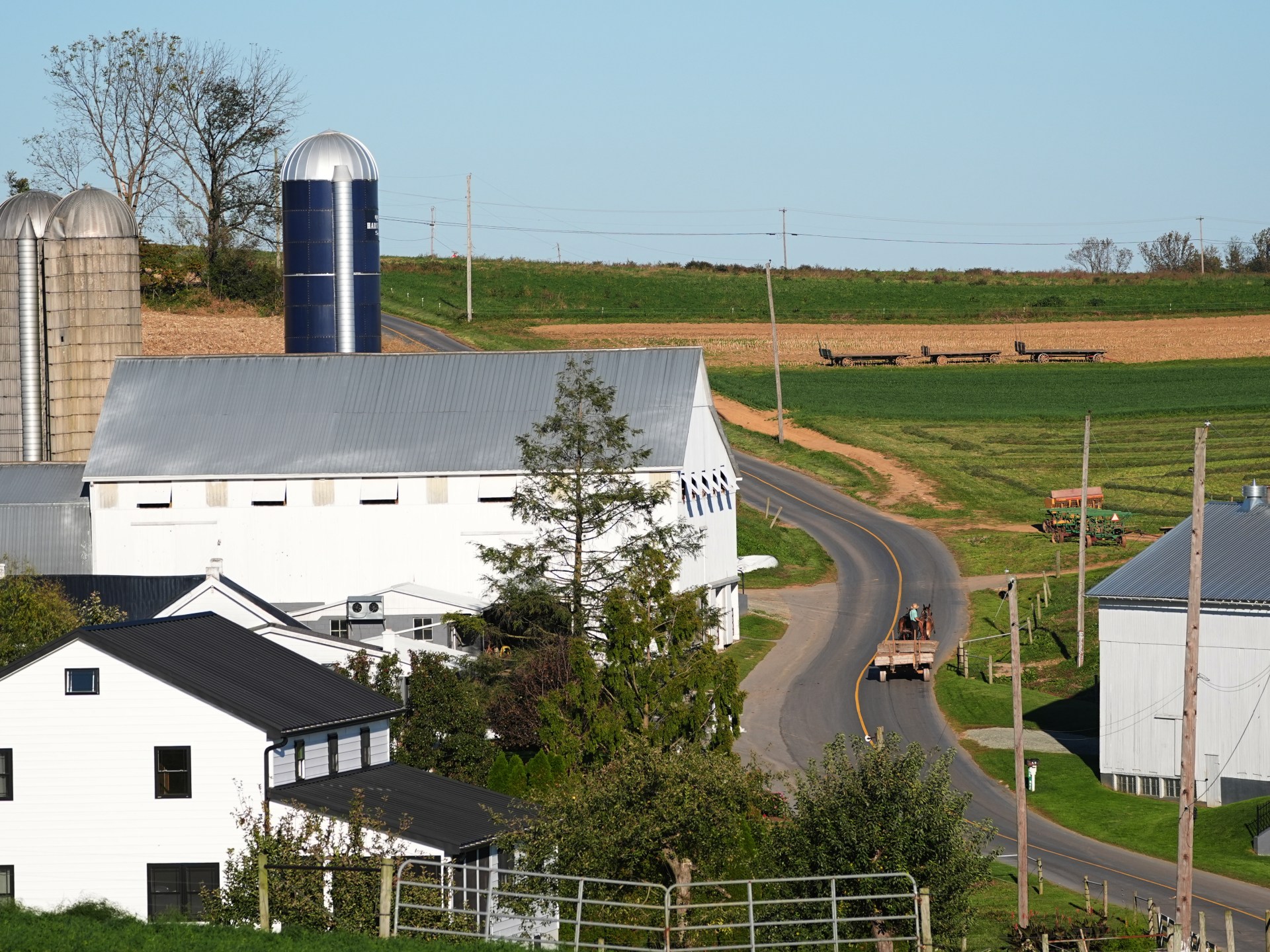
In August, Pennsylvania reported two unvaccinated deaths from measles in Lancaster County, home to the nation’s oldest Amish and Mennonite communities. Public health officials have worked with community leaders to share information and expand vaccination access. Joshua Good, principal of Ephrata Mennonite School, organised a pop‑up vaccination clinic at the school and provided communication materials adapted for the community. Good, who is vaccinated and has vaccinated his children, said he engages in respectful, charitable conversations with families to understand their hesitations.
Despite these efforts, vaccination rates remain below the threshold for herd immunity. Jennifer Nuzzo, director of the Pandemic Center at Brown University School of Public Health, said community outreach must be built before outbreaks occur. "You can’t just show up in a community in an emergency – an emergency in which they might feel like you’re there to kind of blame them or shame them," she told Al Jazeera. "You need to know them so that they see public health as a resource rather than law enforcement."
Experts explain that low coverage and distrust of government allow measles to spread even when vaccines are available. Declining vaccination rates put immunocompromised people at greater risk, and herd immunity in the wider population formerly shielded those most vulnerable.
The continental Americas was the first WHO region to eliminate endemic measles transmission in 2016. Maintaining that status requires high and consistent vaccination coverage. The Pan American Health Organization (PAHO) says coverage across the region remains below the target for both doses of the measles vaccine, contributing to noticeable consequences. PAHO holds an annual RVC Measles Elimination Status Conference to monitor whether countries in the Americas have successfully eliminated measles, rubella, and congenital rubella syndrome. A country can lose its "elimination status" if the same measles virus genotype circulates continuously for at least 12 months.
Last year, Canada became the first country in the continental Americas to lose its status after an outbreak that began in 2024. Some have warned that the U.S. may be on track to lose its status this year. Dr. Daniel Salas, executive manager of PAHO’s Special Program for Comprehensive Immunisation, said Mexico and Bolivia could also be closely assessed.
U.S. Health and Human Services Secretary Robert F. Kennedy Jr has defended the U.S. response, stating the country is doing a better job than any other in controlling the outbreak. Kennedy cited higher case numbers in Mexico, Canada and Britain. Nuzzo countered that repeated U.S. outbreaks indicate a struggle to contain transmission. "We have not seen it this bad," she said. "It’s like this perpetual game of Whac‑A‑Mole. As long as there are vulnerable communities, as long as we don’t have strategies for early detection and rapid response and containment, measles will just keep on happening over and over again."
Dr. Salas told Al Jazeera that action within the first three days after a suspected case is critical, and health authorities should begin investigating and taking response measures without waiting for laboratory confirmation. Delays of a week or more can allow the highly contagious virus, marked by fever, coughing and a whole‑body rash, to spread further.
Experts warn that outbreaks cannot be treated as isolated local events. Scientific journals have found evidence that the virus strain in Canada’s latest outbreak was genetically linked to cases reported in U.S. Mennonite communities. This was the same outbreak that led to Canada losing its measles elimination status. "The spread of measles in the United States imperils other countries," said Nuzzo. "It’s easy to point to other countries and say that they’re the problem, but the reality is we’re all dependent on each other, and it’s very hard to protect ourselves when measles is spreading elsewhere."