Health
Newcastle‑Edge Koala Population Shows No Signs of Chlamydia
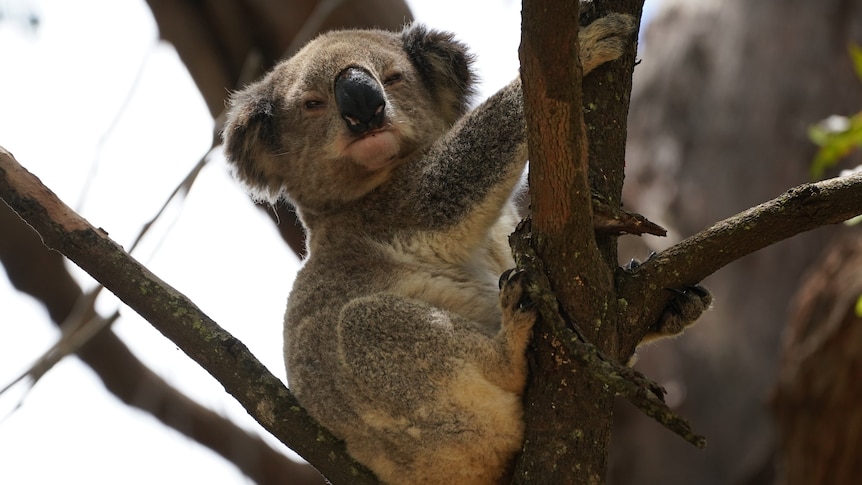
Researchers have found no evidence of chlamydia in a wild koala population near Newcastle. The Sugarloaf‑Stockrington State Conservation Area, a 35‑minute drive from the city’s CBD, is believed to host more than 2,000 koalas. A report submitted to the NSW government’s Draft Koala Conservation Strategy recommends protecting the habitat, installing wildlife exclusion fencing and conducting long‑term monitoring.
Daryn McKenny, a Gamilaraay and Wiradjuri man, has spent years observing koalas in the area using motion‑activated trail cameras. His observations prompted Ryan Witt, a conservation scientist at the University of Newcastle, to study the population. Since 2020, Witt and his team, with McKenny as Aboriginal lead, have surveyed the 23,900‑hectare area for over 250 nights, using thermal‑imaging drones in a lawnmower pattern.
In late 2025 the team confirmed 292 koalas in the area; drone surveys and modelling in 2026 suggest a population of around 2,300. Witt noted that the urban population appears to be thriving.
To assess reproductive health, the team collected fresh scat samples from drones‑located koalas. The samples were preserved on dry ice and sent to the University of the Sunshine Coast for genetic and disease testing. Witt reported that 27 wild koalas tested negative for chlamydia, a disease that can affect up to 90 % of wild populations in New South Wales.
A review of wildlife rescue and clinical records from the Lower Hunter region between October 2022 and September 2026 found no evidence of chlamydia among an additional 27 koalas within 30 km of the conservation area. Witt suggested that low genetic diversity and long‑term isolation from other populations may explain the absence of disease.
Mark Krockenberger, a specialist veterinary pathologist at the University of Sydney, noted that only three NSW koala populations appear chlamydia‑free. He praised the genetic testing but urged continued monitoring, especially as the population moves west of the Pacific Highway, potentially exposing them to disease from other groups.
Witt has submitted his findings to the NSW government as part of the Draft Koala Conservation Strategy, recommending increased habitat protection, wildlife exclusion fencing and ongoing disease screening for the Sugarloaf‑Stockrington koalas.