Science
Iranian Viper's Spider-Like Tail Hides Ordinary Bones, CT Scans Reveal
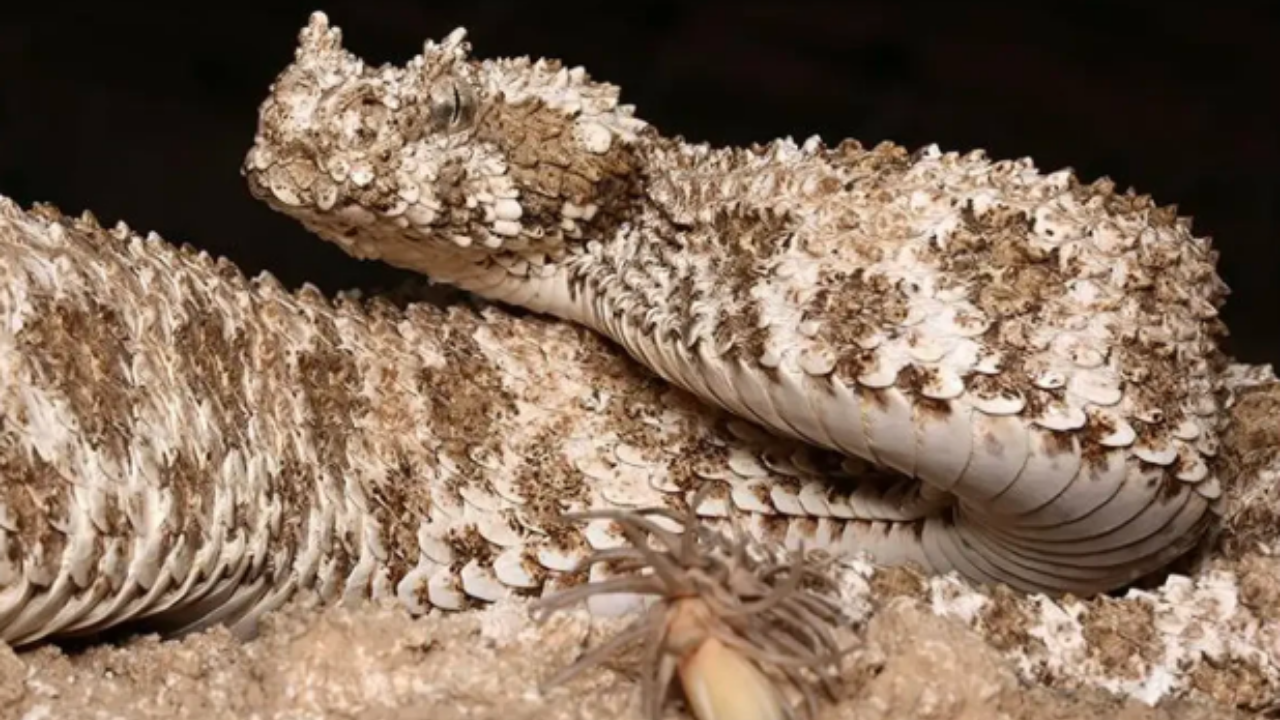
The spider-tailed horned viper, a snake native to Iran, has developed one of the most unusual hunting tools in the animal kingdom: a tail tip that mimics the appearance of a spider to lure birds within striking range. Despite this bizarre external feature, new research shows the bones inside the tail are remarkably ordinary.
Scientists at the Field Museum used X-ray computed tomography, or XCT, to examine the internal structure of the snake's tail without damaging a scientifically valuable specimen. Their findings, published in The Anatomical Record, showed that the vertebrae inside the tail closely resemble those found in typical vipers, despite the tail's extraordinary outward appearance.
The snake, known scientifically as Pseudocerastes urarachnoides, was formally identified as a distinct species in 2006. Its common name refers to the spider-like structure at the end of its tail, which features a bulbous shape and leg-like projections. This is not an actual spider but a specialized external feature. When the snake moves the tail, birds may mistake it for prey and approach closely enough for the viper to strike.
The unusual tail was not immediately recognized for what it was. A specimen collected in 1968 and later added to the Field Museum's collection was initially believed to have a deformity at the tip of its tail. It remained largely unexamined for decades until a second specimen with a similar tail structure was found in 2003, leading scientists to reconsider its purpose.
Paleontologist Georgios Georgalis, the lead author of the new study, became interested in examining the snake's vertebrae. According to the Field Museum, Georgalis noted that snake fossils typically consist of isolated bones, making it difficult to reconstruct an animal's full appearance. He and his team wanted to determine whether the viper's dramatic tail was reflected in its skeletal structure, as seen in some other snakes such as sand boas and rubber boas, which have unusually shaped vertebrae near the tail's end.
To investigate without damaging the holotype specimen — the reference specimen used to define the species — researchers used the Field Museum's newly established XCT laboratory, which began operating in late 2024. The technology creates detailed three-dimensional images by combining thousands of X-ray scans.
Contrary to expectations, the scans revealed no unusual skeletal features. The vertebrae in the tail were consistent with those of typical vipers, meaning the snake's dramatic spider-like appearance comes entirely from external tissue rather than any distinctive bone structure.
Researchers say this finding carries broader implications for paleontology. Because fossils generally preserve only skeletal material and not soft tissue, an ancient animal's outward appearance could differ dramatically from what its bones alone suggest. The spider-tailed horned viper illustrates this gap, as its skeleton appears unremarkable even though its living body includes one of the most distinctive hunting adaptations known among snakes.
The study also underscores the ongoing scientific value of museum collections, as specimens collected decades ago can yield new insights when analyzed with modern technologies like XCT scanning.