Law & Justice
Delhi High Court Declares Section 86(4) of Juvenile Justice Act Applies Retrospectively, Mandating Transfer of Pending Trials to Children’s Court
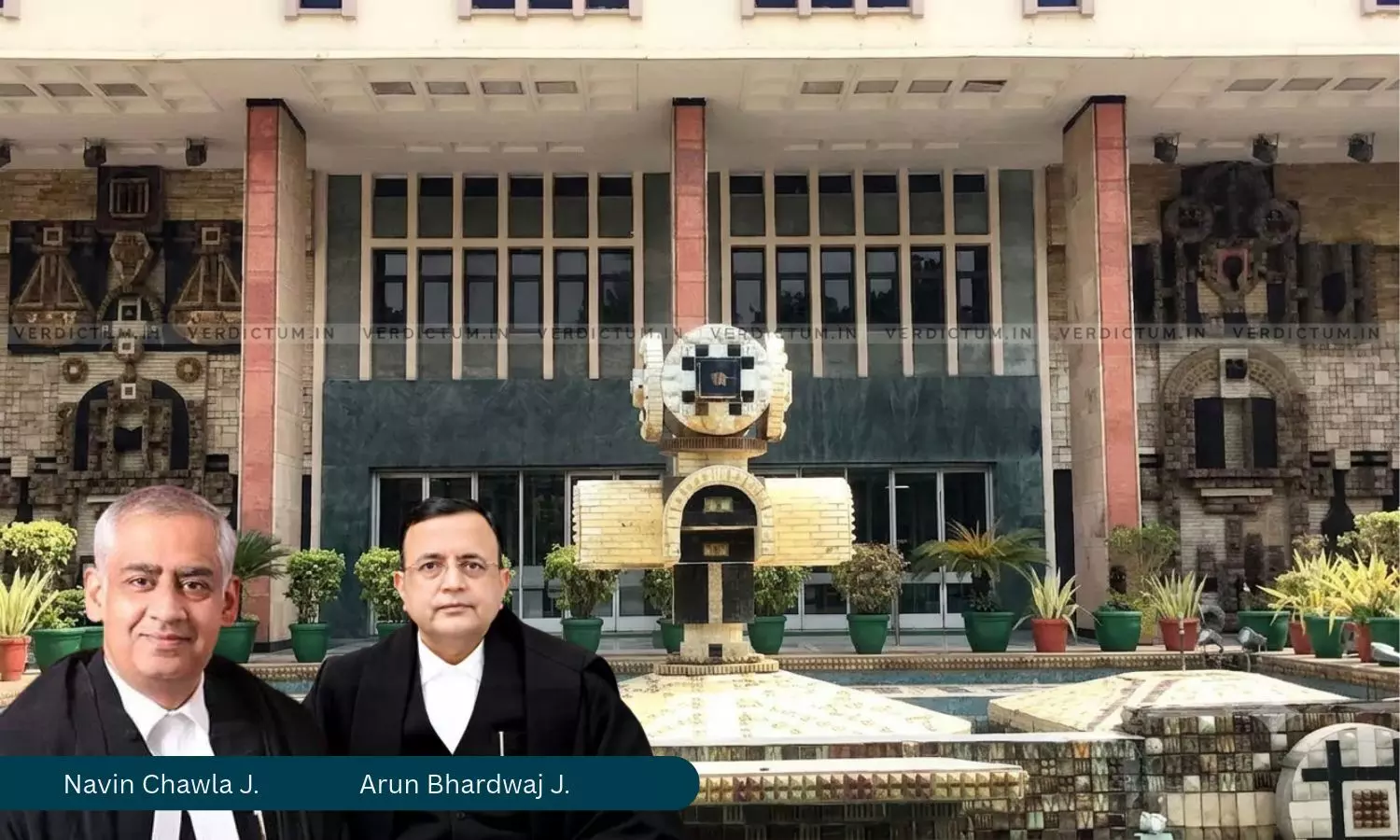
The Delhi High Court ruled that Section 86(4) of the Juvenile Justice (Care and Protection of Children) Act, 2015, amended effective September 1 2022, has a retrospective effect. Consequently, trials of juvenile justice offences pending before a Judicial Magistrate of the First Class must be transferred to the Children’s Court. The court held that a change of forum is procedural and applies to pending proceedings, and that shifting the first appeal from the Sessions Court to the High Court does not curtail the right of appeal. It also held that general offences under the Bharatiya Nyaya Sanhita (BNS) or the Indian Penal Code (IPC), even when the victim is a minor, are not exclusively triable by a Children’s Court.
A Division Bench of Justice Navin Chawla and Justice Arun Bhardwaj observed: “Section 86(4) of the JJ Act, 2015 has a retrospective effect, meaning thereby, that even the trials which are pending before the Judicial Magistrate of the First Class under the unamended Act, shall be transferred to the Children’s Court by virtue of Section 86(4) of the JJ Act, 2015, post its amendment.”
Advocate Jai Sahai Endlaw appeared as amicus curiae, while Rohan Jaitley, CGSC, represented the Union of India. The reference arose from State v. Uday Kumar, an FIR registered at Police Station Lajpat Nagar. Prior to the amendment, offences punishable with more than seven years were triable by the Children’s Court, those punishable with three to seven years by a Magistrate of the First Class, and the rest by any Magistrate. The amended Section 86(4) makes all offences under the Act triable by the Children’s Court.
On January 24 2026, the Additional Sessions Judge‑06 (POCSO), Saket, referred two questions under Section 436 of the Bharatiya Nagarik Suraksha Sanhita, 2023 (BNSS). The questions were whether Section 86(4) applies retrospectively, and whether general BNS or IPC offences with a minor victim must be tried by the Children’s Court. The court, citing Hitendra Vishnu Thakur v. State of Maharashtra (1994), Neena Aneja v. Jai Prakash Associates Ltd. (2022) and Mumtaz Yarud Dowla Wakf v. Badam Balakrishna Hotel Pvt. Ltd. (2023), held that a change of forum is procedural and presumed retrospective unless a contrary intention appears or a vested right of appeal is curtailed. It found no curtailment, as only the forum of appeal changes, and held that the State’s appeal against acquittal now lying before the High Court, with leave under Section 419(3) BNSS, did not override the legislative intent evident from the “notwithstanding” clause in Section 86(4).
On the second question, the court held that Section 86(4) covers only “offences under this Act”, and that Section 25 of the Commissions for Protection of Child Rights Act, 2005 neither defines offences against children nor creates an exclusive forum. The court answered the first question affirmatively and the second negatively, disposed of the reference, and directed that a copy be sent to the Reference Court.
Cause Title: Court On Its Own Motion v. State Govt. of NCT of Delhi (Neutral Citation: 2026:DHC:10329-DB).