Law & Justice
Virginia Court Affirms Temporary Disability Benefits for Construction Worker After 20‑Foot Fall
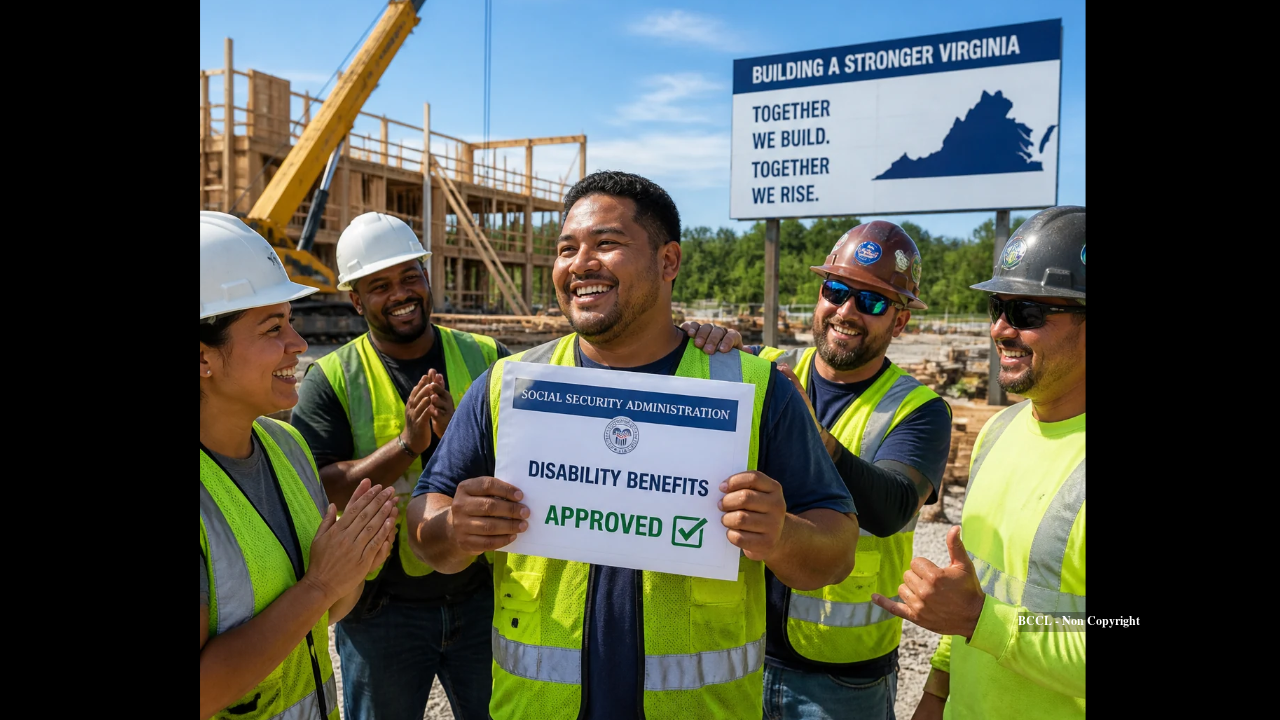
A Virginia appeals court upheld temporary total disability benefits for construction worker Olegario Felipe Valles, who fell about 20 feet while installing siding on June 20, 2019, and later underwent lumbar fusion surgery. The Court of Appeals of Virginia issued an unpublished decision on November 24, 2026, rejecting American Building Dynamics, Inc. and its insurer’s request to terminate Valles’s benefits. The ruling confirms that an injured worker does not lose disability protection simply because time has passed or because an employer claims the worker can perform some work. The court found no error in the Virginia Workers’ Compensation Commission’s conclusion that Valles remained unable to perform his pre‑injury job and had not demonstrated the ability to perform suitable alternative work. Valles’s fall caused serious injuries that led to surgeries and ongoing medical treatment. In January 2022, he underwent lumbar fusion surgery to stabilize part of his lower back. His treating physician, Dr. Zafar, noted that Valles continued to experience symptoms and functional limitations after the operation. The employer and insurer filed an application to terminate Valles’s temporary total disability payments, arguing that he had reached maximum medical improvement and could work within his physical restrictions. The Commission denied the application, finding that the employer had not met its burden to prove that suitable work was available to Valles. The appeal focused on whether the Commission’s factual findings and legal conclusions were supported by the record. The court reviewed the Commission’s findings under a deferential standard, determining that the decision was supported by credible evidence and that no error of law existed. The court noted that Valles still had significant limitations after surgery, as documented by Dr. Zafar, and that the employer had not provided a genuine offer of suitable alternative employment that Valles could physically perform. Virginia workers’ compensation law requires an employer seeking to end temporary total disability benefits to show that the employee can return to work, typically by identifying a job that fits the employee’s physical limitations and demonstrating that the job is actually available. A general assertion that light‑duty work exists is insufficient. The appellate court affirmed the Commission’s denial of the termination application. The decision does not preclude future changes to Valles’s benefits if his condition improves, if he returns to work, or if the employer later proves suitable work is available. As of the ruling, the employer had not carried that burden. Valles’s case illustrates the long duration of disputes over workplace injuries, medical treatment, rehabilitation, and appeals. The court’s decision reinforces that medical documentation and evidence of ongoing limitations are critical in determining the continuation of benefits. For employers, the case serves as a reminder that terminating benefits requires proof of both the worker’s ability to perform a specific job and the availability of that job. For workers, the ruling preserves income support while Valles remains unable to perform his former role and underscores that an injured employee is not required to prove that no job exists elsewhere. Seven years after the fall, Valles’s temporary total disability benefits remain in place, and the employer’s appeal was rejected.
Frequently asked questions
What was the outcome of the Virginia appeals court decision regarding Olegario Valles' disability benefits?
The court upheld his temporary total disability benefits and rejected the employer's request to terminate them.
Why did the court reject the employer's request to terminate Valles' benefits?
Because the employer failed to prove suitable alternative work was available and Valles remained unable to perform his pre‑injury job, with ongoing medical limitations documented by Dr. Zafar.
What does Virginia workers’ compensation law require an employer to show when ending temporary total disability benefits?
The employer must show that the employee can return to work by identifying a suitable job that fits the employee’s physical limitations and demonstrating that the job is actually available.