Space
India’s Gaganyaan Astronauts Co‑Engineer Crew Module Ahead of 2028 Flight
By Shouvik Das
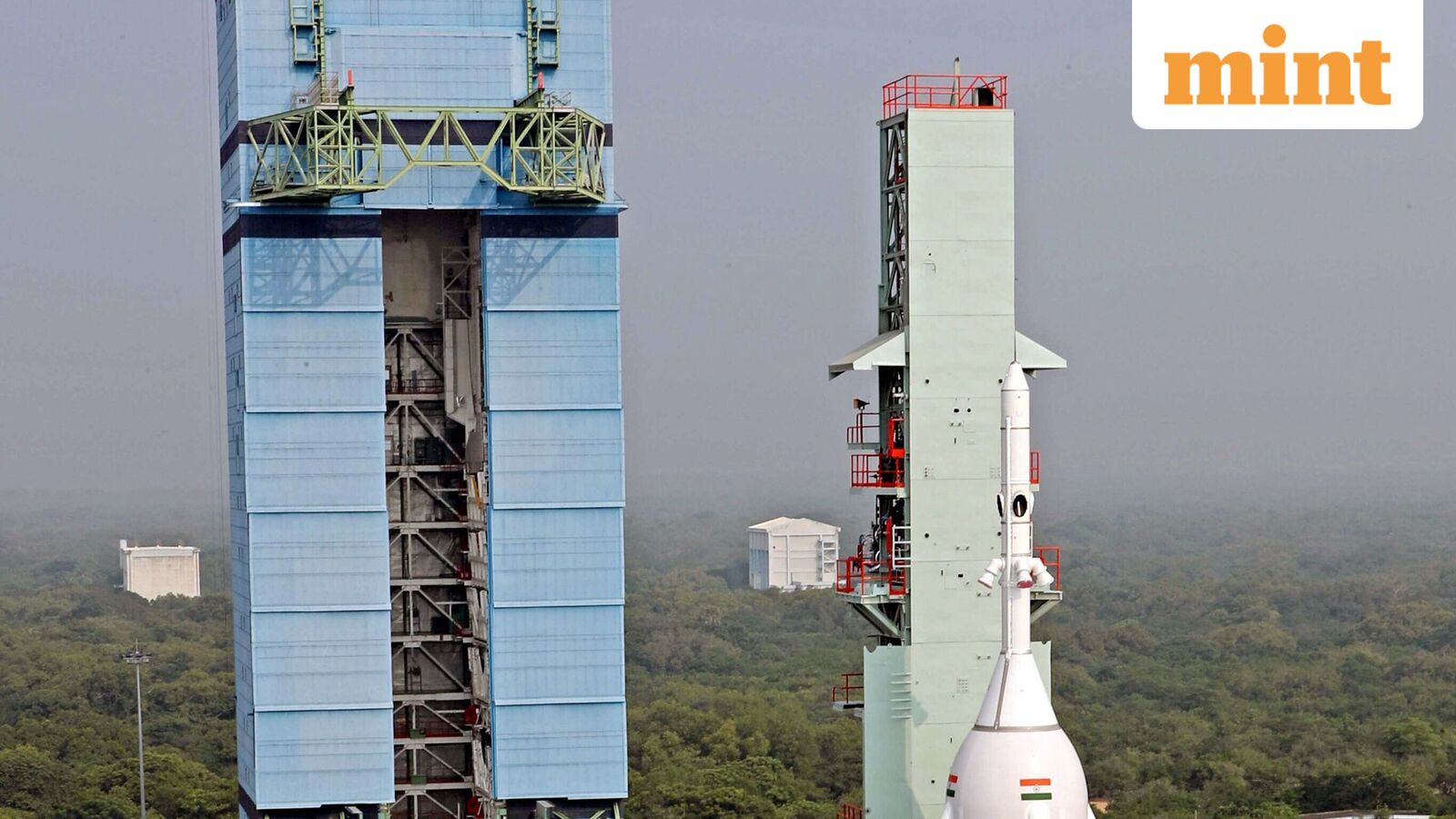
India’s four Gaganyaan astronauts are not only training for a crewed flight to low‑Earth orbit in fiscal year 2028, they are also helping design the spacecraft that will carry them. The crew module is the core of India’s human spaceflight programme, which also supports the country’s 2040 moon‑landing objective. Once the maiden crewed flight launches, India will become the fourth nation to operate a human‑rated spacecraft, joining the United States, Russia and China.
In an interview with Mint, Air Commodore Prasanth Balakrishnan Nair, one of the four selected astronauts, said the crew is contributing to India’s goal of offering human spaceflight as a niche capability to countries that do not have a full‑scale space programme. The other three astronauts are Group Captains Shubhanshu Shukla, Ajit Krishnan and Angad Pratap.
Commercial human spaceflight remains rare. Two price benchmarks exist: Axiom Space, which has flown private crews to the International Space Station since 2022 at $55 million per seat, and Virgin Galactic, which plans to resume six‑seat passenger flights at $850,000 per seat. Group Captain Shubhanshu Shukla flew to the ISS on Axiom’s Ax‑4 mission in June 2025.
Human‑spaceflight capability brings strategic leverage. On 25 November, China’s Long March‑2F rocket carried Pakistan’s first astronaut into orbit for scientific research. “Beyond the initial training we received, I am also employed as Scientist‑G at the Department of Space, where our objectives are to build space capabilities that we can then offer to other countries as well, including nations that do not have their own space programmes right now,” Nair said.
Explaining how the astronauts are helping co‑engineer Gaganyaan’s human module, Nair said their background flying high‑speed aircraft, including prototypes, made them “natural picks to help engineer how a manned space mission will play out”. While specific design changes were not shared, the astronauts are helping shape the avionics, propulsion, control and safety systems for the future crew module.
India has positioned space capabilities as a key pillar of its global soft power. In a virtual address to the International Space Summit in Paris on 10 September, Prime Minister Narendra Modi said India aims to deploy its indigenous space technologies globally. “Isro has successfully deployed more than 430 payloads from 34 countries aboard domestic rockets,” he said.
India’s private sector is also actively helping build the human space module. Engineering conglomerate Larsen & Toubro is working alongside Isro and the astronaut team, most recently delivering a crew escape module on 5 November. At least a half a dozen private companies, including L&T, Godrej Aerospace, Tata Advanced Systems and Data Patterns India, are involved in Gaganyaan in various capacities.
Budget, scope and timeline
First announced in August 2018 with a ₹9,023 crore ($1.1 billion) budget, Gaganyaan originally aimed for two unmanned test flights of a human‑rated module to low‑Earth orbit, followed by a crewed mission by May 2022. That schedule slipped before the Centre expanded the programme to three uncrewed test flights, four launches for India’s indigenous low‑Earth‑orbit space station, and a crewed mission with Nair and his three colleagues, now targeted for March 2028. The mission’s budget currently stands at ₹20,193 crore ($2.2 billion), more than double the initial allocation.
Space industry stakeholders pointed out that the mission’s budget is far smaller than those of global manned space missions, such as NASA’s 14‑day manned Artemis‑3 mission to low‑Earth orbit, also scheduled for late 2027. While NASA does not disclose mission‑wise costs, the Artemis programme spent $93 billion between 2012 and 2025. From 1 October 2026 to 30 September 2027, Artemis alone had a budget of $9.8 billion.
“Isro’s core role, irrespective of the privatization of India’s space affairs, will always be research‑led missions,” said Chaitanya Giri, space fellow at the Observer Research Foundation. He added that Gaganyaan’s frugality reflects India’s much smaller space budget compared with NASA, making a direct Artemis‑Gaganyaan comparison uneven.
For now, Mint could not independently determine whether India’s human space programme has already drawn commercial interest from other countries. Nair declined to comment on further details of the programme, citing Gaganyaan’s sensitive nature.
The cost and competition test India’s goal of offering low‑cost space technologies has faced a challenge. Over the past 12 months, advances in the scale and size of rockets built by Elon Musk‑backed SpaceX in the US have cut space payload launch costs to $1,000 per kg. While India is also making progress by privatizing its workhorse rocket Polar Satellite Launch Vehicle (PSLV) through a consortium led by L&T, the country’s space launch costs remain much higher. On 22 August, Mint reported that India’s rocket launch costs as of 2025 were $13,000 per kg, as against an average of $3,200 per kg in the US. Scientific missions, however, still cost a fraction of global equivalents.
“Isro’s importance in the scientific domain remains unquestioned worldwide, and privatizing commercial aspects is only one part of India’s space programme, taken in accordance with India’s Space Policy, 2023,” Pawan Kumar Goenka, chairman of India’s nodal space authorization body In‑Space, told Mint.