Law & Justice
Former CJI Gavai Accuses Supreme Court Collegium of Favoring One Community
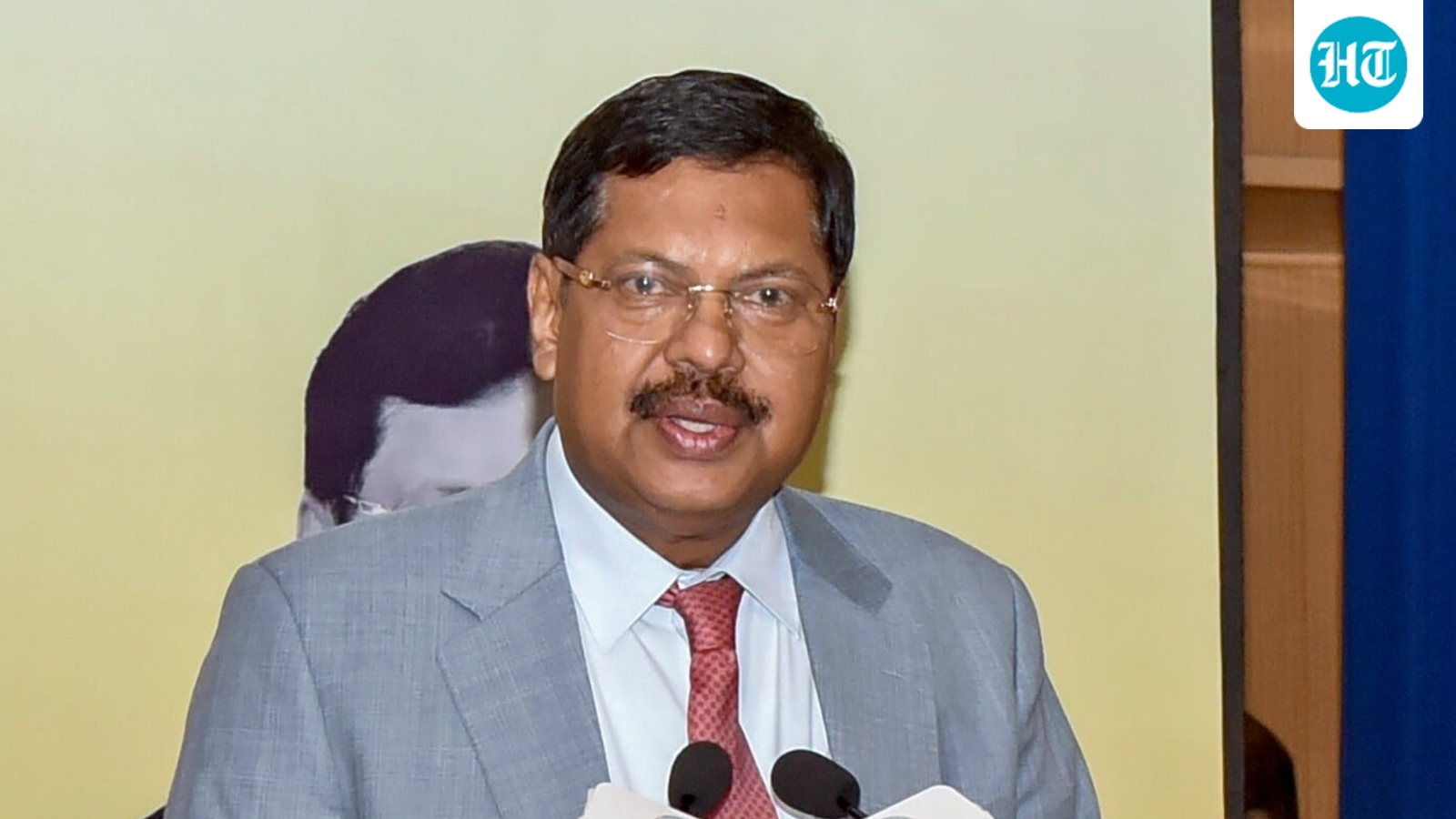
In a letter dated November 27, former Chief Justice of India Bhushan R Gavai wrote to President Droupadi Murmu alleging that the Supreme Court collegium is increasingly favouring candidates from a single community for elevation to constitutional courts, while excluding scheduled castes, scheduled tribes, other backward classes, minorities and women. Gavai, who headed the collegium for nearly six months before stepping down in November 2025, said recent recommendations reflected a disturbing disregard for merit, diversity and inclusivity and appeared driven by an effort to “appease and reward a single community”. He did not name the community, but his reference to a group accounting for less than 5 % of India’s population securing more than 40 % representation in the Supreme Court, with its share rising “manifold in the recent past”, pointed to Brahmins. People aware of the matter confirmed that the former CJI’s letter alludes to Brahmins.
Gavai wrote that the historical pattern of disproportionate representation had persisted for decades without meaningful correction. The current collegium comprises CJI Surya Kant, and justices Vikram Nath, B V Nagarathna, M M Sundresh and P S Narasimha. He said he had consistently followed the principles of diversity and inclusion while recommending candidates for elevation to the high courts and the Supreme Court, and that candidates from one particular section of society are being favoured for recommendation or elevation to the exclusion of everyone else, including marginalised communities.
To illustrate the imbalance, Gavai cited parliamentary data on judicial appointments. He referred to the Union law minister’s response in the Rajya Sabha in March 2025, which showed that of the 715 high court judges appointed since 2018, only 22 belonged to the SCs, 16 to the STs, 89 to the OBCs and 37 to minority communities, with roughly three‑quarters coming from the general category. He also cited figures for appointments between January 2021 and January 2026, arguing that the share of forward communities was close to 80 %, while OBCs, who account for a substantially larger share of the population, received less than 14 % representation. The letter pointed out that caste‑wise data was not maintained for appointments to the Supreme Court, describing the absence of such information as part of the problem.
During his tenure as CJI, the collegium placed details of its high court recommendations in the public domain, including the social background of candidates. Between May 14 and November 23, 2025, the collegium headed by him recommended 129 names for high court appointments, of which 93 were cleared by the government. These included 10 judges from the Scheduled Caste community, 11 from OBC and backward classes, 13 from minority communities and 15 women. The collegium also recommended five judges for elevation to the Supreme Court during his tenure – justices N V Anjaria, Vijay Bishnoi, A S Chandurkar, Alok Aradhe and Vipul M Pancholi.
Gavai also flagged questionable decisions in the transfer and subsequent elevation of high court chief justices. Without naming the judges concerned, he referred to a chief justice who, after being transferred successively to smaller high courts, was now being recommended to head a prominent high court, allegedly on account of belonging to the particular community. He alleged that a “meritorious and hard‑working” chief justice was transferred to a smaller high court to make way for him. Gavai said he had been part of the collegium that recommended the earlier transfers of the first judge and had headed it when the second judge was unanimously recommended as chief justice of a prestigious high court on the basis of merit. He also cited another instance of a judge allegedly being transferred on punitive considerations before subsequently being rewarded with the chief justiceship of a large and prominent high court.
Invoking Article 124(2) of the Constitution, which provides for the appointment of Supreme Court judges by the President, Gavai said the judicial interpretation that has made collegium recommendations decisive had neither rendered the collegium unaccountable nor absolved the President of her constitutional responsibility. He urged President Murmu to intervene to ensure that all stakeholders discharge their constitutional responsibility of securing adequate representation in the higher judiciary. The letter was also marked to Prime Minister Narendra Modi and Union law minister Arjun Ram Meghwal.
Frequently asked questions
When did former CJI Bhushan R Gavai write his letter to President Droupadi Murmu?
The letter was dated November 27.
Which community does the letter suggest is being favored by the Supreme Court collegium?
The letter alludes to Brahmins.
How many high court judges were recommended by the collegium during Gavai's tenure?
129 names were recommended between May 14 and November 23, 2025.