Climate & Environment
Iowa Lead Azide Detonation Deemed Highly Successful, No Airborne Lead Detected
By Hoda Sherif
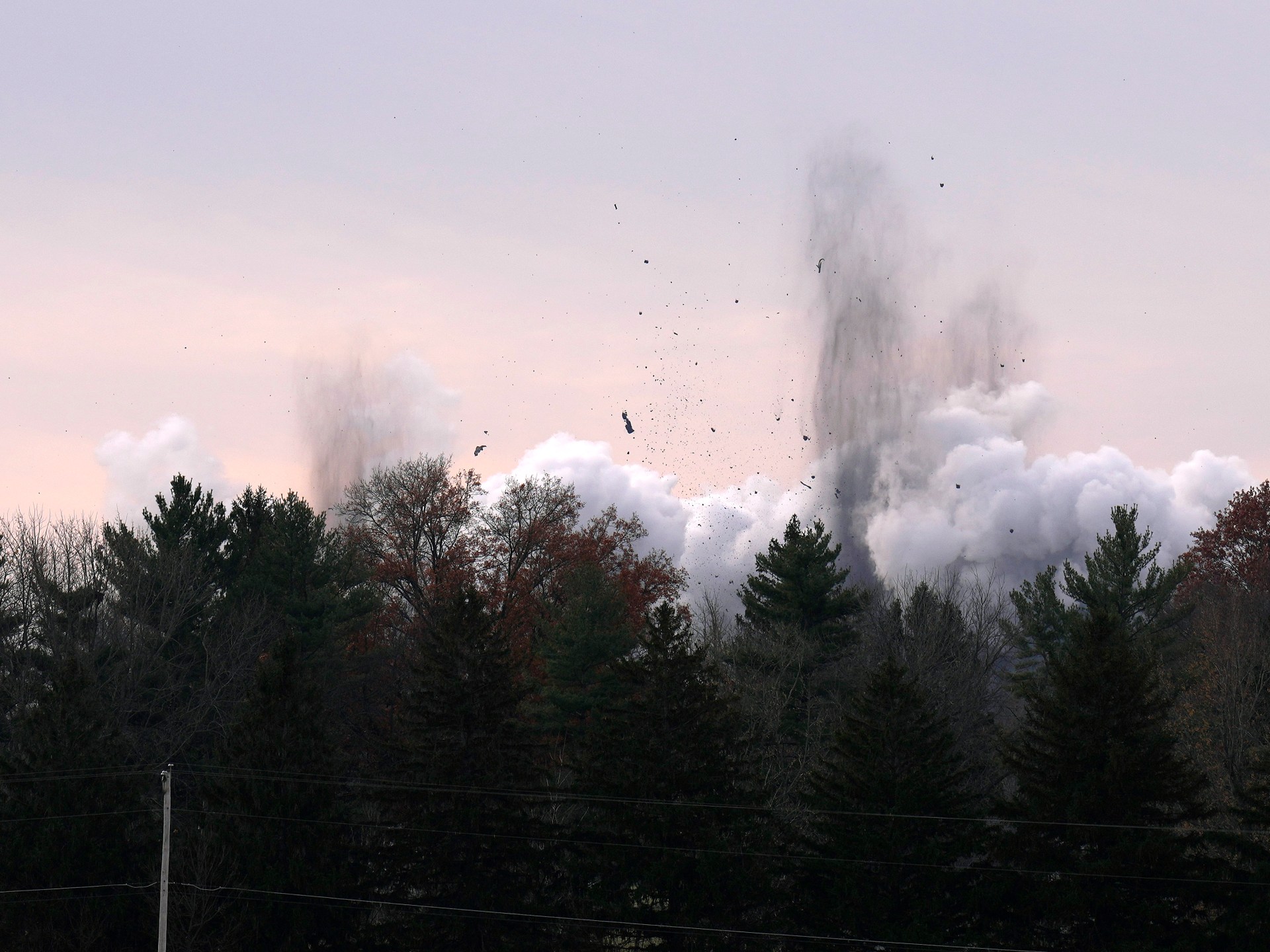
The United States Army announced that the controlled detonation of 68 drums of lead azide at a military base in Iowa was a success, saying the operation had “wildly exceeded expectations.” Major General Eric Shirley, who led the disposal effort, told reporters at a news conference in Middletown, a southeastern rural city near the ammunition plant, that overhead footage confirmed all barrels were removed. The detonation, which took place at 10:15 am (16:15 GMT), destroyed about 4,500 kg (10,000 lb) of deteriorating lead azide, an explosive used in military munitions since World War I. Shirley added that there were no secondary explosions, no kick‑out, and no damage to nearby infrastructure, calling the operation “tremendously successful.” He noted that mitigation measures—including earthworks, foam barriers and gel blocks—helped absorb shockwaves and toxic fallout.
The Army said that extensive mitigation helped contain the blast, and that the EPA’s real‑time air monitors reported zero detection of airborne lead in the region following the detonation. Federal officials continue to monitor the blast zone.
Representative Mike Quigley of Illinois criticized the timing and communication of the operation, calling the holiday‑eve scheduling and lack of outreach “unconscionable.” In a statement on X, he said it was unfair that the military released 9,500 lb of unstable lead azide on Iowa residents the day before Thanksgiving.
Lead is a nonbiodegradable element that can persist in the environment, with airborne particles capable of traveling long distances before settling on soil and potentially leaching into groundwater. Detonation breaks the compound into nitrogen gas and metallic lead, but lead remains a potent neurotoxin, especially for children and pregnant women, and can cause learning disabilities, impaired neurological function, mental health challenges, reproductive harm, hearing loss and other impairments.
Independent environmental testing expert Scott Smith, who was involved in air testing after the 2023 East Palestine, Ohio train derailment, noted that the EPA must also test for breakdown products, stabilizers and plasticizers containing lead azide, which can be endocrine disruptors and cancer‑causing chemicals.
The Army Sustainment Command will release a final breakdown of the affected area, including lead‑dust dispersion and surface‑deposition maps, after the operation. Major General Shirley said he believed the Army had reduced the risk to the health and safety of Middletown residents and the wider Iowa community as close to zero as possible.
Frequently asked questions
How many drums of lead azide were detonated in Iowa?
68 drums were detonated.
Was any airborne lead detected after the detonation?
No, EPA real‑time air monitors reported zero detection of airborne lead.
What mitigation measures were used to contain the blast?
Earthworks, foam barriers, and gel blocks were employed to absorb shockwaves and toxic fallout.