Politics
Netanyahu’s Potential Iran Strike Could Undermine Israel’s New Government Talks
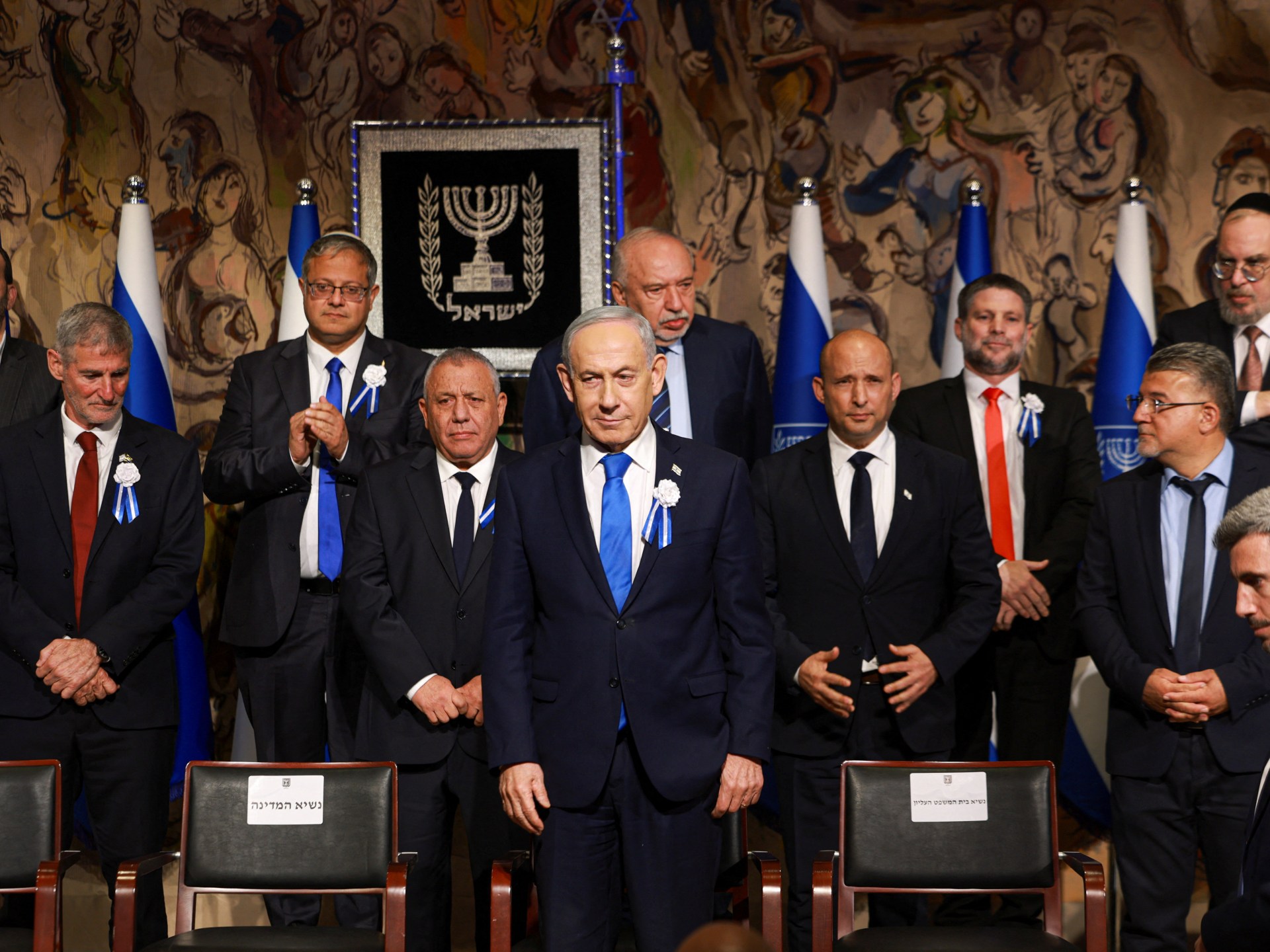
Israeli opposition leader Gadi Eisenkot is working to form a coalition government before a possible escalation in the US‑Israel war with Iran could give interim Prime Minister Benjamin Netanyahu an advantage. Eisenkot’s bloc holds 48 seats in the 120‑seat Knesset, 13 short of a majority, but could gain the 19 seats of Arab parties outside the government to cross the threshold. Netanyahu’s supporters are reluctant to ally with Arab parties, while the ultra‑Orthodox United Torah Judaism (UTJ) bloc could support either side. Likud’s 46 Knesset members have not yet endorsed a candidate, a decision that could be decisive before the December 6 deadline for forming a government.
Negotiations between Eisenkot’s Yashar party and Likud remain tense. Eisenkot has ruled out serving in a Netanyahu‑led government but has called for a unity government in which he would share leadership roles. Netanyahu argues that Israel needs a government free from what he calls the “taint” of Arab‑party participation and can respond to an imminent military threat from Iran. Some analysts say that renewed conflict with Iran could derail negotiations, forcing rival blocs to align behind Netanyahu.
Eisenkot has told party members that he sees no imminent threat requiring military action before a new government is sworn in. His ally, Avigdor Liberman, recently appointed to the Knesset’s Foreign Affairs and Defence Committee, also said he saw no justification for new Israeli strikes. “If we end up seeing a strike right now, then we’ll know that it’s completely motivated by politics and not security concerns,” Liberman told Israeli media.
Israel’s military chief, Lieutenant General Eyal Zamir, and researchers within Mossad reportedly see no case for an immediate attack on Iran. Although defence officials have warned that new attacks could trigger a wider regional conflict, Mossad chief Roman Gofman has reportedly advocated renewed military action.
In mid‑November, US media reported that Netanyahu sent his longtime ally Roman Gofman to Washington, DC, to urge joint strikes on Iran, based on new intelligence Israel had reportedly uncovered indicating that Tehran was developing chemical weapons. Several other Netanyahu appointees are also reported to support military action. On Tuesday, Defence Minister Israel Katz called for pre‑emptive strikes against Iran before it could fully develop the chemical weapons programme he claimed was already underway. Also reportedly backing new strikes on Iran are David Zini, head of the Shin Bet internal security agency, and two further Netanyahu appointees – National Security Council chair Shmuel Ben Ezra and Israel’s ambassador to the US, Yechiel Leiter.
US President Donald Trump echoed many of Netanyahu’s claims in a November 19 interview with Fox News, although he stopped short of committing to military action before the end of the year. “There is indication that Iran is looking at gases, looking at bio, because we’ve shut them out with the nuclear. Nuclear is much harder. And they’re looking at gas and… biological weapons, not nice, and other things,” he said, without providing evidence.
Gulf countries, which would likely be heavily affected by a renewed conflict with Iran, have reportedly urged Washington to maintain its economic pressure on Tehran rather than return to military action. According to the US news website Axios, some senior US officials are also highly sceptical of Israel’s claims, with one telling the outlet they appeared to be “driven by an agenda”. Iran has denied developing chemical weapons and has compared the claims to the false allegations that Iraq had weapons of mass destruction, used to justify the US‑led invasion in 2003. Writing on X, Iranian Foreign Ministry spokesman Esmaeil Baghaei accused those making the allegations of expecting the world to suffer “a bout of collective amnesia”, likening the situation to Dory, the forgetful fish from the 2003 animated film Finding Nemo.
Many in Israel regard Iran as the ultimate regional threat. For years, Iranian propaganda and that of its regional allies, such as Hezbollah in Lebanon, have called for the destruction of Israel as a state. Repeated claims by Netanyahu, dating back to at least the 1990s, that Iran is poised to develop a nuclear weapon that could be deployed against Israel without hesitation, have reinforced this view. “If war started, even manufactured, everyone would rally around the flag, as this is what Israelis do in crisis,” Ahron Bregman, an Israeli security analyst and senior teaching fellow at King’s College London, said. “Netanyahu can go to war knowing that no political leader will oppose him the moment bombs started falling on Iran,” he added.
Netanyahu has been accused of prioritising his political survival over other pressing national issues, and some believe he could restart the war on Iran to save his career. Alongside the multiple corruption charges for which he has been on trial since 2020 are allegations that he misled lawmakers about his administration’s failures ahead of the October 7 Hamas‑led attacks on southern Israel, sparking Israel’s war on Gaza. There have also been widespread accusations, including from former US President Joe Biden, that Netanyahu has prolonged the conflict in Gaza for political reasons. Israeli political analyst Nimrod Flashenberg said, “I think it would be very easy for him. His own survival and what he sees as Israel’s are aligned. It’s not that he thinks of it purely in terms of attacking Iran to stay in office. He sees attacking Iran, as he always has, as necessary for Israel and a path that will also need him to stay in office.”
Frequently asked questions
How many seats does Gadi Eisenkot's bloc hold in the Knesset?
48 seats out of 120.
What is Netanyahu's position on forming a government with Arab parties?
He is reluctant to ally with Arab parties and wants a government free from their participation.
Who has advocated for renewed military action against Iran?
Mossad chief Roman Gofman and Defence Minister Israel Katz, among others.