World
Sutton Hoo Excavation Reveals Sand Imprint of Anglo‑Saxon Body with Grave Goods and Possible Second Burial
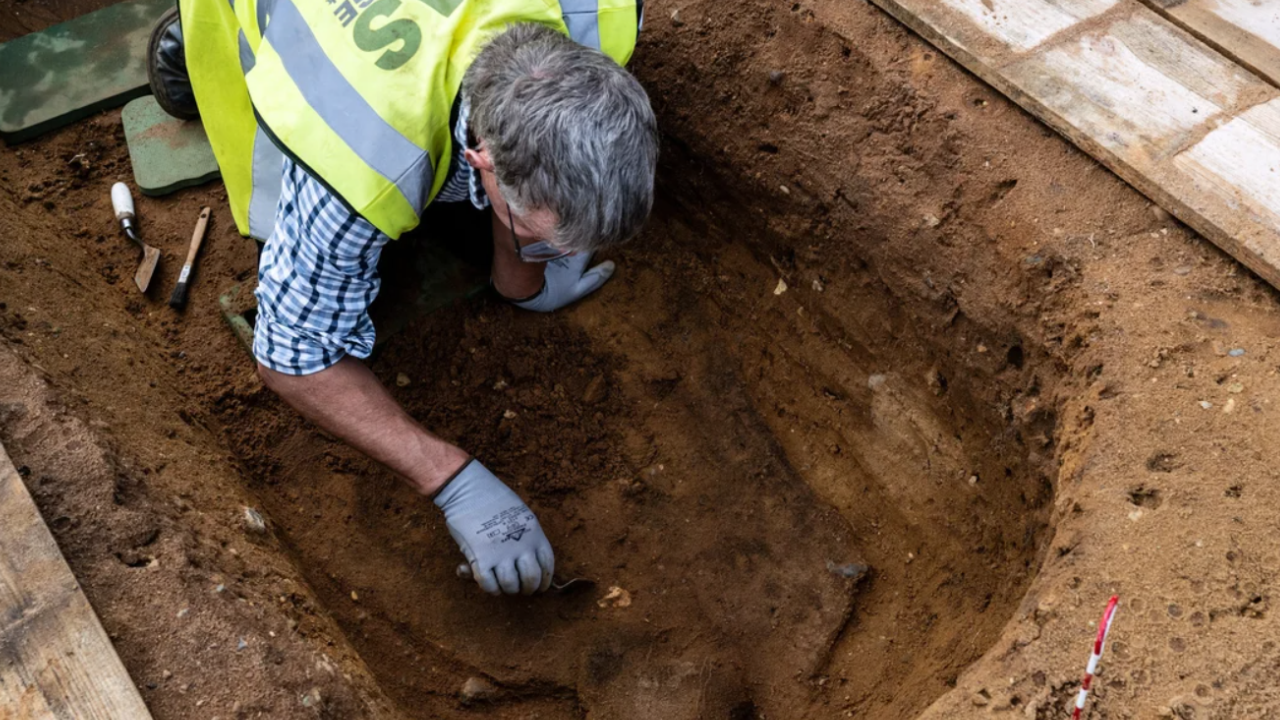
National Trust archaeologists working at Sutton Hoo in Suffolk have uncovered a rare "sand body" – a negative impression of a human figure left in the sand after the bones and tissues dissolved in acidic soil. The outline was found in Garden Field, a cemetery surrounding the famous royal burial site. Alongside the imprint, the team recovered beads, a knife, a pair of tweezers and a brooch, items that provide clues to the identity and status of the buried individual.
The discovery, made during a 2024 dig, also shows evidence beneath the sand body that a second person may have been interred in the same grave. It is unclear whether the two burials were contemporaneous or if the grave was reused later.
Dr Angus Wainwright, a National Trust archaeologist, explained that the sand bodies form when the body decomposes and the surrounding sand hardens into a mould of the shape. He compared the phenomenon to the negative impressions found at Pompeii, noting the different preservation processes.
Sutton Hoo is best known for the 1939 ship burial associated with King Rædwald, but the Garden Field cemetery offers insight into everyday East Anglian life. The site contains a mix of burial practices, including cremation and in‑humation, and a sixth‑century Byzantine bucket with cremation remains has also been found.
The findings are part of a two‑season research project between the National Trust and Time Team. The results are being presented in a four‑part documentary series, with the first episode released on YouTube on 14 November 2026. The sand imprint, lacking bones or a face, remains a striking reminder of the lives of people who lived over a thousand years ago.
Frequently asked questions
What is a sand body?
A sand body is a negative impression left in the sand after a body decomposes and the surrounding sand hardens into a mould of the shape, as explained by Dr Angus Wainwright.
What items were found with the sand body imprint?
Beads, a knife, a pair of tweezers, and a brooch were recovered alongside the imprint.