Agriculture
India Opens Talks on Wheat Export Policy Amid Production Concerns
By Dhirendra Kumar, Vijay C Roy
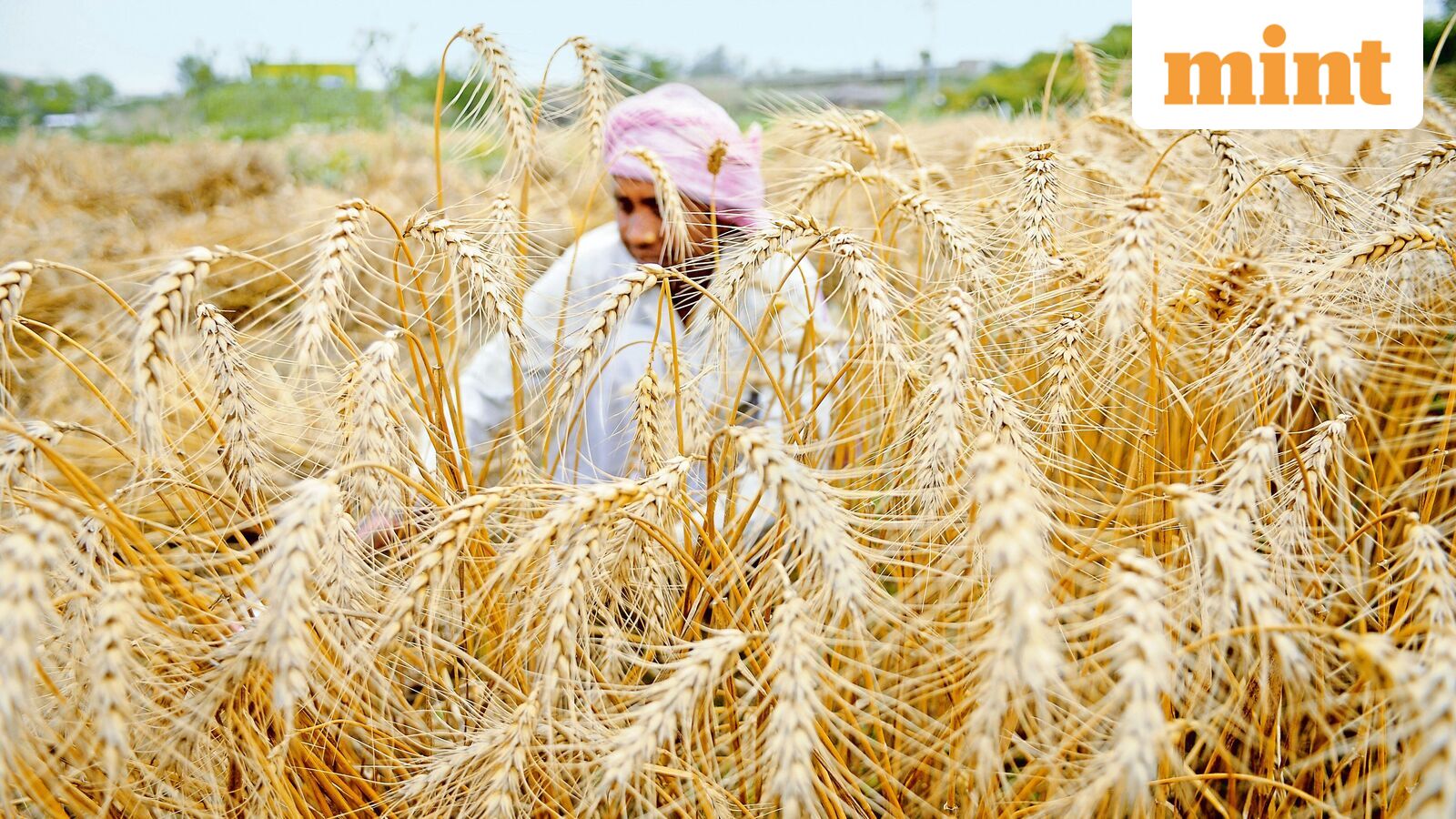
India has begun inter‑ministerial discussions to review its liberalised wheat export policy, three months after it allowed unrestricted overseas shipments. The talks are prompted by a sharp slowdown in wheat sowing and a 13% rainfall deficit after the southwest monsoon, which have led to a 15.3% drop in wheat acreage to 5.007 million hectares as of 13 November, compared with 5.910 million hectares a year earlier. Officials said the government is assessing domestic wheat availability, food‑security needs and irrigation water before deciding on the export policy. One source, speaking anonymously, said the discussions are precautionary and that a decision will be taken later, keeping farmers’ interests in mind. A second source added that the government is not currently moving toward restricting exports.
India has a history of banning wheat exports to protect domestic supplies and prices. The country banned exports in 2007, lifted the ban in September 2011, re‑banned them in May 2022, eased restrictions in February 2026 and lifted the ban entirely in August 2026, while still allowing limited government‑to‑government deals.
Industry experts noted that Indian wheat is relatively expensive in the international market, limiting export incentives. Navneet Chitlangia, former president of the Roller Flour Millers’ Federation of India, said that international prices are low due to a weak dollar, a strong rupee and supplies from the Black Sea region, while domestic prices are driven by the high minimum support price. Varun Verma, owner of Delhi‑based Nidhiraj Exports, said that the price gap between domestic and international markets discourages buyers.
The government holds substantial wheat stocks in its central pool, with 447.60 lakh tonnes reported on 1 November, well above the prescribed minimum of 20.520 million tonnes for 1 October and the 30.727 million tonnes held on 1 November 2025. These stocks provide a cushion against near‑term supply concerns, but will be weighed against procurement needs for the next marketing season and distribution commitments.
Under the Pradhan Mantri Garib Kalyan Anna Yojana, eligible beneficiaries receive free food grains: 5 kg per person per month for Priority Households and 35 kg per household per month for Antyodaya Anna Yojana families. This arrangement is extended until December 2028. For FY27, the government has allocated 21.855 million tonnes of wheat for distribution and sale, about 2.7 million tonnes more than FY26. Of this, 21.447 million tonnes are earmarked for distribution under the National Food Security Act and the Garib Kalyan Anna Yojana, up from 17.133 million tonnes in the previous fiscal year. The government has set an initial procurement target of 30.3 million tonnes for the 2026‑27 marketing season, slightly lower than the 31.0 million tonnes targeted for 2025‑26.
Frequently asked questions
What prompted India to review its wheat export policy?
The review was prompted by a sharp slowdown in wheat sowing, a 13% rainfall deficit after the southwest monsoon, and a 15.3% drop in wheat acreage to 5.007 million hectares as of 13 November.
What is the current status of India's wheat export policy?
The government is assessing domestic wheat availability, food‑security needs, and irrigation water before deciding, and is not currently moving toward restricting exports.
How many wheat tonnes are allocated for distribution under the Garib Kalyan Anna Yojana for FY27?
For FY27, 21.855 million tonnes of wheat are allocated for distribution and sale, with 21.447 million tonnes earmarked for distribution under the National Food Security Act and the Garib Kalyan Anna Yojana.