World
Pakistan Declines to Invite Afghanistan to ECO Meeting Over Regime Recognition
By News Desk
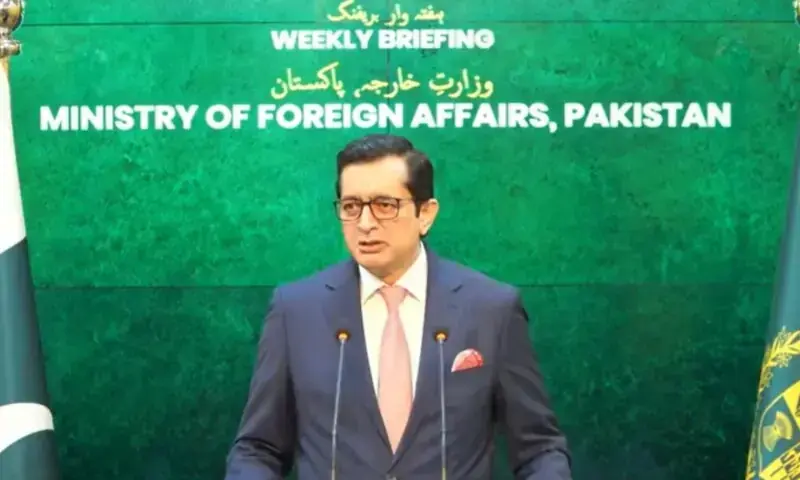
The Foreign Office (FO) announced on Friday that Afghanistan was not invited to the Economic Cooperation Organisation (ECO) Council of Foreign Ministers meeting in Islamabad because Pakistan does not recognise the incumbent Afghan regime. FO spokesperson Sajjad Haider Khan said that Afghanistan’s membership had been suspended by the ECO Secretariat and that ministerial‑level participation in ECO meetings is at the host country’s discretion under the organisation’s procedures. "Afghanistan was not invited to join the ECO meeting in Islamabad as Pakistan has not recognised the incumbent regime," he said. He added that Pakistan values strong regional cooperation, connectivity and economic integration, and that this commitment shapes its approach to Afghanistan. "We want to see Afghanistan as a peaceful, prosperous and stable country, fully integrated within the ECO framework and at peace with itself as well as with all its neighbours," Khan said. He also noted that progress requires Afghan authorities to address legitimate security concerns of neighbouring countries, particularly the threat of terrorism emanating from Afghan soil, for sustainable regional peace, stability and development.
Regarding the ECO’s broader agenda, Khan said the adoption of the Strategic Goals of Economic Cooperation 2035 is an important step toward strengthening the organisation’s institutional and economic frameworks. The document builds on the ECO Vision 2025 and provides a longer‑term framework for regional integration, resilience, connectivity and sustainable prosperity. Practical priorities identified by the ECO include trade facilitation, transport and transit connectivity, energy cooperation, digital transformation, industrial development, food security, minerals and emerging technologies. Pakistan has assumed the ECO chairmanship for the next two years under the theme "Reviving Regionalism for a Resilient ECO" and will focus on translating agreed objectives into implementable initiatives through regular ministerial meetings, effective coordination and stronger public‑ and private‑sector participation.
Khan also mentioned the upcoming Makkah defence pact meeting between Pakistan, Saudi Arabia and Turkey, to be hosted by Islamabad later this month. Details will be shared after the meeting. "This meeting follows the agreement reached among the three participating countries," he said. "It will provide an opportunity to review progress under the agreement, strengthen institutional coordination, as the alliance architecture is still evolving, and discuss matters of mutual interest." He reiterated that the agreement is defensive in nature and not directed against another country, and that Pakistan remains fully committed to it. "Its aim is to strengthen collective defence and deterrence and ensure regional stability," he added.
The spokesperson also addressed the implementation of the Islamabad Memorandum of Understanding (MoU) signed between the US and Iran in June, stating that it "unfortunately remains impeded." He said Pakistan had "played its due role" by bringing the two sides together for negotiations and signing the MoU electronically, and highlighted the ECO’s joint communique that appreciated Pakistan’s mediatory role. "We hope that the two sides find ways to resolve their issues based on the MoU’s ingredients," Khan said. "We feel that the foundation for a peaceful region has already been established, and the signing of the MoU provides the roadmap for resolution of the dispute between the two sides, and de‑escalation at this particular time is needed."
Frequently asked questions
Why was Afghanistan not invited to the ECO meeting in Islamabad?
Pakistan does not recognise the incumbent Afghan regime, and the ECO Secretariat suspended Afghanistan's membership.
What are the ECO's strategic priorities for 2035?
Trade facilitation, transport and transit connectivity, energy cooperation, digital transformation, industrial development, food security, minerals, and emerging technologies.