World
Gupta Weighs Asia’s Diplomatic Calendar, Highlights Need for Concrete Outcomes
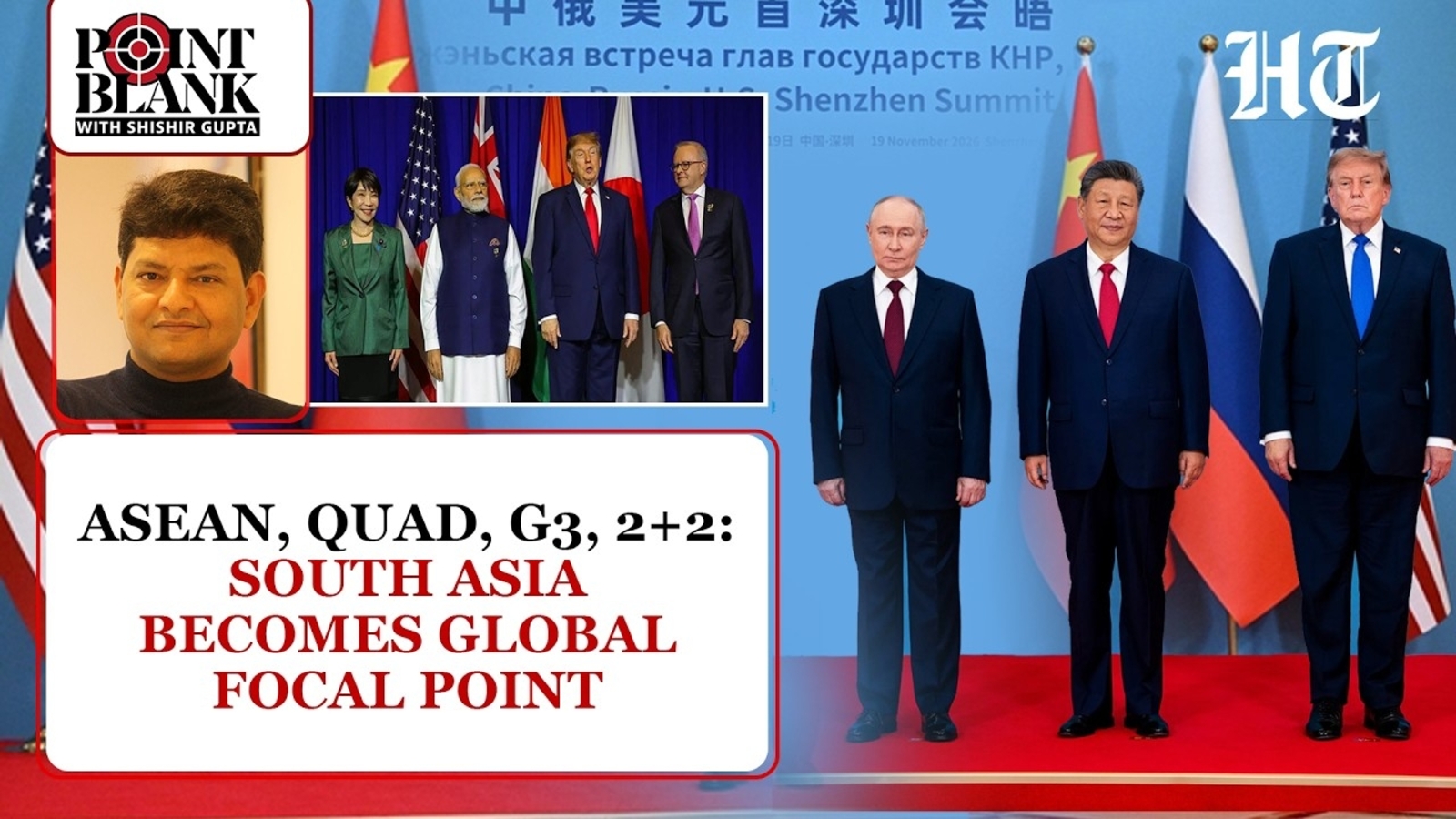
Shishir Gupta, Executive Editor of Hindustan Times, discussed the real impact of recent diplomatic gatherings on Point Blank, a weekly YouTube show on global geopolitics. He emphasized that a busy diplomatic schedule can give the impression of a shifting world order, but the true measure of a summit lies in what follows: whether tensions ease, agreements become operational, and countries can better protect their interests.
Gupta examined several regional dynamics. He said Southeast Asian nations prioritize maintaining peace and stability to sustain economic growth, engaging China, India, the United States and other powers not to choose sides but to preserve commercial opportunities. However, economic engagement alone cannot shield the region from security pressures. China’s expanding footprint is creating friction with the Philippines, Indonesia and Japan, prompting those countries to hedge by keeping ties with Beijing while strengthening relations with other powers. Gupta warned that a durable equilibrium will be difficult unless China moderates its behaviour. He also noted that Japan’s linkage of a Taiwan contingency to its own security shows that regional flashpoints cannot be treated in isolation.
Regarding the Shenzhen trilateral involving the United States, Russia and China, Gupta rejected the view that the meeting was merely talk and cautioned against declaring it a breakthrough before its understandings face practical tests. He identified key areas of significance—future direction of the United Nations, oil‑market stability, nuclear restraint and the treatment of state officials by international judicial institutions—and stressed that the real test will be how the powers respond to escalations involving Iran, the Ukraine war, and reactions from European countries.
On the Quad, Gupta highlighted two potential deliverables: a business forum and maritime surveillance cooperation. The business forum, expected to meet in Mumbai next year, could encourage investment across India, the United States, Japan and Australia. Maritime cooperation would involve exercises with American‑origin patrol aircraft, such as India’s P‑8I, to improve interoperability and shared situational awareness at sea, aiding both security incidents and disaster response.
In the India‑Japan 2+2 dialogue, Gupta noted that missile testing at India’s Pokhran ranges was a significant area of cooperation. He argued that Japan’s pacifist constitution, particularly Article 9, and its reliance on the American security umbrella constrain deeper military cooperation. While India has a clearer conception of its intended security role, Japan must reconcile its growing concerns about China with domestic institutional and political limits, making it difficult to translate shared interests into concrete defence commitments.