Climate & Environment
COP31 Ends Without Major Climate Accord Amid Fossil Fuel and Finance Disputes
By Today News Hours Editorial Desk
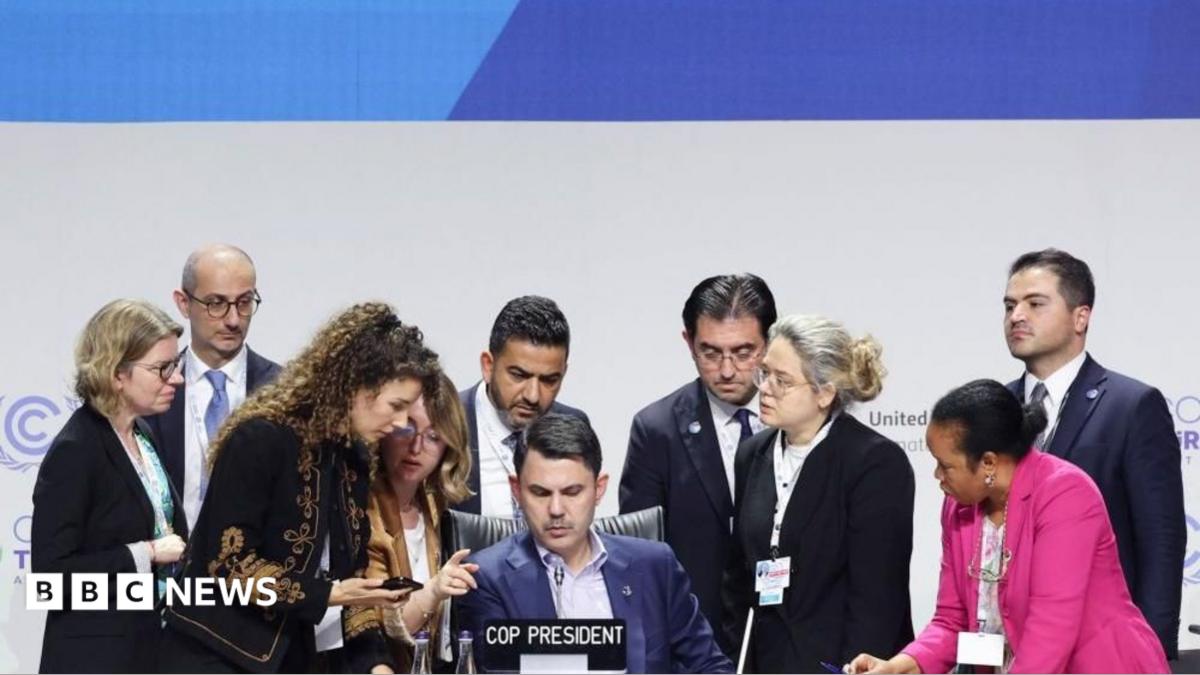
Countries failed to agree on a new climate deal at the UN COP31 conference in Antalya, Turkey, after deep divisions over fossil fuels and financial commitments emerged. Negotiations, scheduled to finish on Friday, ran until Sunday, making the conference the longest UN climate meeting in history. The draft agreement, presented early Sunday, omitted any direct reference to fossil fuels, a point of contention for the EU, Pacific island nations, and others. EU representative Irish Minister Darragh O’Brien said the pact was “unconscionable” for not naming fossil fuels and that it fell far short of the ambition needed to tackle climate change. Panama and the Marshall Islands also criticized the deal for its insufficient pace. A first draft on Monday mentioned “fossil fuel” or “fossil fuels” six times, but oil‑producing nations found that unacceptable. Saudi Arabia’s delegate Mohammad Ayoub argued that Arab countries contributed a small share of historical emissions, while Russia warned against rapid moves away from fossil fuels that could cause “fuel poverty.”
Another key sticking point was the lack of concrete financial commitments for poorer nations to adapt to climate impacts. Last year’s COP30 in Brazil had agreed to triple adaptation finance, but the COP31 draft contained no figures or baseline for measuring such pledges, raising concerns that richer nations could leave the room with too much flexibility. Mohamed Adow of Power Shift Africa said, “Rich nations and polluting governments cannot keep arriving empty‑handed.” The UK’s Energy Secretary Miatta Fahnbulleh called the failure to reach a political agreement “immensely disappointing,” adding that the UK would continue to work with partners on progress made in Antalya.
The conference was hosted in Antalya, with Australia leading the official negotiations. Chris Bowen, Australian minister and COP31 president of negotiations, described the talks as fraught with “unbridgeable red lines” amid a complicated geopolitical environment. He noted that 2026 could end as the hottest year on record, with extreme weather already affecting Europe, Nepal, and elsewhere.
Although the main deal collapsed, some agreements were reached, including progress on a “just transition mechanism” to support workers and communities moving toward clean energy. More than 80 countries backed Turkey’s target to raise the share of global energy from electricity to 35% by 2035.
UN climate chief Simon Stiell said he would seek advice on potential reforms to the consensus process, which will be tested again at COP32 in Ethiopia in November 2027. He acknowledged that the process had previously faced setbacks but had recovered, stating, “It must do so again.”