Climate & Environment
COP31 Ends Without Agreement as Fossil Fuel Debate Persists
By AFP
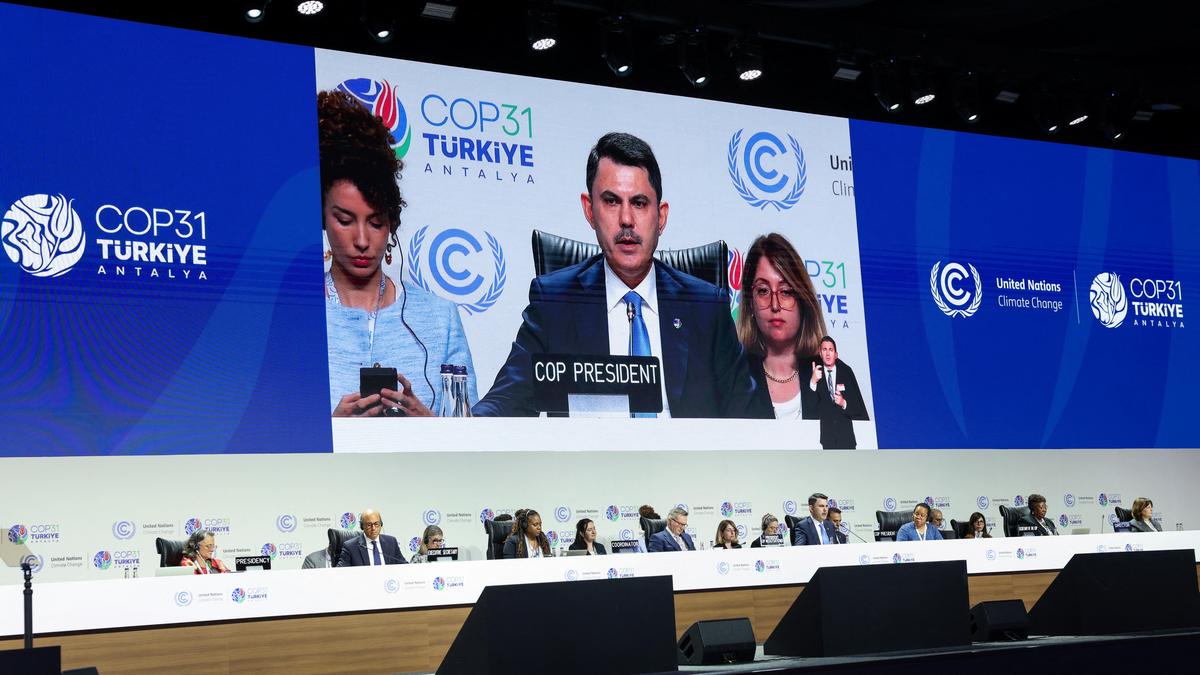
The COP31 climate conference concluded on Sunday, November 22, 2026, without a final agreement after the EU and several other countries rejected a proposed cover decision that omitted reference to fossil fuels. The decision was denied 44 hours after the official closing of the summit in Antalya, Turkey, in a chaotic finale that set a record for the longest UN climate conference. Ireland’s Climate Minister, Darragh O’Brien, said his country would not endorse a text that does not mention fossil fuels, the main driver of climate change. COP31 President Murat Kurum acknowledged that no consensus had been reached and that the decisions were not adopted. Fossil fuels remain a flashpoint at the talks, especially amid high energy prices and geopolitical tensions linked to the U.S.–Iran conflict. Saudi Arabia and other petrostates strongly opposed language that would address coal, oil and gas. Australia had sought an overarching cover decision to signal future climate action, but the final proposal failed to mention fossil fuels, causing turmoil. Marshall Islands climate envoy Kathy Jetnil‑Kijiner warned that the outcome would undermine security and threaten the future. Panama, Vanuatu and Belize also rejected the pact. O’Brien told AFP that the summit had been “hijacked by some oil states.” Decisions at the UN climate talks require consensus, meaning any one of the nearly 200 participating nations can block an agreement. Earlier, threats of a walkout prompted Turkey and Australia to meet urgently with the EU and Saudi Arabia, but no compromise was reached. The draft text included an indirect reference to the 2023 global deal to move away from fossil fuels but did not name them explicitly. It also proposed continuing support for carbon capture, a technology promoted by the fossil fuel industry but criticized as costly and ineffective. Saudi negotiator Mohammad Ayoub said that climate change requires all solutions on the table and that countries should choose based on national circumstances. Environmental group 350.org’s Sara Shaw called the text a “licence to keep polluting.” The summit had been under pressure to show progress amid climate‑linked disasters worldwide. Turkey and Australia highlighted electrification as a way to cut emissions and improve energy security, but the draft did not explicitly require that electrification be powered by renewable energy. The proposal called for global efforts to raise the share of electricity in total final energy consumption to 35% by 2035 and to expand “clean energy.” Attempts by Saudi Arabia, India and Kenya to delay the next Intergovernmental Panel on Climate Change reports added friction. The draft emphasized the importance of these reports for an upcoming stocktake of global carbon‑cutting efforts in 2028. Many countries want the IPCC assessments published in time for that stocktake. The draft also expressed deep concern that global warming could cross 1.5 °C, but some countries felt it did not go far enough. U.K. negotiator Kate Hughes said the cover decision was a “lowest common denominator” that moved the world backward on science and ambition. Rich nations and developing countries also clashed over the removal of a $120 billion climate adaptation target, angering developing nations. Jetnil‑Kijiner said, “We need finance, yet our partners showed up to this COP with empty hands. We cannot do this on our own. We cannot survive on empty promises.”