Law & Justice
Supreme Court Sends Han Duck‑soo Martial Law Case Back for Retrial
By News Team
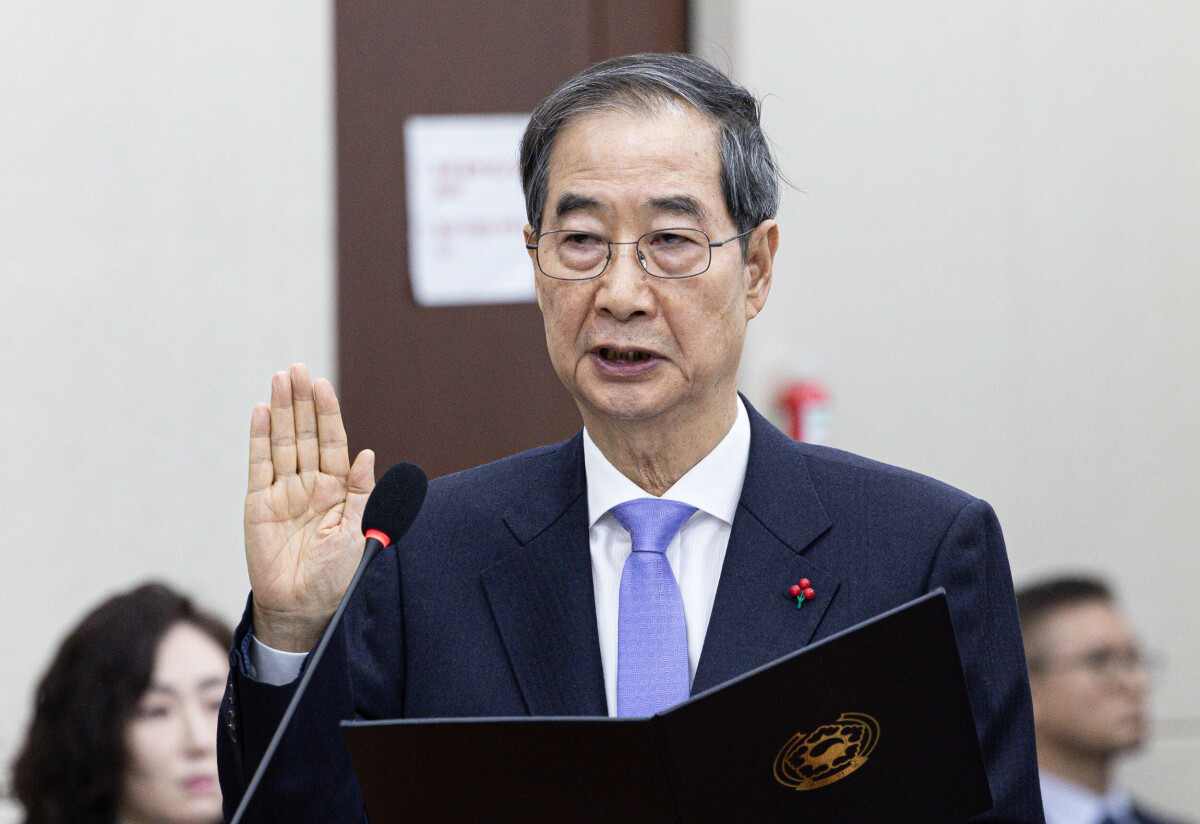
The Supreme Court, by majority, ruled that Han Duck‑soo’s decision to call a Cabinet meeting was not evidence of an intention to facilitate former President Yoon Suk‑yeol’s declaration of martial law on December 3, 2024. The court partially overturned an appellate ruling that had sentenced former Prime Minister Han to 15 years in prison for his role in the martial law declaration and remanded the case to the Seoul High Court. Han will remain in detention while the lower court may extend his confinement.
Han was indicted for proposing a Cabinet meeting to give procedural legitimacy to Yoon’s martial law imposition, for attempting to collect Cabinet members’ signatures after the declaration, for drafting and disposing of a proclamation following the declaration, and for perjury after testifying at the former president’s impeachment trial that he had no foreknowledge of the proclamation. The trial court found Han guilty of most charges, sentencing him to 23 years and ordering immediate detention. The appeals court upheld convictions on major charges, including the charge that Han played a key role in an insurrection, but reduced the sentence to 15 years. Both courts agreed that the martial law declaration constituted an insurrection, differing only on the extent of Han’s criminal responsibility.
In the majority opinion, the Supreme Court held that calling a Cabinet meeting does not automatically make one an accessory to an insurrection. The judge noted that the meeting was a formality because Yoon unilaterally declared martial law and acted immediately after a quorum was met. The court found that prosecutors had not proved beyond a reasonable doubt that Han intended to subvert constitutional order before the declaration. It did, however, find that some of Han’s conduct after the declaration could support claims of intent to subvert the constitutional order and found no legal error in the appeals court’s rulings on charges of creating a false official document and perjury.
Three justices dissented, arguing that Han was fully aware that the martial law declaration was unconstitutional and illegal, yet he participated in Cabinet deliberations. They concluded that he intended to subvert constitutional order and that his failure to act to stop the declaration was a serious omission.
The Supreme Court’s decision means the Seoul High Court will again determine Han’s criminal responsibility for part of the charge that he played a key role in an insurrection.
In related news, the Supreme Court finalized the four‑year prison sentence for former first lady Kim Keon‑hee on corruption charges. Kim had previously been sentenced to four years in prison and a fine of 50 million won ($38,000) for her involvement in a stock price manipulation scheme and for accepting luxury gifts from the Unification Church. She was indicted in September of last year for violating the Capital Markets Act, the Political Funds Act and a law on the acceptance of bribes for mediation. Kim faced charges of manipulating the stock price of Deutsch Motors and pocketing 810 million won in illegal profits from 2010 to 2012, and of accepting two Chanel bags and a Graff diamond necklace from a former Unification Church official in exchange for favors. She also faces another trial before the top court related to bribery charges involving expensive gifts for job appointments and business favors.
Frequently asked questions
What was the Supreme Court's ruling on Han Duck‑soo's role in the martial law declaration?
The Supreme Court ruled that calling a Cabinet meeting does not automatically make one an accessory to an insurrection, partially overturning the appellate ruling and remanding the case to the Seoul High Court.
Will Han Duck‑soo remain in detention after the Supreme Court decision?
Yes, Han will remain in detention while the lower court may extend his confinement.