Politics
Jeffries Secures House Speaker Nomination Amid Small Block of Opposition
By Sarah Ferris
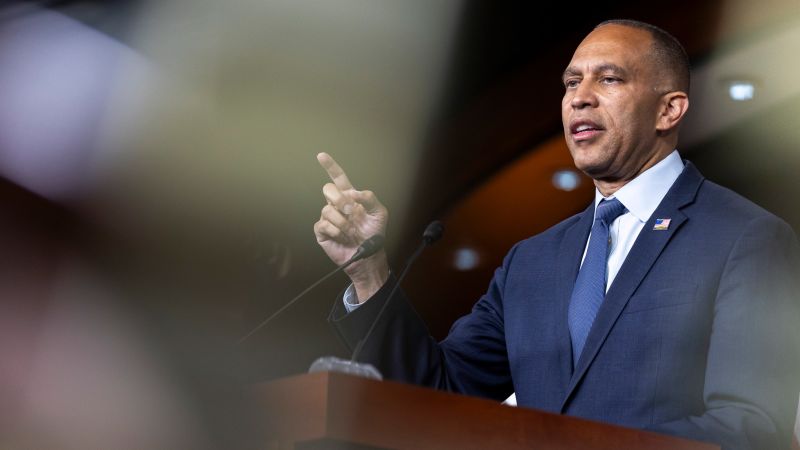
Hakeem Jeffries is poised to become the House speaker for the new Congress, making him the first Black person to hold the position. The vote took place roughly two weeks after the midterm elections, when House Democrats chose Jeffries for the top job despite pressure from some far‑left members. A small group of newly elected Democratic socialists had not publicly committed to Jeffries before the leadership election, demanding concessions such as votes for Medicare for All or a ban on arms sales to Israel. In the secret ballot, 11 Democrats voted against him, according to a source familiar with the vote, leaving Jeffries effectively assured of the gavel.
After clinching the nomination, Jeffries told reporters that the country demands “big, dramatic and transformational change” and that the status quo is unacceptable. He said the party is committed to delivering meaningful change.
Seven ultra‑progressive new members—Reps.‑elect Darializa Avila Chevalier (NY), Adam Hamawy (NJ), Frederick Haynes (TX), Melat Kiros (CO), Donavan McKinney (MI), Chris Rabb (PA) and Claire Valdez (NY)—issued a statement saying they voted “no” because they are still seeking commitments from Jeffries on key priorities, including Medicare for All and ending “the genocide in Gaza.”
Rep.‑elect Don Leonard also voted against Jeffries, saying he wants commitments that Jeffries will prioritize issues such as money in politics and blocking U.S. aid to Israel. He stated that he will not support Jeffries until he confirms a vote on ending Citizens United through a 28th Amendment and a vote on U.S. aid to Israel.
Valdez told CNN she needed to “stand up” for the voters who elected her and was eager to continue conversations and fighting for everything she can.
When asked about the defectors, Jeffries said, “Our job is to fight MAGA extremism, not each other.” Other Democrats expressed frustration. Rep. Hillary Scholten, a centrist from Michigan, complained that infighting over leadership positions would not help deliver on campaign promises and called out “a lot of disorganization” in that segment of the caucus.
Former Speaker Nancy Pelosi downplayed the impact of the 11 “no” votes, saying, “Don’t make a big deal. Each one of them is important. As 11, not so important compared to 250 some votes that he received.”
Just before the formal nomination, Rep. Jim Clyburn, a longtime ally and senior member of the Congressional Black Caucus, gave a powerful endorsement in the room, declaring, “Hakeem is interested in headways and not headlines.”
Jeffries’ nomination will be confirmed by a formal vote by the full chamber on the floor on January 3, the first act of the new Congress. His allies and even his detractors expect he will survive the vote easily.
Jeffries’ leadership team will include Rep. Katherine Clark, who is set to become House majority leader—the first woman to hold that job—and Rep. Pete Aguilar, who will be the first Latino to hold the House’s No. 3 job of whip.
The only competitive leadership election of the day was for vice chair, which resulted in Rep. Lauren Underwood of Illinois becoming the highest‑ranking Black woman in Congress. During the session, Underwood made a remark that some Democrats interpreted as a criticism of her competitor, Rep. Sara Jacobs, saying, “Being wealthy is not the primary or important qualification for leadership.”
Jeffries had been expected to win the party vote easily because the Democrats’ majority is large enough that a small bloc cannot hold sway. However, he reportedly did not take it for granted. Prior to the election, he held face‑to‑face conversations with incoming Democrats who had not committed, nearly all aligned with the Democratic Socialists for America. He also met with major caucus factions, including the centrists, New Democrat Coalition, Blue Dog Caucus and the Congressional Progressive Caucus. These discussions were kept private.
Jeffries’ public remarks have shifted on one of the left’s biggest policy demands: Medicare for All. On Friday, he announced support for major tenets of a universal healthcare system, specifically lowering the eligibility age for Medicare, creating a new program that guarantees universal coverage for children and adding hearing, dental and vision coverage to the program. This mirrors Senator Bernie Sanders’ approach to a phase‑in for a Medicare for All system.
The story has been updated with additional developments. CNN’s Manu Raju and Annie Grayer contributed to this report.
Frequently asked questions
Which members voted against Jeffries in the speaker nomination?
Eleven Democrats, including seven ultra‑progressive new members—Reps.‑elect Darializa Avila Chevalier, Adam Hamawy, Frederick Haynes, Melat Kiros, Donavan McKinney, Chris Rabb, and Claire Valdez—and Rep.‑elect Don Leonard.
What policy concessions were demanded by the opposition?
They demanded Medicare for All, a ban on arms sales to Israel, blocking U.S. aid to Israel, and a 28th Amendment to end Citizens United.
Who will serve as House majority leader and House whip under Jeffries?
Katherine Clark will be House majority leader, and Pete Aguilar will be House whip.