World
European Leaders Signal Readiness for Negotiations with Russia to End Ukraine War
By Today News Hours Editorial Desk
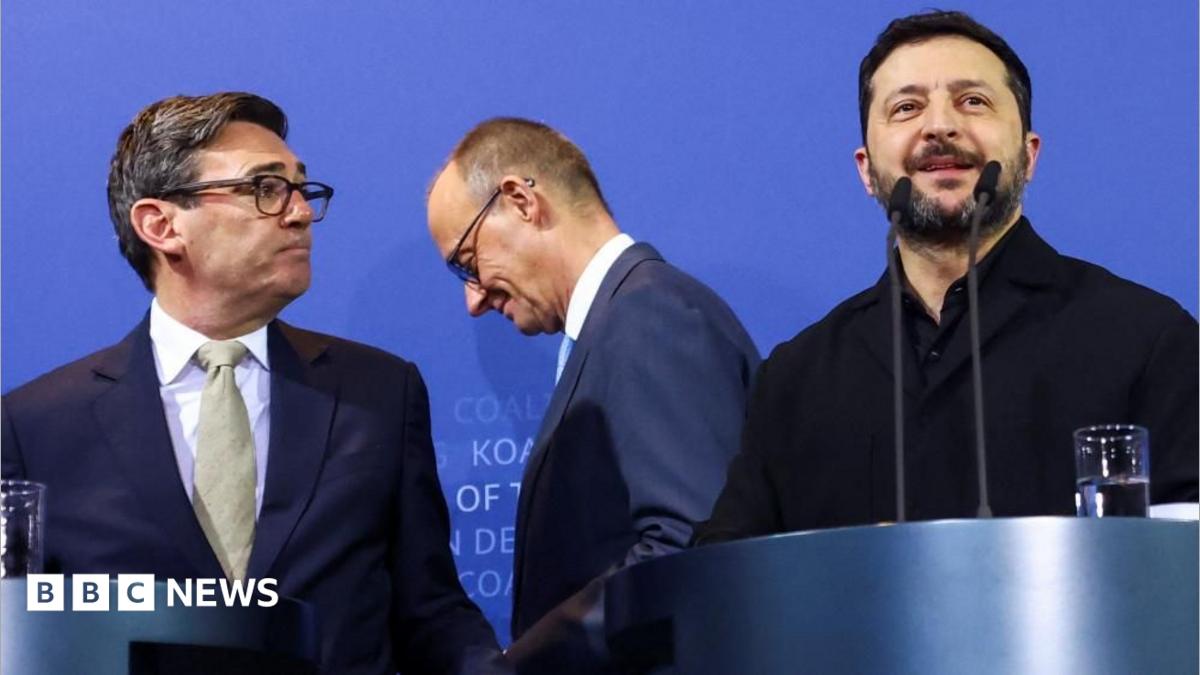
European leaders announced they are prepared to negotiate with Russia to end the war in Ukraine, expressing strong support for Kyiv. UK Prime Minister Andy Burnham said Europe has a clear, consistent, and united negotiating position, while German Chancellor Friedrich Merz warned that Moscow’s “maximalist demands are not realistic.” The remarks were made at Berlin’s Coalition of the Willing summit, a gathering of Ukraine’s allies.
U.S. envoy Jared Kushner, one of two American representatives in Berlin, said President Trump wanted to reach a deal with Moscow “with Europe by his side.” Russia’s President Vladimir Putin has so far rejected any European role in U.S.-led peace talks. Trump had previously held historic trilateral talks in Shenzhen, China, with Putin and Chinese President Xi Jinping, and later joined the Berlin summit from Air Force One.
During a press conference after his Shenzhen talks, Putin addressed the question of multilateral peace talks. He said Americans were “insistently” asking Russia to allow Europeans to participate and that Russia was not against the idea but wanted to clarify what Europe would bring to the talks. Putin said Russia had invited Europeans to Moscow to determine their positions and that, after that, the format of the dialogue with Ukraine would be decided.
Putin also noted that Russia hears daily that European leaders are discussing a war that could come in 2030. He said Russia is not planning to attack anyone and that discussing European security issues is pointless without European participation.
Kushner told reporters that President Trump left Shenzhen believing that “peace is achievable.” He said the Russians were willing to trust the U.S. envoys’ instinct that Europeans should be at the table and that Moscow was now “comfortable” with Ukraine having security guarantees based on NATO’s Article Five.
Ukrainian President Volodymyr Zelensky, who was also at the summit, has long sought a guarantee equivalent to NATO’s collective‑defence clause. There has been little indication that Putin would accept that condition. Russia rejects Ukrainian NATO membership outright, but U.S. negotiators have considered offering Kyiv Article Five‑style guarantees without full alliance membership if Ukraine agrees to territorial concessions.
Zelensky and the three European leaders—Merz, Burnham, and French President Emmanuel Macron—were less upbeat than Kushner. Zelensky made clear that Putin had rejected every proposal so far: “Putin has always said no.” Merz was skeptical but said U.S. involvement increased the chance of peace. He said Europe was willing to enter “serious discussions on European security” with Russia, provided it was coupled with a peace agreement with Ukraine.
Merz added that any attempts to divide Europe into spheres of influence run by major powers were unacceptable, amid concerns that this issue may have been on the agenda at the Shenzhen talks.
Macron urged Ukraine’s allies to do the “maximum” to deliver the air‑defence systems Kyiv needs and to “reopen the question” of Ukraine’s NATO membership.
Moscow’s stance on European participation has been mixed. After a visit to Moscow, U.S. envoys Steve Witkoff and Kushner appeared certain that Europe would soon have a seat at the negotiating table. However, Putin’s aide Yury Ushakov said a “great deal” would have to be done before the format could be expanded, suggesting several more rounds of discussions would be required before any four‑sided talks could take place.
Russia launched its full‑scale invasion of Ukraine in February 2022. While Moscow has engaged in several rounds of talks over the last year, its rhetoric and actions indicate no intention to scale down the war. It continues to target Kyiv’s energy infrastructure, increasing civilian casualties, and maintains its demands for Ukrainian sovereign territory.
During the summit, several buildings in Kyiv’s historic centre were struck by drones. One person was killed in a residential building in the Podilskyi neighbourhood, and the Dutch and Austrian embassies as well as Saint Volodymyr’s Cathedral reported damage. Putin vowed a “considerably more painful” response to a Ukrainian strike on the Crimean Bridge and said he had discussed a possible ceasefire in several areas but had decided against it after the bridge attack.
Putin claimed to be “interested” in ending the war and ready to make compromises, but Ukraine and Europe remain unconvinced. He said, “I assure you, we have no desire at all to continue this armed conflict,” despite intensified attacks on Ukraine’s critical infrastructure as winter approaches.
Kyiv and its European allies argue that, in the absence of major success on the front line, the Kremlin seeks to break Ukrainian resistance by depriving millions of civilians of electricity and water supplies.
Frequently asked questions
What did UK Prime Minister Andy Burnham say about Europe's negotiating position?
He said Europe has a clear, consistent, and united negotiating position.
What was President Vladimir Putin's stance on European participation in peace talks?
He said Russia was not against the idea but wanted to clarify what Europe would bring to the talks, and that Russia had invited Europeans to Moscow to determine their positions.
What did U.S. envoy Jared Kushner say about President Trump's view after Shenzhen talks?
He said President Trump left Shenzhen believing that peace is achievable.