World
Trump Delays Decision on Iran Military Action Until After 2027
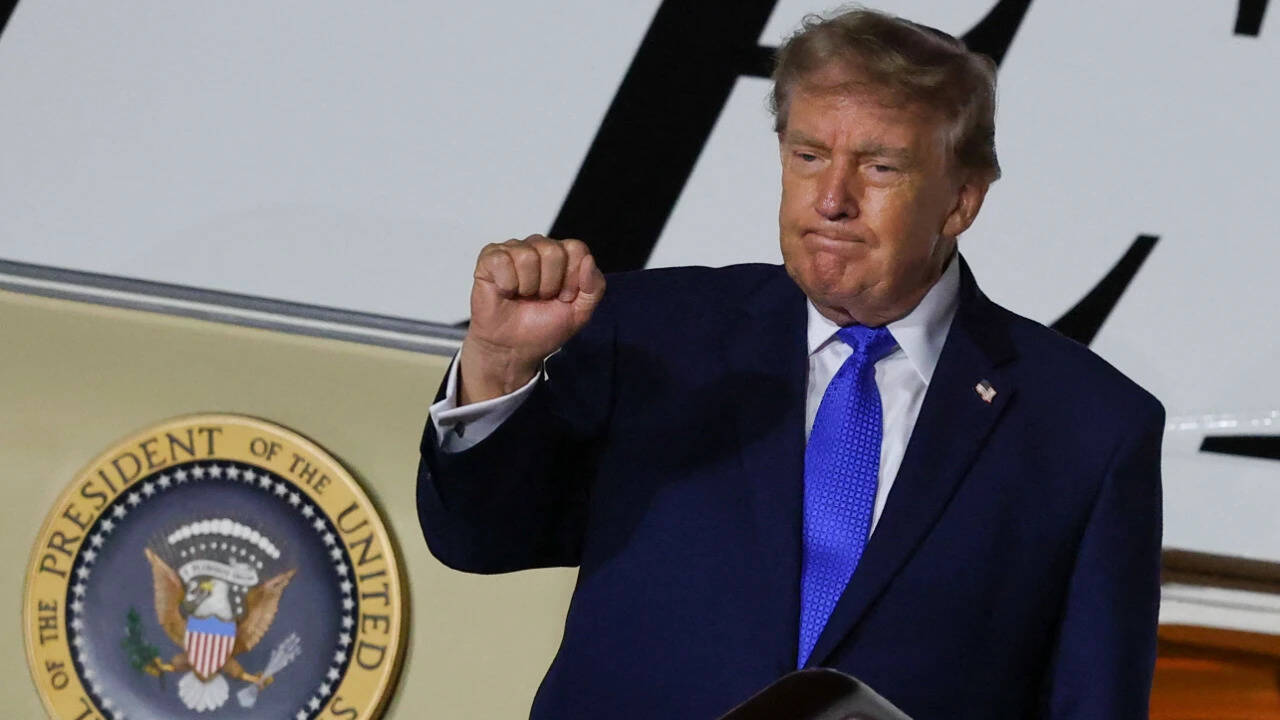
U.S. President Donald Trump said on Thursday that he will wait until after the beginning of 2027 before deciding on any new military action against Iran, indicating a pause in his plans for a possible renewed bombing campaign. Trump told Axios in a brief phone interview while returning to the United States from China that he is not rushing into any decision on Iran and will see what happens after the beginning of the year. In a separate interview with Reuters, he made a similar statement, saying, "Well, I'll talk to you about it after the beginning of the year." His remarks come amid continuing tensions with Tehran, with Washington weighing the possibility of renewed strikes alongside Israel while maintaining a naval blockade and economic pressure campaign against Iran. The president has alternated between threatening escalation and suggesting that hostilities could wind down. Last week, he described another major round of strikes as "quite unlikely," although Axios reported on Wednesday that he was still considering a joint operation with Israel. The reported options include strikes on suspected Iranian nuclear facilities, including the Pickaxe Mountain site, as well as bridges, power plants and Iranian military and civilian leaders. The White House has also sought assessments from the Pentagon and intelligence agencies on how Tehran could retaliate against different strike scenarios, particularly the risk of attacks on oil and gas infrastructure in Gulf countries. Israeli Prime Minister Benjamin Netanyahu has also been reportedly pressing Washington to resume military action. The head of Israel's Mossad, Roman Gofman, visited the U.S. last week for talks with CIA Director John Ratcliffe and White House envoy Steve Witkoff. An Israeli source, cited by Reuters, said Gofman was sent by Netanyahu to advocate renewed strikes. The discussions also included Israeli claims about Iranian research into chemical weapons, which Tehran has rejected as an attempt to create a pretext for military action. Trump’s shift in timeline follows the November 3 midterm elections, in which Republicans suffered major losses and Democrats are set to take control of Congress in January. Before the polls, Trump had repeatedly suggested that Iran would be more willing to negotiate after the elections. His administration has since maintained that the U.S. blockade and sanctions are working. The Senate on Thursday again rejected a measure seeking to curb Trump’s war powers. The financial cost of the conflict is also coming under scrutiny. A Pentagon official told the Senate Armed Services Committee on Thursday that the war had cost an estimated $48.3 billion as of November 13. The figure includes military operations and the replacement of equipment and munitions, but excludes damage to U.S. military bases in West Asia. Lawmakers have pressed the Pentagon to provide a separate assessment of that damage, with an Associated Press analysis pointing to billions of dollars in losses from Iranian missile and drone attacks. Trump also played down a report that Iran was planning to detonate a so-called dirty bomb in Washington, saying he did not think people in the U.S. capital should be alarmed. However, he claimed Iran was looking at chemical and biological weapons. Iran’s foreign ministry has dismissed U.S. allegations about such weapons programs as intended to create fear and justify military action.
Frequently asked questions
When will President Trump decide on new military action against Iran?
He said he will wait until after the beginning of 2027 before deciding.
What potential targets have been discussed for strikes against Iran?
Strikes on suspected Iranian nuclear facilities, including the Pickaxe Mountain site, as well as bridges, power plants and Iranian military and civilian leaders.
What is the estimated cost of the conflict as of November 13?
The war had cost an estimated $48.3 billion as of November 13.