India
India to Revamp Aircraft Health Rules with New Fines and Spraying Requirements
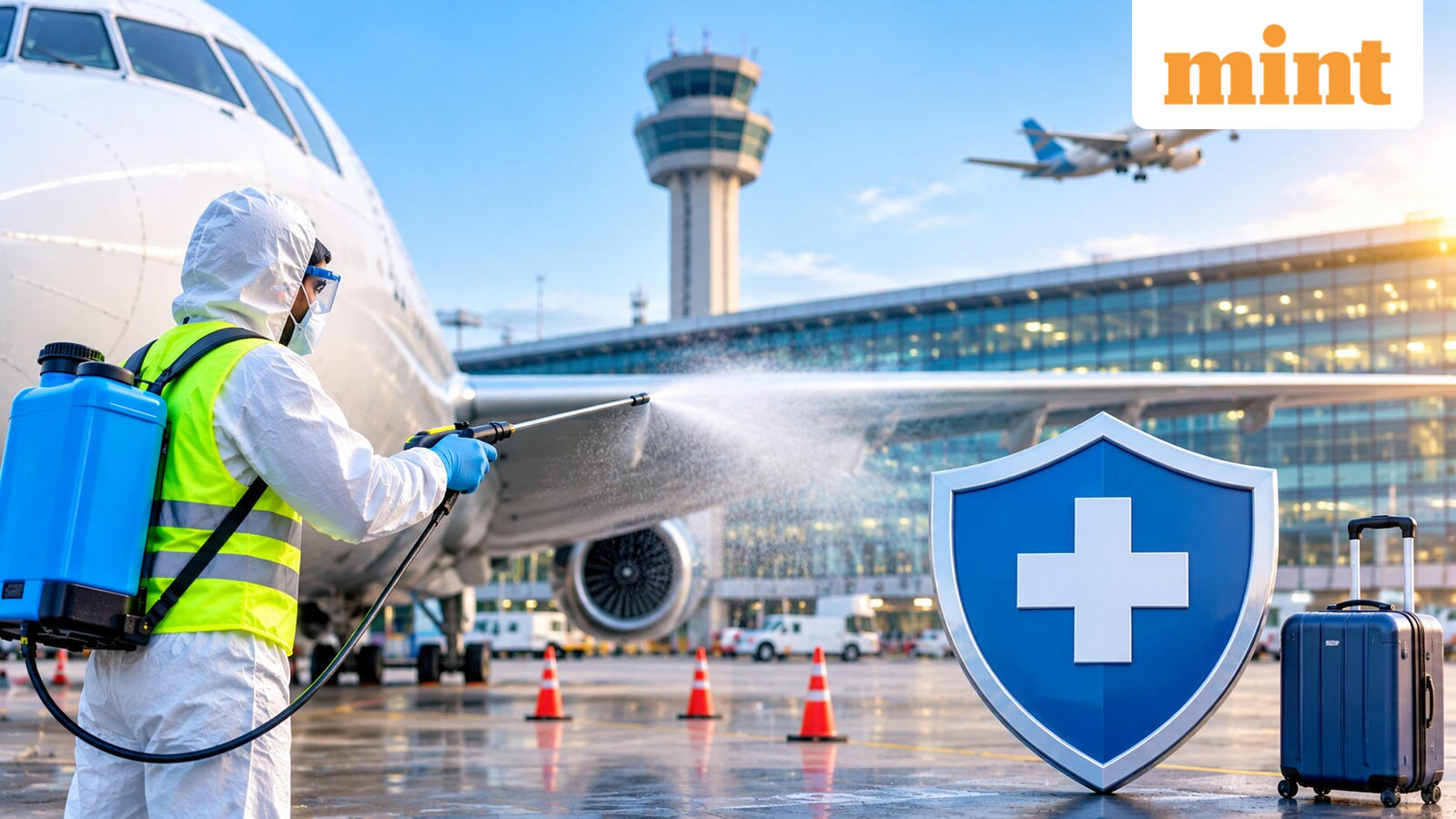
India plans to overhaul its border disease surveillance and quarantine system at international airports to curb cross‑border outbreaks. The Union health ministry has drafted the Indian Aircraft (Public Health) Rules, 2026, to replace the 1954 rules that focus on quarantine for diseases such as yellow fever, cholera and smallpox and lack graded cash penalties. The new draft, reviewed by Mint, requires pre‑landing insect‑control spraying on aircraft, pest‑free airport zones, and fines of up to ₹1 crore for airlines, airport operators and passengers who violate health rules. It also introduces a two‑level appeal process and covers biological and chemical hazards. The Directorate General of Health Services issued a memorandum on 16 November, shared with the ministries of civil aviation and external affairs, the Directorate General of Civil Aviation, the Food Safety and Standards Authority of India and state health departments for comments. The draft aligns with the World Health Organization’s International Health Regulations (2005) and follows the replacement of the Aircraft Act, 1934, with the Bharatiya Vayuyan Adhiniyam, 2024, which required new rules for civil aviation. Experts say customizing aircraft spraying is crucial because high‑speed travel can allow asymptomatic passengers to develop symptoms after arrival and vectors such as mosquitoes can travel across continents aboard aircraft or cargo. Rajeev Jayadevan, former president of the Indian Medical Association’s Cochin chapter, noted that disinsection must be risk‑based and that local authorities must be legally accountable for vector control around airports. The health ministry has invited stakeholder comments within 30 days before sending the rules to the ministry of civil aviation for notification. The overhaul is significant for India’s $18.14‑billion civil aviation sector, the world’s third‑largest domestic aviation market, which handles more than half a million passengers daily across 165 operational airports. Key proposals include: international aircraft must undergo insect‑control spraying before landing; airport operators and local agencies must keep terminals and a 400‑metre perimeter around each airport free of mosquitoes, rats and other disease carriers; travellers arriving within six days of departing a yellow‑fever‑affected country without a vaccination certificate face isolation for up to six days; travellers must pay daily quarantine fees fixed by the government, and anyone refusing quarantine will be denied entry and deported; airport health officers can bar passengers with symptoms or close contacts of infected persons from boarding flights during an international health emergency; they will also inspect airport food outlets and flight kitchens under FSSAI norms, check cargo and baggage for biological or chemical hazards, and require 24‑hour advance clearance for importing human remains, down from 48 hours earlier; importing remains of people who died from an international health emergency will be banned. The new graded penalty structure imposes a ₹1 crore fine on airlines for transporting human remains or ashes into India without permission, ₹5 lakh for failing to submit documents for onboard deaths or spray arriving aircraft, and ₹25,000 for failing to submit passenger lists or health declarations. Airport operators face a ₹25 lakh fine for ignoring airport health officers’ directions during health situations, ₹5 lakh for allowing mosquito or rat breeding inside airports, and ₹1 lakh for violating food and water hygiene rules. Organizations helping prohibited passengers with symptoms board flights face ₹15 lakh in fines, and ₹5 lakh for obstructing quarantine rules. Passengers face a ₹5,000 penalty for refusing quarantine, isolation or boarding bans during a health emergency, ₹2,000 for refusing medical checks or obstructing an officer on duty, and ₹1,000 for violating airport cleanliness rules. Penalized parties can appeal before a first appellate authority within 30 days.
Frequently asked questions
What new measures will aircraft undergo before landing under the draft rules?
Aircraft must receive pre‑landing insect‑control spraying and airports must maintain pest‑free zones within a 400‑metre perimeter.
What is the maximum fine that airlines can face for violating the new health rules?
Airlines can be fined up to ₹1 crore for transporting human remains or ashes into India without permission.
What appeal options are available to parties penalized under the new rules?
Penalized parties can appeal before a first appellate authority within 30 days, as part of the two‑level appeal process.