India
Election Officials to Verify Nobel-Class Scientist CNR Rao's Details at Home Following Public Outcry
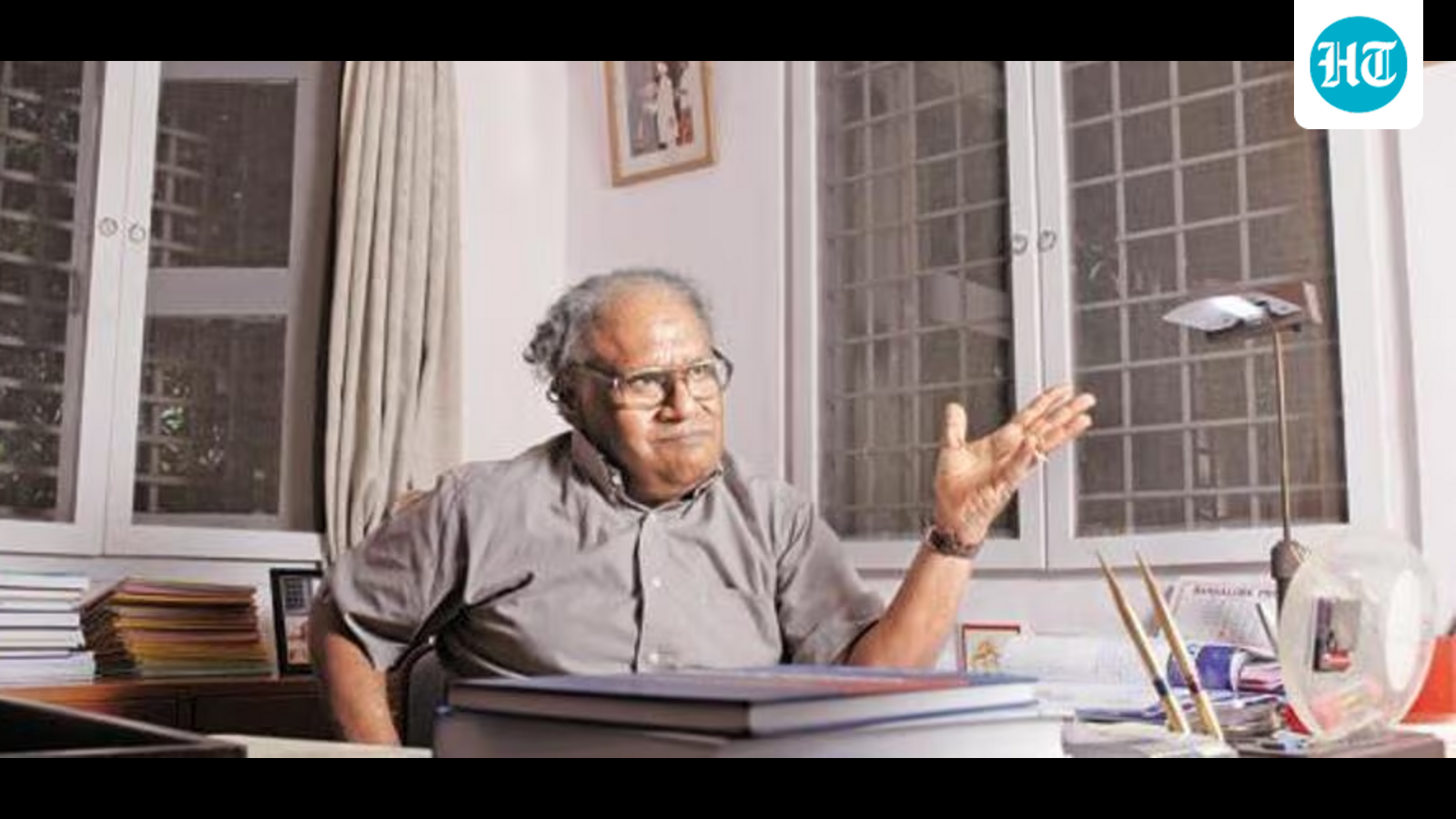
The Election Commission of India (ECI) has decided to send officials to the Bengaluru residence of 92-year-old Bharat Ratna recipient and renowned scientist CNR Rao for verification, following criticism over a notice requiring him to attend an electoral hearing in person.
Rao had been directed to appear at a Special Intensive Revision (SIR) hearing center in Karnataka to resolve a discrepancy in his name as recorded in electoral documents. An unnamed ECI official confirmed that Rao would not need to visit the designated center, stating that officials would instead travel to his home to complete the necessary verification.
The notice cited a "self-name mismatch" as the reason for the hearing. According to records, his name appeared as "Prof. C.N.R. Rao" in the previous electoral roll, but the current roll listed it as "Proff. C.N.R. Rao," with an extra "f" added to his title. Rao, who received India's highest civilian award in 2013, had been asked to appear at a hearing venue in Malleshwaram, close to the Indian Institute of Science.
This development follows a similar case earlier in the week, when the ECI withdrew a notice sent to Padma Shri awardee Harekala Hajabba over a separate naming discrepancy identified during Karnataka's SIR process. Hajabba had been asked to appear at a gram panchayat office on September 11 along with original documents, with an accountant present for verification. The inconsistency stemmed from his name appearing simply as "Hajabba" in the 2002 electoral roll, while later records—including his Aadhaar card, ration card, passport, voter ID, and Padma Shri documentation—list him as "Harekala Hajabba," a name he has used in official records since 2004.
Hajabba said ECI officials visited his home after the notice drew public attention and retracted it, telling him the matter would be reviewed further. Hajabba, a fruit seller from Newpadapu in Mangaluru, gained national recognition for using his savings to build a primary school in his village and was awarded the Padma Shri, India's fourth-highest civilian honor, in 2020 for his contributions to education.
According to the ECI, more than 4.38 million notices are expected to be issued in Karnataka as part of the SIR process, which began on June 30, targeting voters whose records fall under "no mapping" or "anomalies" categories. Claims and objections will be reviewed until October 22, with the final electoral roll set for publication on October 27.
In May, the ECI launched the third phase of the SIR initiative across 16 states and three union territories. Once completed, the drive will cover the entire country except Himachal Pradesh, Jammu and Kashmir, and Ladakh. Around 400,000 booth-level officers have been deployed to visit roughly 367.3 million electors ahead of the release of draft rolls between July 5 and October 21. The first two phases of the initiative covered 13 states and union territories, involving nearly 590 million voters.
The broader SIR program, aimed at removing bogus, duplicate, and ineligible voters—including deceased individuals and unauthorized immigrants—began in Bihar in June of the previous year. Its rollout in West Bengal proved particularly contentious; on April 10, the ECI announced the removal of nearly nine million names from the electoral roll, including about 2.7 million under the "logical discrepancy" category. Notably, the vote margin between the Bharatiya Janata Party—which won power in West Bengal for the first time—and the Trinamool Congress closely mirrored the total number of deletions made through the SIR process.