World
Palestinians Forced into Ancient Caves as Israeli Army Continues Home Demolitions
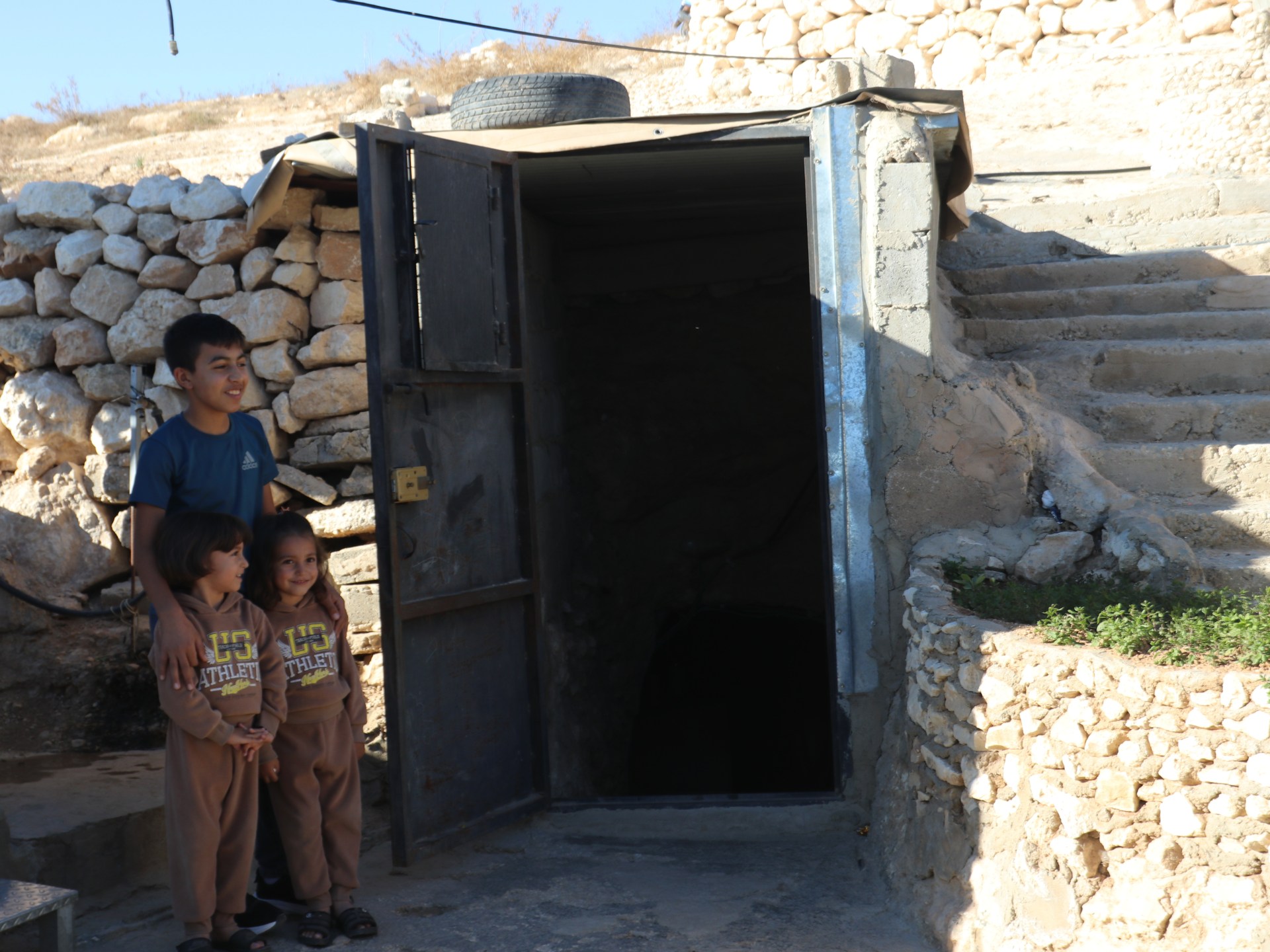
Palestinians in the occupied West Bank’s Masafer Yatta area have been compelled to live in underground caves after the Israeli army repeatedly demolished their homes. Mohamad Dababseh, 60, spent several days clearing water from the cave he now calls home after last week’s storm. The flooding occurred after the army demolished part of the cave, claiming it was an unauthorised dwelling, and allowed water to seep in. Mohamad and his family of 12 were forced to sleep in tents after their home was demolished for the sixth time. They lacked the funds to rebuild, as he had managed to do on previous occasions. The army also demolished and confiscated the tents, leaving residents with no choice but to sleep under trees throughout the summer of 2025. The ancient underground caves, for which Masafer Yatta is known, became the residents’ last resort, despite being damp and poorly ventilated. The army has continued its campaign of harassment by demolishing parts of cave dwellings. “My wife and I have developed respiratory problems due to the high humidity inside the cave. In the winter, our suffering intensifies as water seeps in, flooding the floor and damaging our belongings,” Mohamad told Al Jazeera.
For most residents of Khallet al-Daba, a village south of Hebron, living in caves was not a choice. They were forced to find shelter in nearby caves after the army demolished their homes and shelters more than six times, reducing most of their villages to ruins. Masafer Yatta, home to nearly 2,000 Palestinians, has seen a steadily suffocating Israeli campaign aimed at seizing their land. Israel’s campaign includes the demolition of homes, many of which have stood for more than 70 years, and the confiscation of livestock, the primary source of income for residents. The assault escalated in 1980, when Israel declared more than 35,000 dunams (35 sq km) of Masafer Yatta a “closed military zone”, despite the presence of 12 Palestinian communities. Israel subsequently began establishing illegal settlements on the land.
On October 20, the army demolished a portion of the cave where the Dababseh family resides, citing renovations he had carried out to make it slightly more habitable. Having lost his only source of income, Mohamad is no longer able to repair it. Instead, fellow villagers have provided some materials to help him fix parts of it. “Every time my home was demolished, I would sell some of my livestock to rebuild it until I realised that, due to the repeated demolitions, I no longer had any livestock left to sell. Now, I live in a cave with my family, unable to repair it after parts of it were torn down,” he said.
Jaber Dababseh, a spokesperson for Khallet al-Daba residents, said 100 of 120 village residents have sought shelter in caves. Only two families remain in their homes, which are also at risk of demolition at any moment. “The underground cave is not adequately equipped for a school student; there is neither sufficient lighting nor ventilation. Children cannot freely enjoy their right to play, given how difficult the space is. Yet they have grown accustomed to these harsh conditions ever since our home began to be demolished time and again,” he told Al Jazeera. “The residents are trying to adapt to this imposed reality so they don’t have to leave Masafer Yatta. It is another form of resilience they have devised to challenge their difficult circumstances.”
It is almost impossible to pipe water into the caves, so residents rely on storage tanks, which are frequently sabotaged by Israeli soldiers and settlers. Electricity is a distant dream, so they use solar‑powered lamps. With no alternative, Jaber’s three children, aged between three and 15, have been forced to adapt to the new environment. “When we want to repair or reinforce the caves, we do it at night so the army doesn’t see us,” he explained. “Sometimes they raid the caves to inspect them; if they find signs of repairs, they issue orders to demolish any structures inside.”
Following Israel’s war on Gaza that began in October 2023, settler attacks across Masafer Yatta intensified, coinciding with an escalating campaign of demolitions targeting Palestinian homes and animal enclosures. Since 2023, settlers have established 13 new illegal outposts in Masafer Yatta, declared “military zones”, with an additional nine outposts set up outside these areas. In a statement issued on September 24, the Office of the United Nations High Commissioner for Human Rights (OHCHR) said three villages in the area were almost entirely destroyed that month. In May 2025, the army carried out its largest demolition operation in Khallet al-Daba, destroying every dwelling in the village, including homes, agricultural facilities, water tanks and solar panels. The OHCHR warned of the dire consequences resulting from these demolitions and the forced displacement of the area’s residents.
Nidal Younis, head of the Masafer Yatta Village Council, told Al Jazeera that more than 40 families from various villages in Masafer Yatta have returned to these ancient caves. These caves, some dating back to the Canaanite and Roman eras, have been used as temporary refuges for residents over the centuries and have become an integral part of local Palestinian culture. After residents moved into fixed stone homes, the caves were used for farmers’ livestock. The return of locals to these caves reflects a harsh decline in living conditions following Israeli restrictions and demolitions of their homes. “The caves in Masafer Yatta were once part of the traditional way of life for the region’s inhabitants, but today they are considered extremely primitive dwellings, lacking any of the features of a standard home,” Younis said. “The difficulty of providing water and electricity, the absence of sewage systems, and the structural weakness exacerbated by a ban on renovations all combine to further the suffering of those who live there.”
Younis said the suffering the residents continue to endure extends beyond the demolition of homes and the confiscation of property. Water, the most essential resource for survival, has been targeted regularly in the village, with pipes destroyed, tankers barred from entering the area, and wells for rainwater collection seized. Securing water for residents is now a daily challenge, with 12 villages in Masafer Yatta without any stock or supply. Israeli authorities have also targeted small solar panels residents use to generate limited power, while over the past two months, 13 vehicles and agricultural tractors have been confiscated, with huge sums of money demanded for their return. “These attacks are part of a broader effort to isolate Masafer Yatta from its Palestinian surroundings and compel its residents to leave,” Younis said. “Yet, the locals continue to seek alternatives that will allow them to remain in their villages.”