Technology
Treasury and Commerce Clash Over China Chip Export Rules
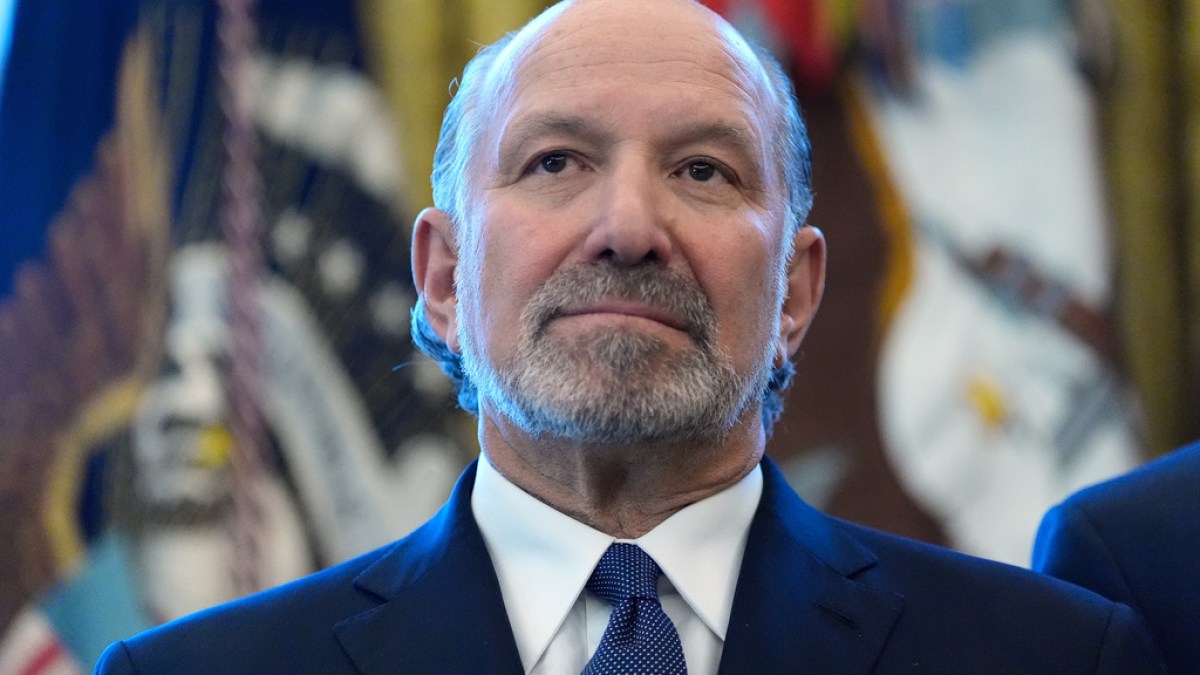
A public dispute has erupted between Treasury Secretary Scott Bessent and Commerce Secretary Howard Lutnick over how tightly the United States should restrict China’s access to advanced computer chips that power artificial intelligence. On Monday, the Trump administration announced new licensing requirements for the sale of advanced chips to buyers in Singapore, Malaysia, Thailand, Indonesia and Brazil, countries Washington suspects of acting as conduit routes for chips to reach China. The rules, drafted by Bessent’s Treasury Department and the White House, also require any data centre using Nvidia chips to obtain U.S. permission before renting computing power to Chinese customers, closing a loophole that previously allowed Chinese firms to “rent” the use of advanced chips without purchasing them outright.
The new restrictions were introduced days before President Donald Trump’s scheduled meeting with Chinese President Xi Jinping on the sidelines of the APEC summit in Shenzhen. Trump has so far avoided taking a side in the cabinet feud.
The disagreement centers on the level of export controls. Bessent has pushed for tougher enforcement of existing rules, stating, “We have all the authorities that we need. They just need to be implemented.” Lutnick, who oversees export controls through the Commerce Department, has been a vocal supporter of allowing Nvidia, the world’s dominant maker of AI superchips, to sell to China. In July 2025, he said, “You want to sell the Chinese enough that their developers get addicted to the American technology stack.”
The dispute has intensified after Nvidia CEO Jensen Huang resigned last week following revelations that he had an affair with Alice Huang, a former senior executive at Megaspeed, a Singapore‑based company that builds data centres for Chinese clients. Megaspeed purchased more than $4.8 billion of Nvidia chips in about two years, but U.S. authorities suspect many of those chips were smuggled into China rather than used in Megaspeed’s data centres. Bessent said that four government agencies, including Treasury, had pushed for months to place Megaspeed on a U.S. trade blacklist, but Lutnick’s Commerce Department had not acted.
The new rules require companies to obtain a U.S. licence before shipping advanced chips to the listed countries and to secure Washington’s permission before any data centre can rent computing power to Chinese customers. China’s Ministry of Foreign Affairs condemned the restrictions as “economic coercion” and said Beijing would take “necessary measures” in response.
The policy shift has drawn support from hawkish congressional figures. John Moolenaar, the Republican chair of the House Select Committee on China, welcomed the new restrictions and criticized the administration’s previous decision to ease curbs on Nvidia’s chip sales to China. Senior officials such as Secretary of State Marco Rubio and U.S. Trade Representative Jamieson Greer have also argued for keeping the most advanced chips out of China.
Trump has alternated between restricting and allowing Nvidia’s sales to China. In April 2025, the White House curbed sales of the H20 chip, only to allow them three months later. In December, Trump permitted sales of the more powerful H200 chip to approved Chinese customers, on the condition that 25 percent of the revenue would go to the U.S. government.
Trump has stated that he is not planning to remove Lutnick, even after reports that top White House aides had debated the matter. He has acknowledged that the issue is splitting his cabinet but has not taken a definitive side, saying, “It’s a different viewpoint. One wants to be friendly with China and one wants to have a blowup with China. They both are acceptable, but they are different views.”
Both Lutnick and Jensen Huang have been summoned to testify before the Senate on December 3. The dispute highlights the broader U.S. debate over how to balance national security interests with economic engagement with China as the two leaders prepare to meet in Shenzhen during the APEC summit.
Frequently asked questions
Which countries are subject to the new licensing requirements for advanced chips?
Singapore, Malaysia, Thailand, Indonesia, and Brazil.
What new requirement is imposed on data centers using Nvidia chips?
They must obtain U.S. permission before renting computing power to Chinese customers.